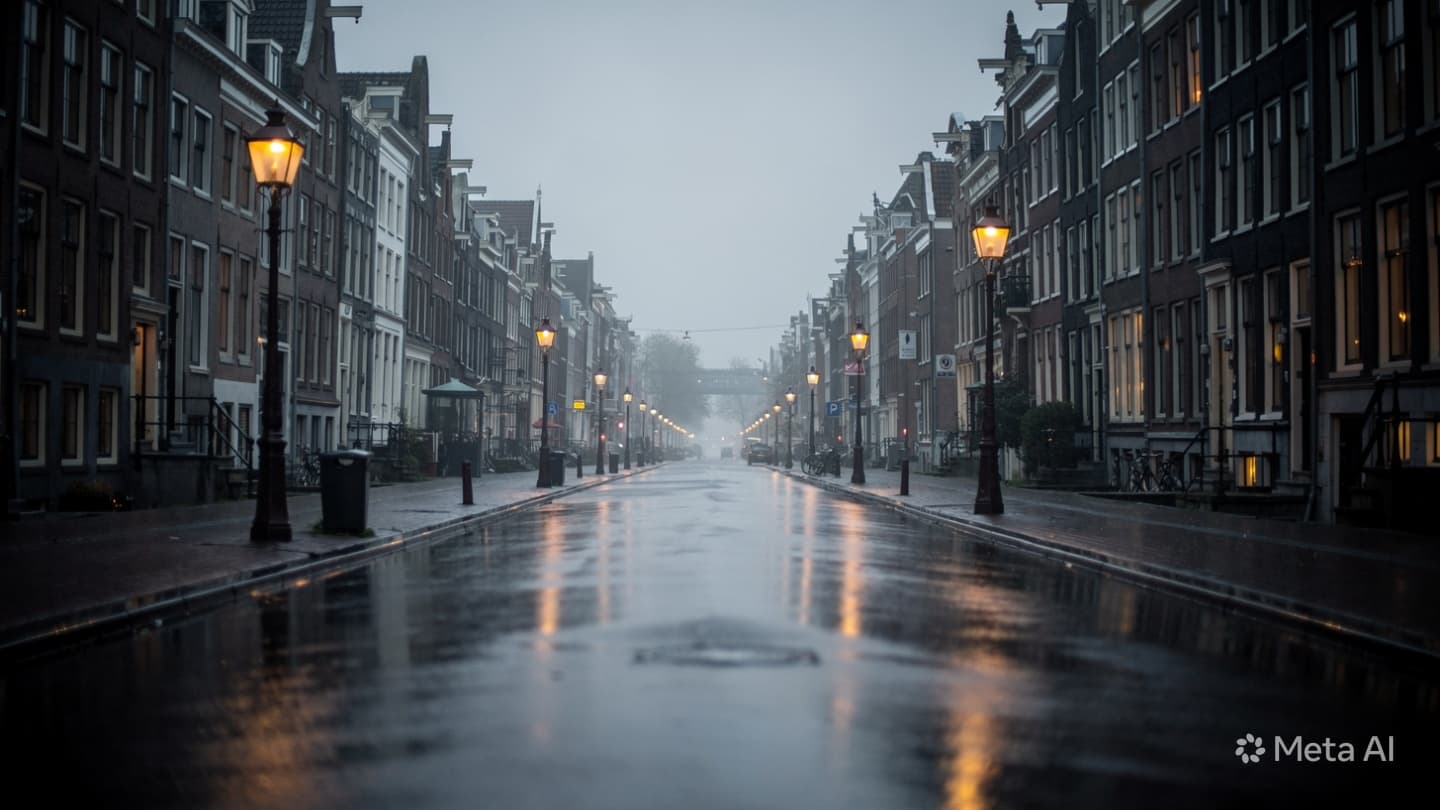
The city breathes in a rhythm of steel and motion, a kinetic hum that rarely pauses for the individual soul. In the veins of Amsterdam, where canals mirror the grey expanse above and bicycles weave through the tapestry of stone, the unexpected often arrives as a sharp discord. It is a place of perpetual movement, yet sometimes that flow encounters an abrupt, silent cessation. When light shifts across the urban landscape, casting long, melancholic shadows against the brick facades, the fragility of our daily transit becomes hauntingly apparent.
We move through these streets with a sense of practiced autonomy, trusting in the lanes and the signals that govern our passage. Yet, there are moments when the choreography of traffic fails, surrendering to a sudden, kinetic chaos. The street becomes more than a thoroughfare; it transforms into a threshold, a space where the mundane act of travel meets the absolute weight of finality. Here, the hum of the city falls away, replaced by the stillness that follows a rupture in the ordinary order of things.
On a recent evening, the atmosphere in Nieuw-West shifted under the gravity of such a collision. The air, usually thick with the sounds of a late-spring twilight, carried the weight of a sudden loss. A motor scooter, a vessel of quick and agile movement, collided with a young pedestrian, altering the trajectory of multiple lives in an instant. It is a scene that ripples outward, touching the observers, the responders, and the quiet witnesses who happen upon the aftermath.
There is a profound loneliness in these intersections, where life is measured in the fleeting blink of an eye. The investigators move with measured precision, collecting remnants of a shattered narrative while the city continues its relentless pulse just a few streets away. The contrast is stark—the urgency of the sirens and the cold, unyielding reality of the forensic markers left upon the asphalt. Every piece of evidence is a fragment of a story that ended far too soon.
Reflecting on such events requires a difficult balance between acknowledging the tragedy and honoring the void left behind. We often seek patterns in the statistics, hoping to find a cause or a lesson, yet the raw reality is that the road remains indifferent. It accepts our passage with a neutrality that can feel chilling when measured against the depth of human grief. We walk these paths, ride these routes, and navigate the intersections with a hope that the rhythm will remain unbroken.
Yet, we are reminded that the infrastructure of our lives is held together by fragile conventions. Behind the clinical language of incident reports and the sterile updates of public authorities lies the weight of an empty chair and the echoes of a life suddenly stilled. The investigation into the circumstances of this particular collision—the precise turn of a wheel, the fleeting miscalculation of space—serves only to map the coordinates of sorrow. It does not replace what has been lost to the pavement.
As the authorities examine the forensic evidence and appeal to those who might hold a missing piece of the memory, the neighborhood is left to absorb the shock. There is no remedy for the sudden absence of a young spirit, only the slow, collective process of acknowledging the event. The city will continue to move, its lights reflecting in the canals, but the memory of that moment on Pieter Calandlaan remains suspended in the heavy, quiet air of the city’s conscience.
In the quiet hours that follow such incidents, one finds a somber clarity. We are all participants in the complex, shifting flow of this urban landscape, tethered together by the commonality of the road. We move in haste, often distracted by the demands of the day, yet the sudden stillness of a collision forces us to witness the fragility we share. It is a reminder that the space between motion and stillness is thinner than we care to admit.
The investigation into the collision remains ongoing as the Dutch police’s Traffic Investigation Team continues its work. Authorities have confirmed that a thirteen-year-old boy died following a collision with a motor scooter in Amsterdam Nieuw-West on May 23, 2026. The driver of the scooter, an eighteen-year-old local resident, sustained injuries and was taken into custody by police. Officials are currently seeking witnesses to provide further clarity on the events that led to the fatal outcome on Pieter Calandlaan.
Published by Banx Network. This article is part of the Banx decentralized media programme, powered by the BXE token on the XRP Ledger.