The story of every building begins long before its walls rise. It begins with the materials chosen to endure time, weather, and unexpected challenges. Among those challenges, fire remains one of the greatest tests of structural resilience. New research suggests that a different kind of concrete—lighter in weight and lower in carbon emissions—may also prove more capable of withstanding intense heat.
Geopolymer concrete differs from conventional Portland cement concrete by relying on industrial byproducts such as fly ash and ground granulated blast-furnace slag, activated with alkaline solutions. Researchers have increasingly explored the material because it can reduce carbon emissions associated with cement production while offering promising mechanical performance. Recent studies indicate that lightweight versions of geopolymer concrete can retain more of their structural strength after exposure to elevated temperatures than comparable traditional concrete.
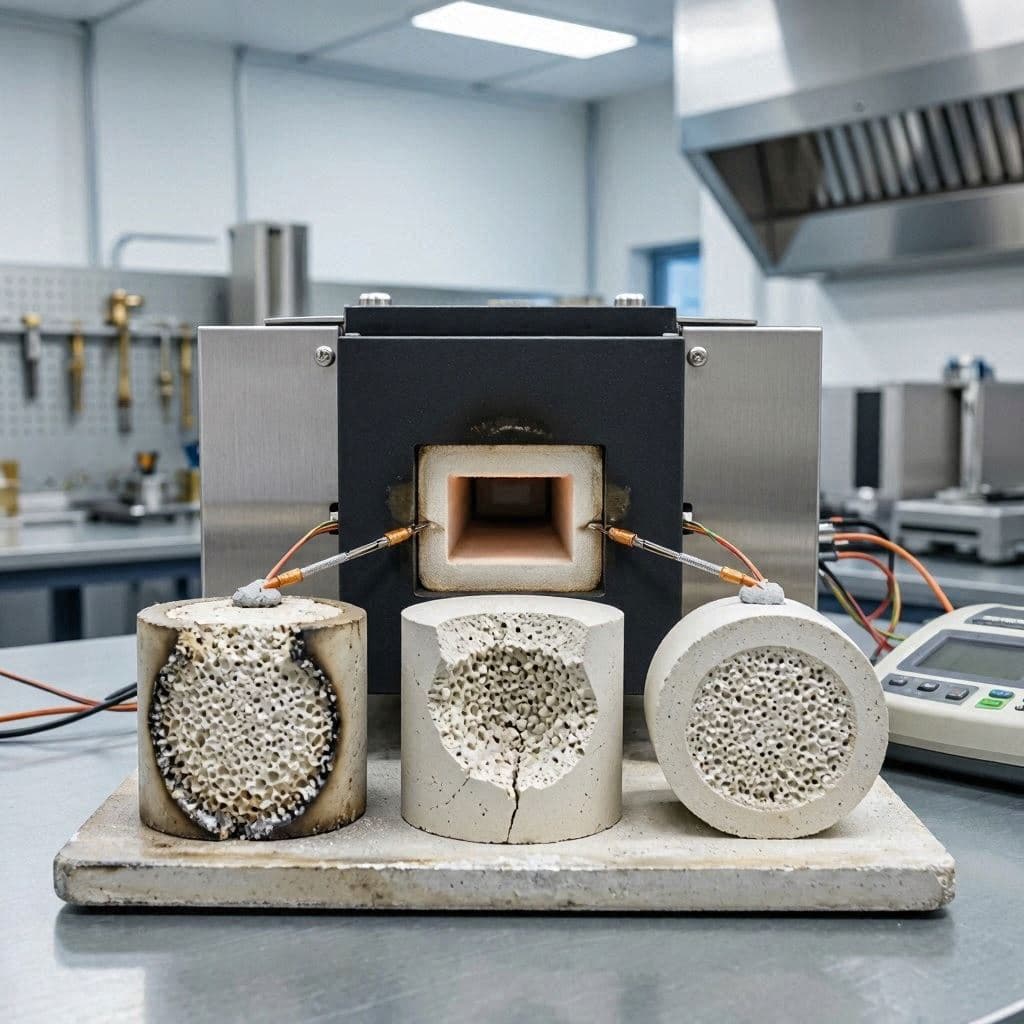
Scientists subjected lightweight geopolymer concrete specimens to temperatures ranging from several hundred degrees Celsius to as high as 800°C. Although both conventional and geopolymer concrete experienced strength losses as temperatures increased, the geopolymer mixtures generally preserved a greater percentage of their original compressive strength and maintained better structural integrity after cooling.
Researchers attribute part of this improved performance to the material's chemical composition. Unlike ordinary cement paste, geopolymer binders contain aluminosilicate networks that are more stable under high-temperature conditions. Lightweight aggregates such as pumice also contribute by reducing thermal stress and limiting internal damage during heating.
Another advantage observed during testing was the reduced occurrence of explosive spalling, a phenomenon in which pieces of concrete break away rapidly during fires because of trapped moisture and internal pressure. Some geopolymer mixtures exhibited less cracking and lower mass loss after heating compared with conventional concrete, suggesting greater resilience in severe thermal environments.
Engineers believe these characteristics could benefit structures where fire resistance is especially important, including tunnels, industrial facilities, transportation infrastructure, and high-rise buildings. The lighter weight of geopolymer concrete may also reduce structural loads while maintaining adequate strength for many construction applications. Ongoing research continues to optimize material formulations for broader commercial use.
Despite encouraging findings, researchers note that geopolymer concrete is not immune to heat damage. Strength gradually declines as temperatures become more extreme, and long-term durability, manufacturing consistency, and large-scale implementation remain active areas of investigation. Additional field testing will help determine how laboratory performance translates into real-world construction projects.
As sustainable construction becomes an increasingly important global objective, advances in materials science continue to reshape expectations of what modern infrastructure can achieve. Lightweight geopolymer concrete represents one example of how reducing environmental impact and improving fire resilience may progress together, offering engineers another option as they design buildings intended to endure both everyday use and extraordinary events.
AI Image Disclaimer: The accompanying visuals are AI-generated illustrations created to represent the scientific concepts discussed and are not photographs from the research.
Sources (verified):
Scientific Reports ScienceDirect Research on Engineering Structures & Materials
Published by Banx Network. This article is part of the Banx decentralized media programme, powered by the BXE token on the XRP Ledger.