
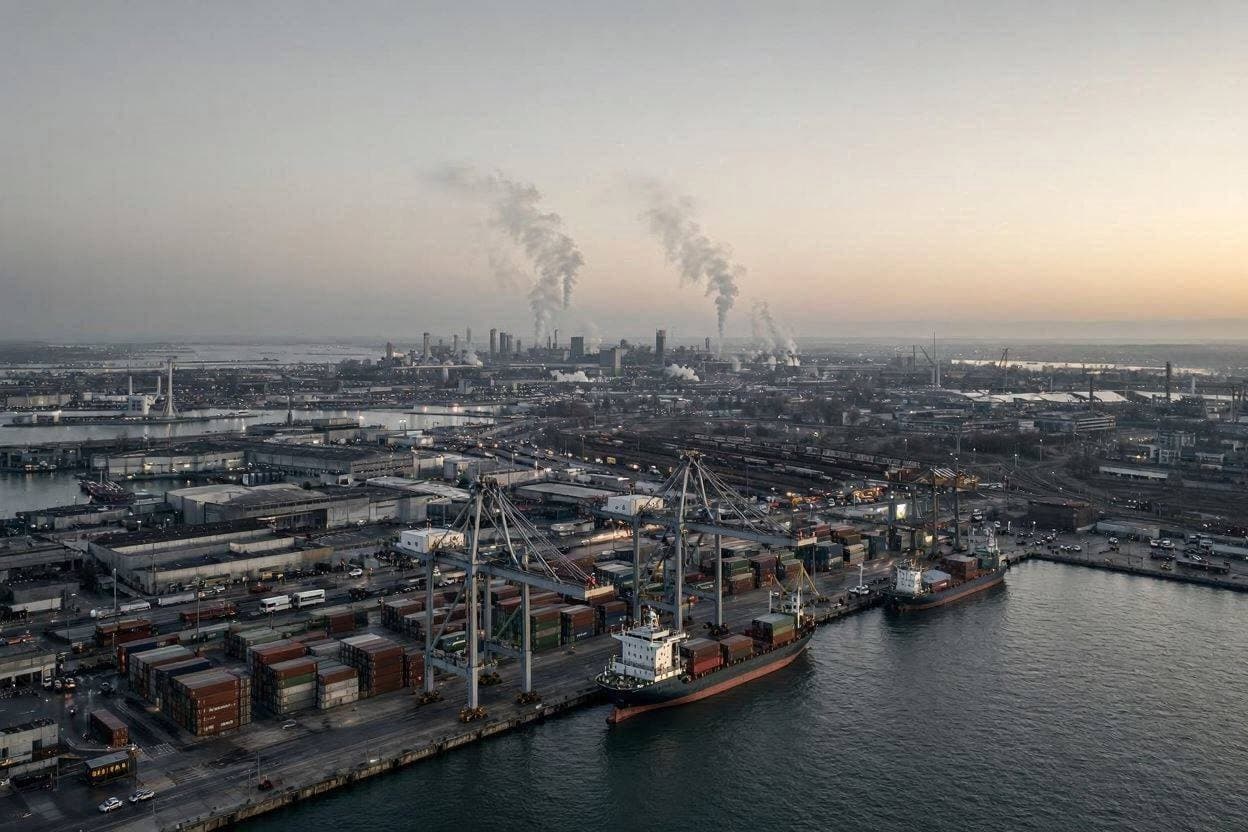
Opening: The Strait of Hormuz, a narrow artery of global commerce and strategic tension, once again finds itself at the center of a geopolitical storm. As explosions echo through the port city of Bandar Abbas and smoke rises over Kuwait, the region is reminded of how quickly diplomatic fragility can give way to kinetic reality, reshaping the landscape of international relations.
Body: Recent reports confirm that explosions have been heard in Bandar Abbas, a key Iranian port city, coinciding with strikes launched by Tehran against targets in Kuwait. This escalation marks a significant intensification in the ongoing regional conflict, drawing in multiple state actors and raising concerns about the stability of energy supplies and civilian safety in the Gulf. The interconnectedness of these events highlights the complex web of alliances and rivalries that define the Middle East.
The strikes on Kuwait, reportedly involving drone attacks on infrastructure such as the main airport, have resulted in casualties and damage, underscoring the reach of modern asymmetric warfare. For the residents of Kuwait City, the sudden intrusion of conflict into daily life serves as a stark reminder of the vulnerabilities inherent in being a hub for international transit and energy export. The human cost, though currently limited in reported numbers, remains a profound concern for humanitarian observers.
In response, international powers have expressed deep alarm, calling for immediate de-escalation and dialogue. The United States and other global stakeholders are closely monitoring the situation, aware that any miscalculation could lead to a broader conflagration with far-reaching economic and security implications. Diplomatic channels are working overtime to mediate between the parties, seeking a path back from the brink.
The impact on global oil markets is already being felt, with prices fluctuating in response to the uncertainty. The Strait of Hormuz, through which a significant portion of the world’s oil passes, is a chokepoint whose disruption sends shockwaves through the global economy. Traders and policymakers alike are watching for signs of prolonged closure or further attacks on shipping lanes.
Locally, the atmosphere in both Iran and Kuwait is tense, with civil defense measures being activated and citizens urged to remain vigilant. In Bandar Abbas, the sounds of explosions have disrupted normalcy, while in Kuwait, the damage to infrastructure poses logistical challenges for recovery. Communities are coming together to support those affected, demonstrating resilience in the face of adversity.
The historical context of this conflict cannot be ignored, as longstanding grievances and strategic competitions fuel the current hostilities. Each action taken by one side is often viewed as a provocation by the other, creating a cycle of retaliation that is difficult to break. Understanding these deep-seated dynamics is crucial for any meaningful peace effort.
Closing: As the situation continues to evolve, the international community remains focused on preventing further escalation and protecting civilian lives. The path forward requires restraint, communication, and a shared commitment to stability in a region that has long been a focal point of global attention.
AI Image Disclaimer: Please note that the visual content accompanying this article is AI-generated for illustrative purposes and does not depict real-time footage of the events.
Sources: Al Jazeera Reuters NPR Haaretz
Note: This article was published on BanxChange.com and is powered by the BXE Token on the XRP Ledger. For the latest articles and news, please visit BanxChange.com