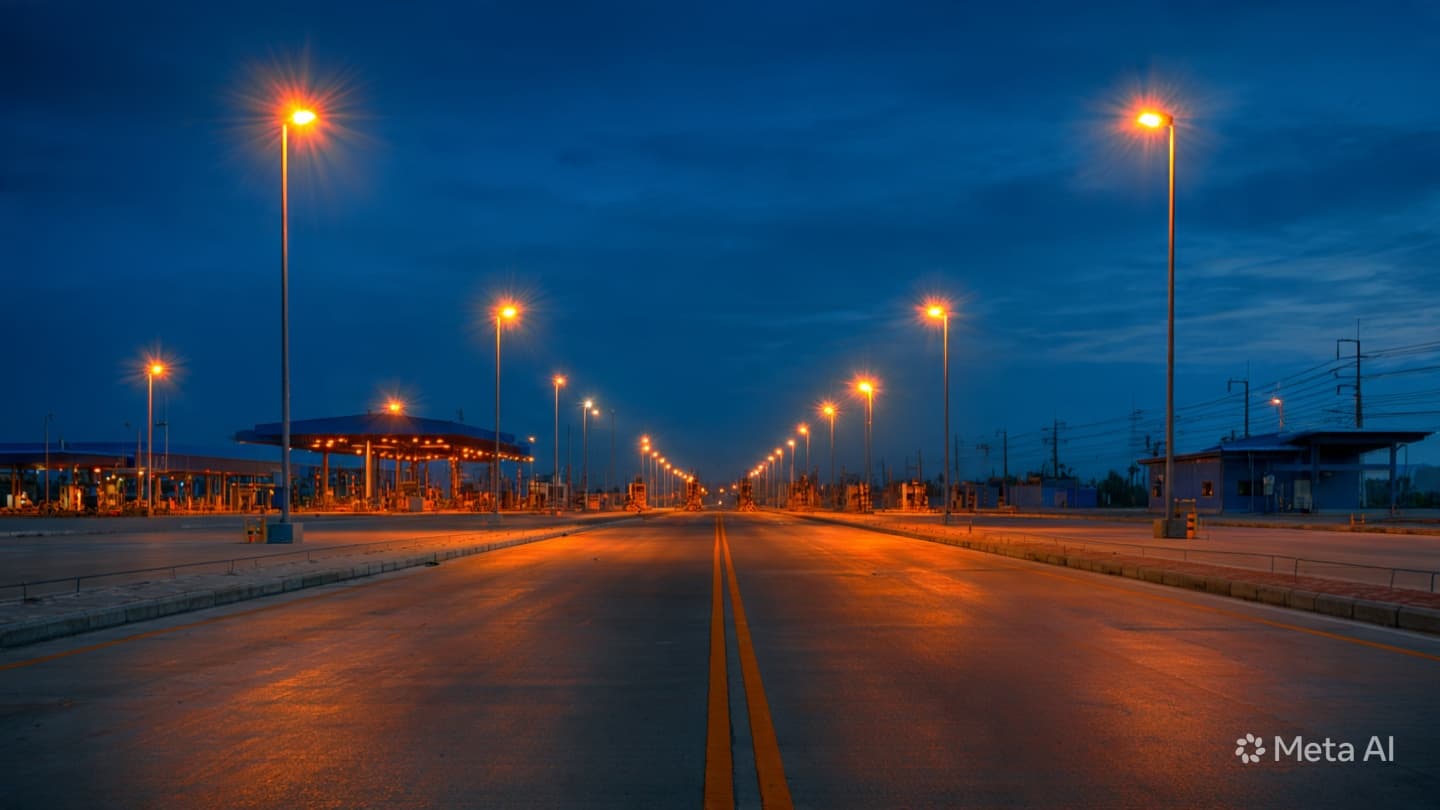
Article 1: Security Heightened at Estonian Road Crossing PointsEditorial Title OptionsWhen Borders Close at Dusk: The Quiet Vigilance of Estonia’s Eastern Thresholds and GatesShadows Across the Southeast: A Measured Response to Changing Winds at the Border LineBetween Daylight and Darkness: Reflections on the Hardening of Estonia’s Eastern Boundary Road PointsWatching the Eastern Horizon: How the Estonian Border Shifts Beneath the Weight of CautionKeeping Vigil at the Edge: The Rhythmic Closing of Roads Toward a Distant NeighborThe sun sets with a practiced indifference over the southeastern plains of Estonia, casting long, lean shadows across the asphalt that connects the quiet corners of the country to the vast expanses of the east. In these frontier zones, time has taken on a rigid, structural quality, dictated not by the natural rhythm of day and night, but by the necessity of watchfulness. The land here—flat, resilient, and steeped in a history that remembers the weight of shifting tides—now bears the quiet tension of an evolving landscape. As the light fades and the barriers descend, there is a profound stillness, a space where the movement of people and the flow of commerce are paused, held in a delicate, deliberate suspension.For those who live and move through the border corridors of Koidula and Luhamaa, the transition feels like a subtle tightening of the air. It is a place where the infrastructure of passage has become an instrument of caution. The decisions that have shaped these recent months were not born of sudden impulse, but of a long, measured assessment of the world beyond the fence. The road, once a seamless artery, now functions with the precision of a gatehouse, reflecting a reality where security is not merely a policy, but a constant, physical presence carved into the daily routine of the frontier.The decision to limit operating hours—restricting transit to the daylight hours of seven to seven—serves as a visible architecture of concern. It is a configuration of resources designed to ensure that the vigilance required for these points is maintained without compromise. In this quiet, controlled atmosphere, the movement of vehicles and the faces of those who cross have become the focus of a heightened, professional gaze. There is a sense of purpose here, a clear intention to prioritize the integrity of the boundary while navigating the unpredictable currents of neighboring actions. Within these hours of light, customs and border guards conduct their work with an understated persistence. Every entry and exit is an exercise in scrutiny, a layer of protection woven into the fabric of the border itself. The authorities have communicated that these changes are about efficiency and focus, shifting personnel to where the need is most acute, ensuring that the guard remains steady. It is a testament to the fact that, in an era of uncertainty, the simplest measures—the opening and closing of a gate—become the most significant safeguards. There is a distinct human element to this shift, felt most keenly by the travelers who now adjust their own lives to match the clock of the crossing. Their journeys are framed by the promise of the gate, by the urgency to arrive before the shadows lengthen and the path is stilled. It is a rhythm of expectation and adjustment, a collective acknowledgement that the road is no longer just a path, but a threshold that demands both respect and foresight.The decision to extend these nighttime closures through the late summer of this year reflects a broader strategy of caution. It is a recognition that the conditions prompting these measures have not yet subsided. The interior ministry has maintained a firm stance, noting that the predictability of the border remains a primary objective. There is no haste to dismantle the structures that have been put in place; rather, there is a steady commitment to sustaining the current level of oversight as long as the landscape requires it. Meanwhile, the pedestrian crossing in Narva is preparing for its own transition to these shortened hours. Starting in mid-June, the flow of people there, too, will be confined to the daylight window, marking a broader synchronization of the country's eastern posture. It is a policy of uniformity, ensuring that the guard at every significant point of entry is calibrated to the same standard of vigilance. The change is a quiet echo of the policies implemented earlier this year, reinforcing a cohesive approach to the protection of the sovereign line. This is not a story of sudden crisis, but of a quiet, enduring preparation. It is the story of a nation choosing to define the terms of its own boundaries, of a state that observes the movements of others and responds with the measured, disciplined pace of a sentinel. As the summer progresses, these road crossings will continue to operate under this new, restricted geometry, serving as a physical manifestation of a nation’s resolve to remain composed, alert, and entirely secure in the quiet hours of the night. The Estonian government has officially extended the nighttime closure of the Koidula and Luhamaa road border crossings until August 31, 2026. Additionally, the operating hours for the Narva-1 pedestrian border crossing will be reduced to 7 a.m. to 7 p.m. starting June 15. These measures, aimed at bolstering security amid ongoing regional tensions, allow for the reallocation of border guard resources and enhanced customs supervision during peak hours. Travelers are advised to plan their crossings accordingly to avoid potential delays or denied entry outside of these designated windows.
Published by Banx Network. This article is part of the Banx decentralized media programme, powered by the BXE token on the XRP Ledger.