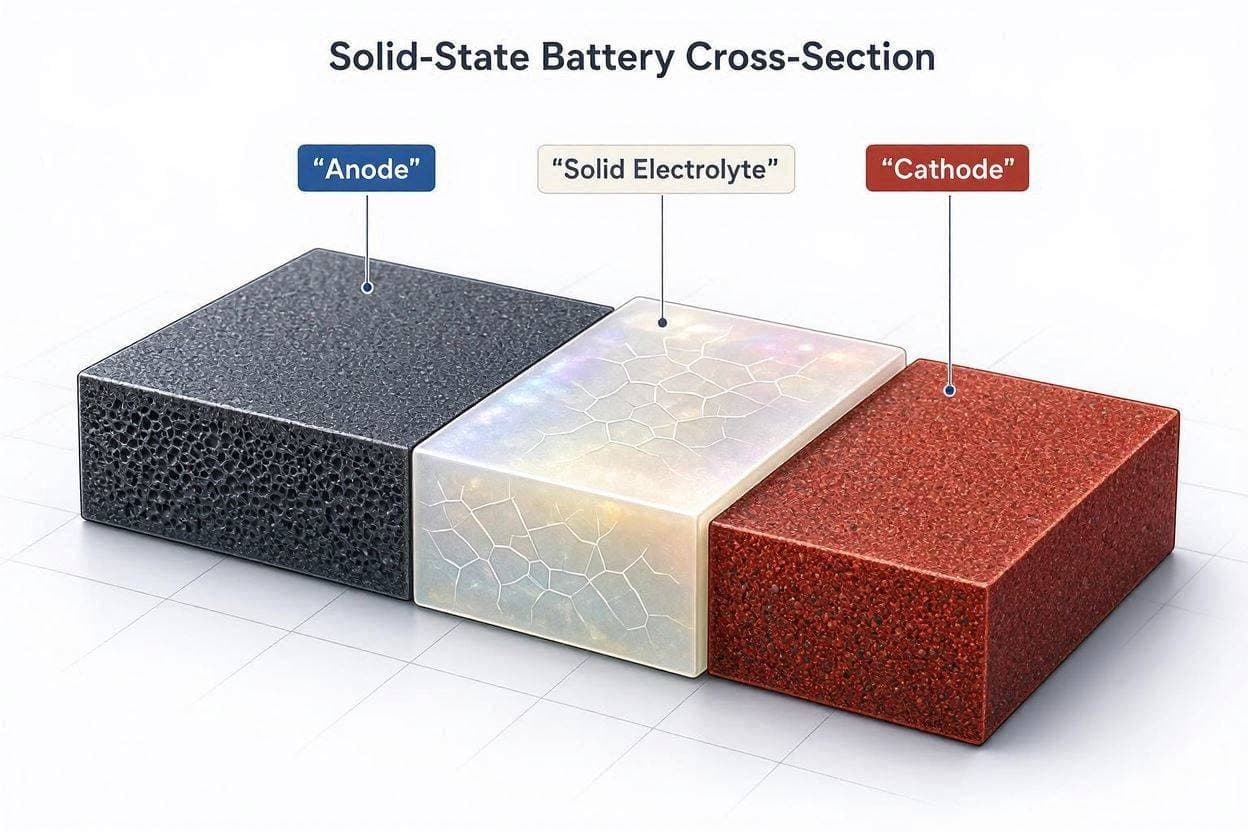
Opening: In the quiet laboratories where the future of energy is being forged, a long-standing mystery has finally begun to yield its secrets. Solid-state batteries, hailed as the holy grail of electric vehicle technology, have long been plagued by a persistent flaw: the tendency to short-circuit due to the growth of metallic dendrites. Recent breakthroughs by researchers have now illuminated the precise mechanism behind these failures, offering a clear path toward safer, longer-lasting energy storage solutions that could revolutionize everything from smartphones to electric cars.
Body: The promise of solid-state batteries lies in their use of solid electrolytes instead of the flammable liquids found in traditional lithium-ion batteries. This substitution offers higher energy density and improved safety. However, the transition has been hindered by the formation of lithium dendrites—needle-like structures that grow from the anode and penetrate the solid electrolyte, causing internal short circuits. For years, scientists struggled to understand exactly how these soft metallic structures could crack hard ceramic materials.
New research, including studies from institutions like MIT, has revealed that the issue is not just about hardness but about mechanical stress and chemical interactions at the interface. The dendrites exploit microscopic flaws in the solid electrolyte, growing along grain boundaries and exerting pressure that leads to fracture. By understanding this mechanical failure mode, researchers can now design electrolytes that are more resistant to dendrite penetration, either by improving their toughness or by creating interfaces that suppress dendrite growth.
This insight is crucial for the commercialization of solid-state technology. Many automotive manufacturers have set ambitious timelines for integrating these batteries into their vehicles, but reliability remains a key concern. The ability to predict and prevent short circuits will accelerate the development of prototypes that can withstand the rigors of daily use. It transforms the challenge from a fundamental scientific obstacle into an engineering problem with viable solutions.
The implications extend beyond electric vehicles. Safer, higher-capacity batteries could enable longer-lasting consumer electronics, more efficient grid storage, and even new applications in aviation. The aviation industry, in particular, has been eyeing solid-state batteries for their potential to reduce weight and increase range, but safety certifications require a level of reliability that has been elusive until now.
Researchers are now exploring various strategies to mitigate dendrite formation, including the use of composite electrolytes, protective coatings, and advanced manufacturing techniques. These approaches aim to create a more uniform interface between the electrodes and the electrolyte, reducing the sites where dendrites can initiate. The progress is incremental but steady, reflecting the collaborative nature of modern materials science.
The breakthrough also highlights the importance of interdisciplinary research. Solving the dendrite problem required expertise in electrochemistry, materials science, and mechanical engineering. By combining these perspectives, scientists have developed a more holistic understanding of battery failure, leading to innovations that address the root causes rather than just the symptoms.
As the field moves forward, the focus will shift from laboratory demonstrations to scalable production methods. The challenge now is to manufacture these advanced batteries at a cost that is competitive with existing technologies. The recent insights into short-circuit mechanisms provide a foundation for optimizing production processes and ensuring quality control, which is essential for mass adoption.
Closing: The unraveling of the short-circuit mystery in solid-state batteries marks a significant turning point in energy storage technology. With a clearer understanding of the underlying mechanisms, researchers are better equipped to design batteries that are not only powerful but also safe and durable, bringing the promise of a fully electric future closer to reality.
AI Image Disclaimer: The images provided are AI-generated visualizations of battery microstructures and should be viewed as conceptual illustrations rather than literal microscopic photographs.
Sources: MIT News, Science Daily, SciTechDaily, Nature Index, IDTechEx
Published by Banx Network. This article is part of the Banx decentralized media programme, powered by the BXE token on the XRP Ledger.