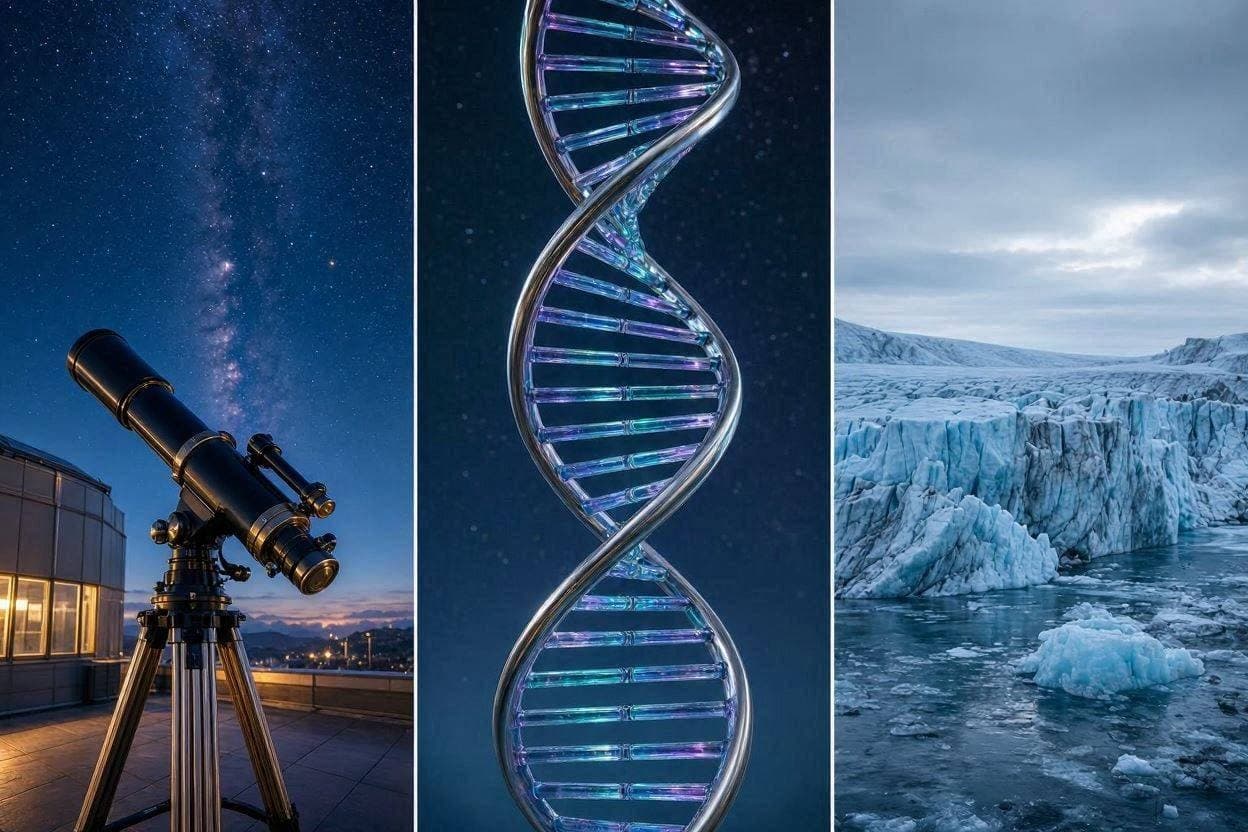
In the pages of Nature, the pulse of scientific progress beats strong and steady, revealing a world that is constantly unfolding in ways both subtle and profound. Recent issues have highlighted a constellation of discoveries that span the cosmos, the cell, and the climate, reminding us of the interconnectedness of all things. From the distant atmospheres of exoplanets to the intricate mechanisms of aging within our own bodies, these findings offer not just data, but a deeper understanding of our place in the universe.
Body: In the realm of space, astronomers have made significant strides in characterizing the atmospheres of distant worlds. New spectroscopic data from the James Webb Space Telescope has revealed complex organic molecules in the clouds of gas giants, hinting at the diverse chemical processes at play in other solar systems. These discoveries do not confirm life, but they expand our knowledge of where the building blocks of life might exist, fueling the imagination and guiding future searches for habitable planets.
Closer to home, biologists have uncovered new insights into the aging process. Research published in Nature details how specific cellular pathways regulate longevity and repair damage. By identifying key proteins that decline with age, scientists are exploring potential therapies to slow down or even reverse some aspects of aging. This work holds promise for treating age-related diseases and improving the quality of life for an aging global population.
In climate science, refined models have provided clearer predictions of extreme weather events. Recent studies show how rising ocean temperatures are influencing jet stream patterns, leading to more persistent heatwaves and storms in certain regions. These findings are crucial for policymakers and communities preparing for the impacts of climate change. They offer a scientific basis for adaptation strategies and underscore the urgency of reducing greenhouse gas emissions.
The convergence of these fields is also noteworthy. For instance, biological research is informing climate solutions, such as developing crops that are more resilient to drought. Similarly, space technology is aiding climate monitoring, providing global data on deforestation and ice melt. This interdisciplinary approach is becoming increasingly essential for tackling complex global challenges.
Each discovery, while distinct, contributes to a larger tapestry of knowledge. They remind us that science is not a collection of isolated facts but a continuous narrative of inquiry and understanding. As we learn more about the universe, we also learn more about ourselves and our responsibility to protect our planet.
The peer-review process in Nature ensures that these findings are robust and reliable. It is a testament to the rigorous standards of the scientific community, where claims are tested and verified before being accepted. This commitment to truth is what makes science such a powerful tool for progress.
Closing: The latest highlights from Nature reflect the breadth and depth of current scientific inquiry. From the stars above to the cells within, these discoveries enrich our understanding of the world and inspire us to continue asking questions, seeking answers, and striving for a better future.
AI Image Disclaimer: The visuals in this article are AI-generated illustrations representing concepts in space, biology, and climate science, created for illustrative purposes only.
Sources: Nature, Nature Astronomy, Nature Climate Change, Nature Biology, Space.com, SciNews
Published by Banx Network. This article is part of the Banx decentralized media programme, powered by the BXE token on the XRP Ledger.