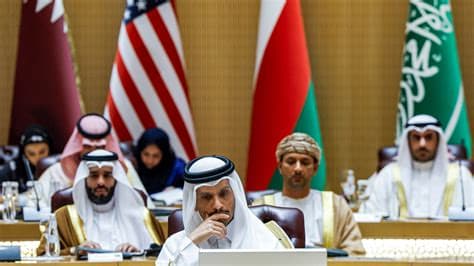
Top US envoys were expected to arrive in Qatar on Tuesday, but uncertainty over the timing and content of any diplomatic engagement raised doubts about prospects for a lasting U.S.-Iran agreement and the full reopening of the Strait of Hormuz.
The diplomacy follows exchanges of fire over the weekend that tested a June 17 interim accord between the United States and Iran. The 14-point pact provided 60 days to negotiate a permanent truce and address issues including the future of Iran’s nuclear program.
The conflict has disrupted global oil and broader trade, exposed Gulf states to Iranian drone and missile attacks, and killed thousands of people, mainly in Iran and Lebanon. The White House said Donald Trump’s son-in-law Jared Kushner and envoy Steve Witkoff were expected to land in Doha for “high-level meetings,” with additional technical meetings continuing alongside.
Iran, however, signaled limits on engagement. While Iran was sending a technical delegation to Qatar, Foreign Ministry spokesperson Esmaeil Baghaei said it had “no relation” to the Americans’ visit and that no negotiations would occur with the U.S. in the coming days. A senior Iranian official said any Doha meeting would likely focus narrowly on managing the Strait of Hormuz and reducing tension.
Markets reflected some de-escalation after the weekend’s fighting, with oil prices slipping further, yet they were still headed toward a steep quarterly loss. The article also described how the war had pushed up global inflation and left Trump under domestic political pressure ahead of November midterm elections.
It further noted that maritime traffic through the Strait of Hormuz—previously carrying about a fifth of global oil and liquefied natural gas trade—had come to a near standstill. Iran has sought to exert control over the strait alongside Oman, including proposals to charge shipping fees and obstacles to vessels outside defined routes.
The article also reported a cycle of accusations between the U.S. and Iran: the U.S. accused Iran of striking commercial ships with missiles or drones and said it bombed Iranian military facilities in response. Iran, in turn, launched missiles and drones at U.S. military sites in Kuwait and Bahrain, with both sides alleging violations of the ceasefire.
Beyond U.S.-Iran dynamics, the interim deal also aims to end the conflict between Israel and Hezbollah in Lebanon. However, Lebanon’s parliament speaker Nabih Berri, an ally of Hezbollah, cast doubt on a separate U.S.-brokered framework deal, with analysts warning it could entrench a stalemate by tying Israel’s withdrawal from southern Lebanon to Hezbollah disarmament.
Published by Banx Network. This article is part of the Banx decentralized media programme, powered by the BXE token on the XRP Ledger.