
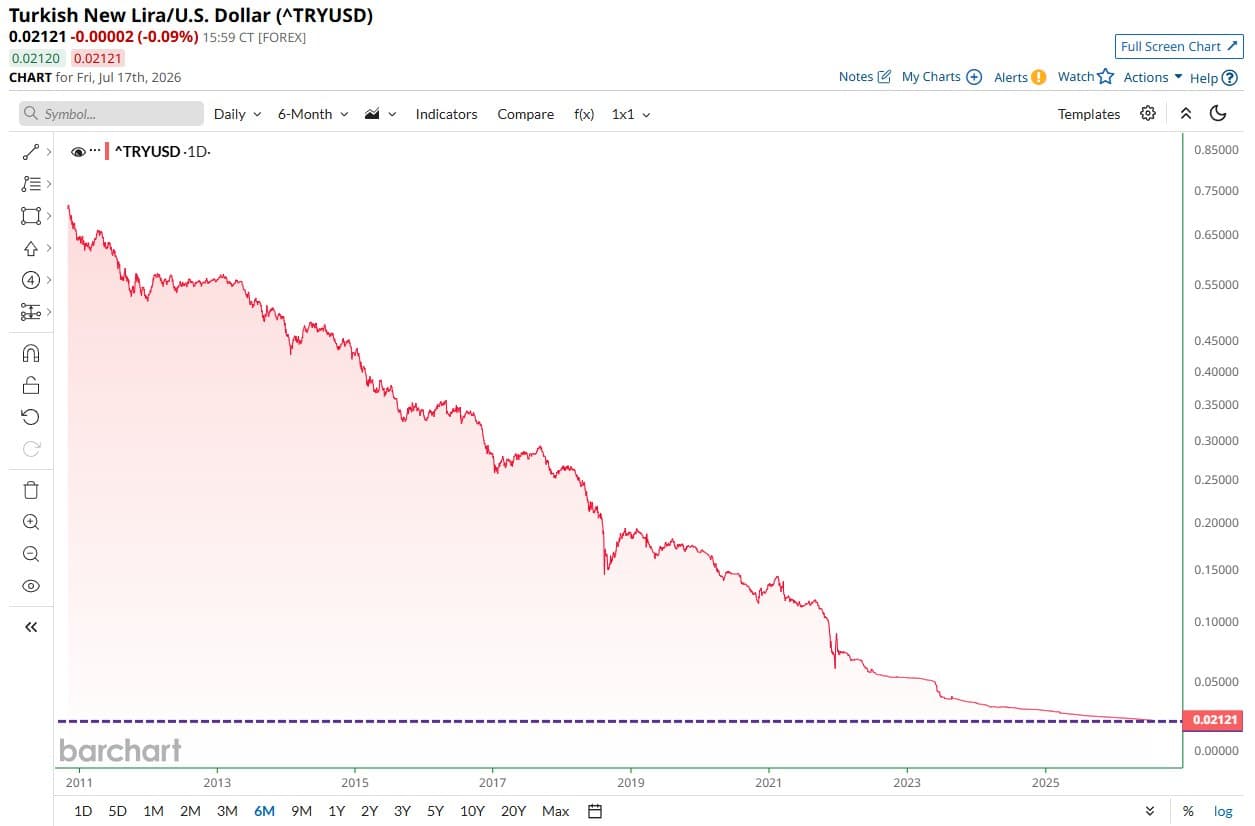
The Turkish lira has fallen to a new record low against the U.S. dollar, extending one of the most dramatic currency declines among major emerging markets. Data shared by market observers shows the lira has lost roughly 97% of its value over the past fifteen years, highlighting the scale of Turkey's long-running economic challenges. The depreciation reflects years of elevated inflation, currency instability, and concerns about monetary policy. As the lira weakens, imported goods become more expensive, placing additional pressure on households and businesses. Turkey's dependence on imported energy and industrial inputs means currency weakness often feeds directly into higher consumer prices throughout the economy. The decline has significantly impacted purchasing power for Turkish citizens. Savings held in local currency have lost value relative to foreign currencies, prompting many individuals and businesses to seek protection through dollar holdings, gold, and other assets. This shift has complicated efforts by policymakers to stabilize financial conditions and restore confidence in the domestic currency. Authorities have implemented various measures over the years, including interest-rate adjustments, foreign-exchange interventions, and programs aimed at attracting international investment. While some policies have temporarily slowed the pace of depreciation, structural economic pressures and persistent inflation concerns have continued to weigh on the currency. Financial markets closely monitor the lira because it serves as a barometer of investor confidence in Turkey's economy. Currency weakness can increase borrowing costs, reduce investment inflows, and create challenges for companies with debt denominated in foreign currencies. These factors have contributed to recurring volatility in Turkish financial markets. The latest milestone underscores the difficulties facing policymakers as they attempt to balance economic growth, inflation control, and financial stability. Investors will be watching upcoming economic data and policy decisions for signs that conditions may begin to stabilize after years of sustained currency depreciation.
Published by Banx Network. This article is part of the Banx decentralized media programme, powered by the BXE token on the XRP Ledger.



.jpg&w=3840&q=75 "Sally Rooney’s Books to Be Withdrawn From UK Sale Over Palestine Action Support")