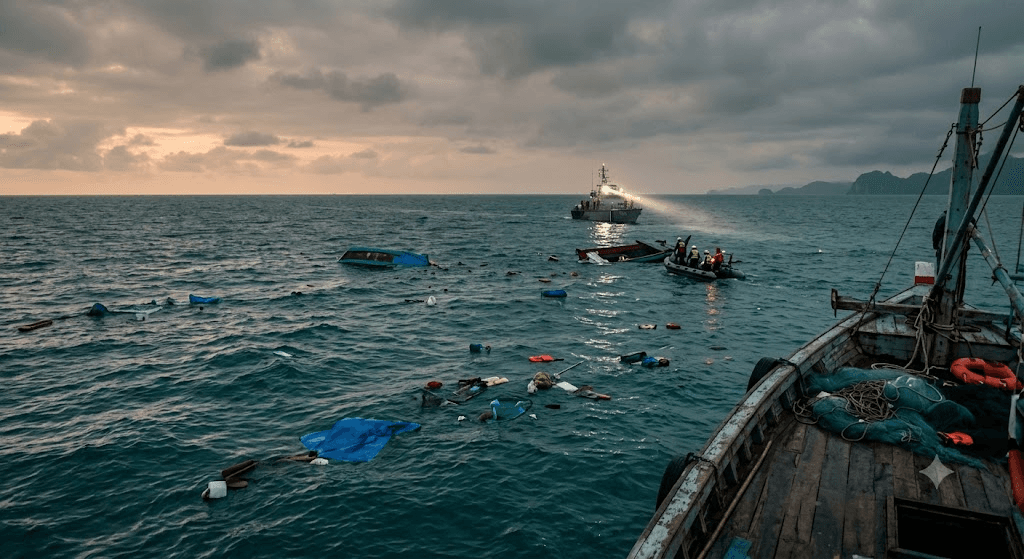
NAYPYIDAW, Myanmar — In what is shaping up to be one of the worst maritime disasters in recent memory, United Nations agencies warned on Thursday, July 16, 2026 that more than 500 people are feared dead after two vessels carrying Rohingya refugees reportedly capsized off the coast of Myanmar.
The International Organization for Migration (IOM) and the UN Refugee Agency (UNHCR) issued a grave joint statement expressing deep alarm over the suspected dual shipwrecks. While official casualty figures are still being verified, the scale of the unfolding tragedy has cast a somber light on the escalating desperation of the persecuted minority.
According to preliminary intelligence gathered by the UN, both vessels departed from Myanmar’s war-torn western Rakhine State in late June. The passengers were primarily stateless Muslim Rohingya, including several individuals who had secretly traveled from overcrowded, squalid refugee camps across the border in Cox’s Bazar, Bangladesh, to board the ships.
The disaster unfolded in two devastating stages: the first vessel, carrying an estimated 250 passengers, completely lost radio and satellite contact shortly after setting sail in late June and is feared to have foundered early on. The second vessel, packed with roughly 280 people, is believed to have succumbed to violent seas and capsized off the Ayeyarwady coast of Myanmar on July 8.
The timing of these crossings has shocked regional experts. The Rohingya typically avoid ocean passages during the peak monsoon season due to notoriously hazardous maritime conditions. However, UN officials noted that recent torrential rains, severe regional flooding, and deteriorating safety on land likely forced the passengers to take unprecedented risks.
The tragedy underscores the compounding crises squeezing the Rohingya population. Approximately 1.2 million refugees remain trapped in makeshift camps in Bangladesh after fleeing systemic military violence in Myanmar. Recent severe funding shortfalls from international donors have forced humanitarian agencies to slash food rations in these camps, drastically aggravating the living conditions.
Meanwhile, inside Myanmar’s Rakhine State, intense civil conflict has reignited between the ruling military junta and the Arakan Army, an ethnic armed group. The escalating crossfire has left remaining Rohingya communities trapped, facing extreme restrictions on movement and dwindling access to basic survival resources. With no safe legal pathway out, many are choosing the perilous sea route toward nations like Malaysia, Indonesia, or Thailand.
The Andaman Sea and the Bay of Bengal have collectively transformed into one of the deadliest maritime migration corridors on earth. In 2025 alone, over 6,500 Rohingya attempted the crossing, with nearly 900 recorded as dead or missing—marking it the deadliest year on record with the highest mortality rate of any major refugee sea crossing globally.
Human rights organizations have repeatedly accused regional maritime authorities of ignoring distress signals or actively pushing back drifting refugee vessels. Following Thursday's announcement, the IOM and UNHCR renewed their urgent appeals to regional governments to mobilize immediate search-and-rescue operations and dismantle human trafficking networks exploiting the vulnerable.
"Stronger regional and international efforts are needed to prevent further loss of life," the agencies implored, warning that without a comprehensive geopolitical solution, the sea will continue to claim hundreds more innocent lives.
Published by Banx Network. This article is part of the Banx decentralized media programme, powered by the BXE token on the XRP Ledger.