
Key Highlights
- Festival Duration:The Gion Matsuri spans the entire month of July.
- Cultural Significance:This festival is deeply rooted in Shinto traditions and local history.
- Community Involvement:Hundreds of participants engage in the festivities, showcasing local craftsmanship.
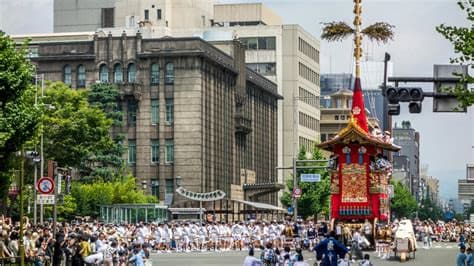
The Gion Matsuri, one of Japan's most celebrated festivals, has once again transformed the streets of Kyoto into a vibrant spectacle filled with towering floats and cultural heritage. This centuries-old festival, which is closely associated with the Yasaka Shrine, reaches its zenith in mid-July, captivating both locals and tourists alike. The grand processions feature large yamaboko and yamahoko floats, which are meticulously crafted and adorned with intricate decorations that reflect traditional Japanese artistry.
As the festival unfolds, the streets of Kyoto become a canvas for creativity and community spirit. The floats, some reaching impressive heights, are paraded through the central neighborhoods, drawing large crowds who gather to witness the slow, coordinated movements of these magnificent structures. Each float tells a story, often depicting historical or mythological themes, and showcases the craftsmanship of local artisans who dedicate countless hours to their creation.
In the days leading up to the main events, the atmosphere in Kyoto is electric with anticipation. The Yoiyama evenings, which occur in the days before the grand procession, feature lively street celebrations illuminated by lanterns. Food stalls line the streets, offering a variety of traditional Japanese delicacies, allowing visitors to indulge in the local cuisine while soaking in the festive ambiance. These evenings serve as a warm-up to the main festivities, fostering a sense of community and shared experience among participants.
The Gion Matsuri is not just a visual feast; it is also steeped in history and cultural significance. The festival dates back to the 9th century, originally established as a ritual to appease the gods during a time of plague. Over the centuries, it has evolved into a celebration of local culture and Shinto traditions, making it a vital part of Kyoto's identity. The festival's enduring legacy is a testament to the resilience and creativity of the local community, who continue to honor their ancestors and traditions through this vibrant event.
As the festival progresses, the excitement builds towards the grand procession, where the floats are paraded through the streets, accompanied by traditional music and dance. This climactic event not only showcases the beauty of the floats but also reinforces the bonds of community and cultural pride among the people of Kyoto. The Gion Matsuri serves as a reminder of the importance of preserving cultural heritage while celebrating the vibrancy of contemporary life.
In conclusion, the Gion Matsuri festival is a remarkable event that encapsulates the spirit of Kyoto. With its towering floats, rich traditions, and community involvement, it continues to attract visitors from around the world, ensuring that this cherished festival remains a highlight of Japan's cultural calendar.
Published by Banx Network. This article is part of the Banx decentralized media programme, powered by the BXE token on the XRP Ledger.



