
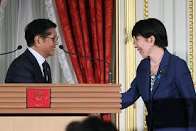
Japanese Prime Minister Sanae Takaichi and Philippine President Ferdinand Marcos Jr. made a significant announcement regarding the initiation of talks for an intelligence-sharing pact aimed at enhancing security cooperation between the two nations. This commitment marks a critical step in their evolving bilateral relationship amid growing apprehensions regarding China’s assertive behavior in the East and South China Seas.
During a joint press conference in Tokyo, both leaders emphasized the importance of the talks not only on GSOMIA but also on the delimitation of maritime borders. Marcos stated, “These are very important steps to further strengthen our defense cooperation and to uphold a rules-based maritime order.” The leaders noted that the pact would establish protocols for the safe sharing and protection of sensitive military data.
As part of this collaborative effort, discussions regarding the transfer of Abukuma-class destroyer escort vessels and other defense equipment from Japan to the Philippines are also on the agenda. The potential transfer could represent Japan’s first export of lethal military equipment under revised defense export principles, significantly aiding the capabilities of the Philippine Navy, which is currently outgunned by China.
In the face of a shifting strategic environment, both countries are striving to enhance their military cooperation. Takaichi highlighted the need to deepen collaboration to effectively address challenges posed by regional security threats. The GSOMIA, akin to agreements Japan holds with the U.S., Australia, and South Korea, reflects a growing trend among allies to share intelligence and bolster defenses against shared adversaries.
This move also follows the recent enactment of the Reciprocal Access Agreement, allowing the armed forces from each country to conduct joint drills and respond to disasters. Additionally, a previous agreement regarding the acquisition and cross-servicing of military supplies was signed in early 2026, setting the stage for stronger operational cooperation.
Geopolitical analysts note that the initiation of GSOMIA talks underscores a shared understanding of the need for enhanced cooperation in light of uncertainties regarding U.S. commitments to regional security. However, the ultimate goal for both Japan and the Philippines is to build resilience in their respective defense capabilities rather than entirely replacing U.S. support.
As the situation evolves, robust ties between Tokyo and Manila may serve to stabilize the region, ensuring that maritime interests are protected under internationally recognized norms and not dominated by force. This strengthening partnership is likely to be closely monitored by China, which may perceive it as an effort to contain its influence in the region.
Published by Banx Network. This article is part of the Banx decentralized media programme, powered by the BXE token on the XRP Ledger.


