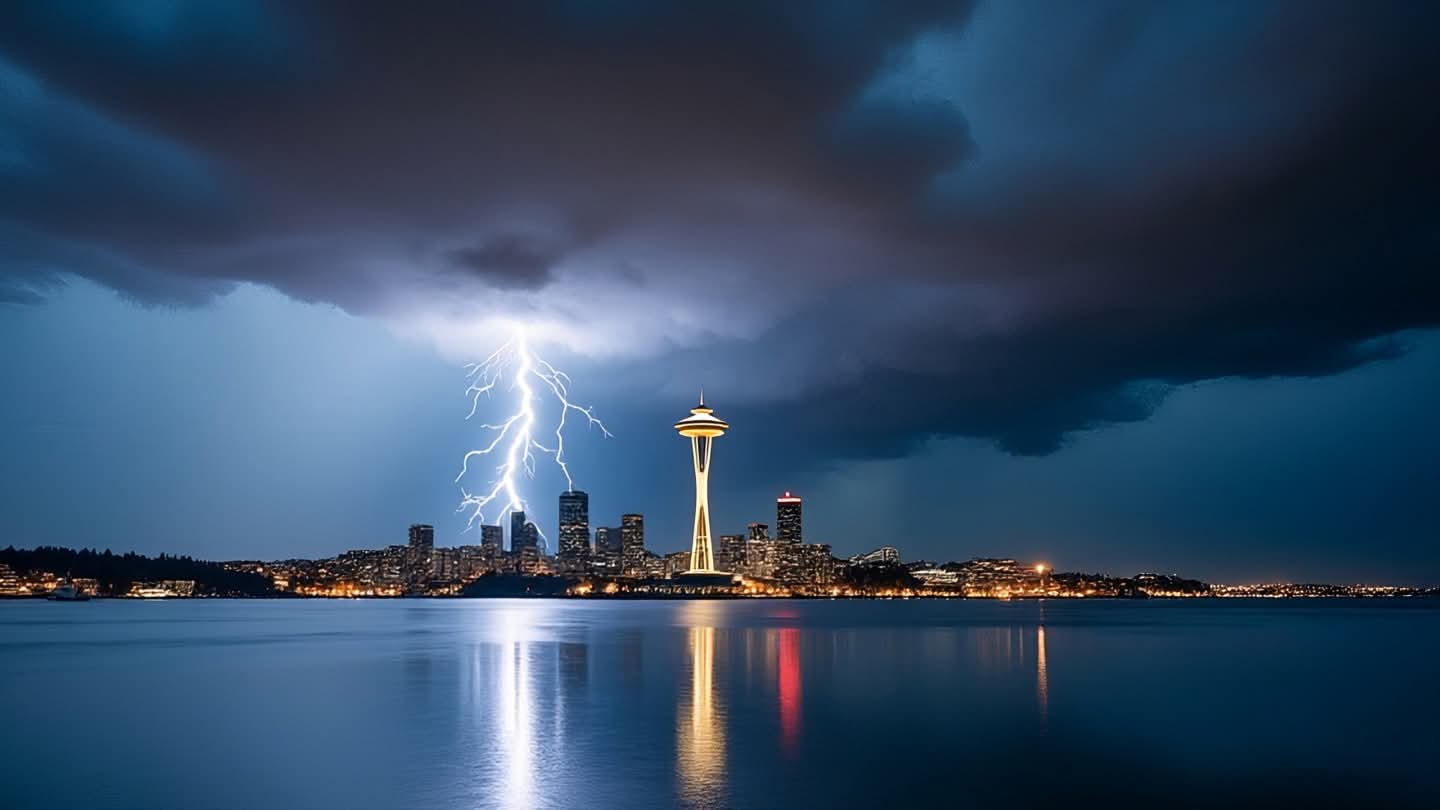
In the Pacific Northwest, where summer mornings are often greeted by a gentle, misty silence, the rhythm of the weekend was abruptly interrupted this past Saturday. A series of thunderstorms rolled through Seattle and Western Washington, acting as nature’s unwanted alarm clock for those hoping to sleep in. The sudden burst of lightning and rumbling thunder broke the long stretch of tranquil weather, reminding residents that even in the most predictable seasons, the atmosphere retains its capacity for surprise.
The storms, which developed late Friday night and continued into Saturday morning, were fueled by an unstable air mass moving over the region. Meteorologists had forecasted the possibility of scattered showers and thunderstorms, but the intensity and timing caught many off guard. The crackle of electricity in the sky served as a stark contrast to the usual calm, jolting thousands from their beds with a reminder of the raw power that exists just above the cloud layer.
For local meteorologists, such events are a fascinating display of atmospheric dynamics. Scott Sistek, a prominent weather expert in the region, noted that these storms were part of a broader pattern affecting both Western and Eastern Washington. The presence of fire weather warnings in nearby areas, such as the Olympics, highlighted the dry conditions that can accompany such turbulent weather, adding a layer of caution to the spectacle.
Residents took to social media to share their experiences, with many expressing a mix of annoyance and awe. Videos of vivid lightning strikes and audio recordings of loud thunder circulated widely, creating a shared moment of communal observation. For some, it was a nuisance; for others, it was a beautiful, if noisy, reminder of the natural world’s unpredictability. The storms became a topic of conversation at coffee shops and community centers alike.
The impact on the weekend’s plans was minimal for most, but the psychological effect was notable. The expectation of a quiet, lazy Saturday was replaced by a need to stay indoors or seek shelter during the peak of the activity. This disruption serves as a gentle nudge to appreciate the stability of fair weather when it arrives, rather than taking it for granted. It is a lesson in humility before the elements.
Emergency services remained on high alert, monitoring for any potential damage or hazards caused by the storms. While no major incidents were reported, the presence of strong winds and heavy rain required vigilance. The preparedness of the city’s infrastructure ensured that the disruption remained largely confined to the auditory and visual realms, without causing significant logistical chaos.
As the day progressed, the storms gradually subsided, leaving behind a refreshed atmosphere and cooler temperatures. The air felt cleaner, charged with the scent of ozone and wet earth. For those who ventured outside after the calm returned, the landscape appeared vibrant and renewed, washed clean by the brief but intense downpour. It was a classic example of nature’s ability to reset and rejuvenate.
In the end, the Saturday thunderstorms were more than just a weather event; they were a moment of connection with the natural world. They reminded Seattleites that they live in a dynamic environment, subject to forces beyond human control. While the "alarm clock" may have been unwanted, the experience offered a chance to pause, listen, and appreciate the power of the storm.
AI Image Disclaimer: The visual elements in this article are AI-generated illustrations depicting stormy skies over urban landscapes and abstract representations of weather patterns, designed to reflect the themes of atmospheric change without showing real proprietary radar data or specific damage scenes.
Sources: Emerald City Weather, Fox 13 Seattle, KOMO News, National Weather Service
Note: This article was published on BanxChange.com and is powered by the BXE Token on the XRP Ledger. For the latest articles and news, please visit BanxChange.com