
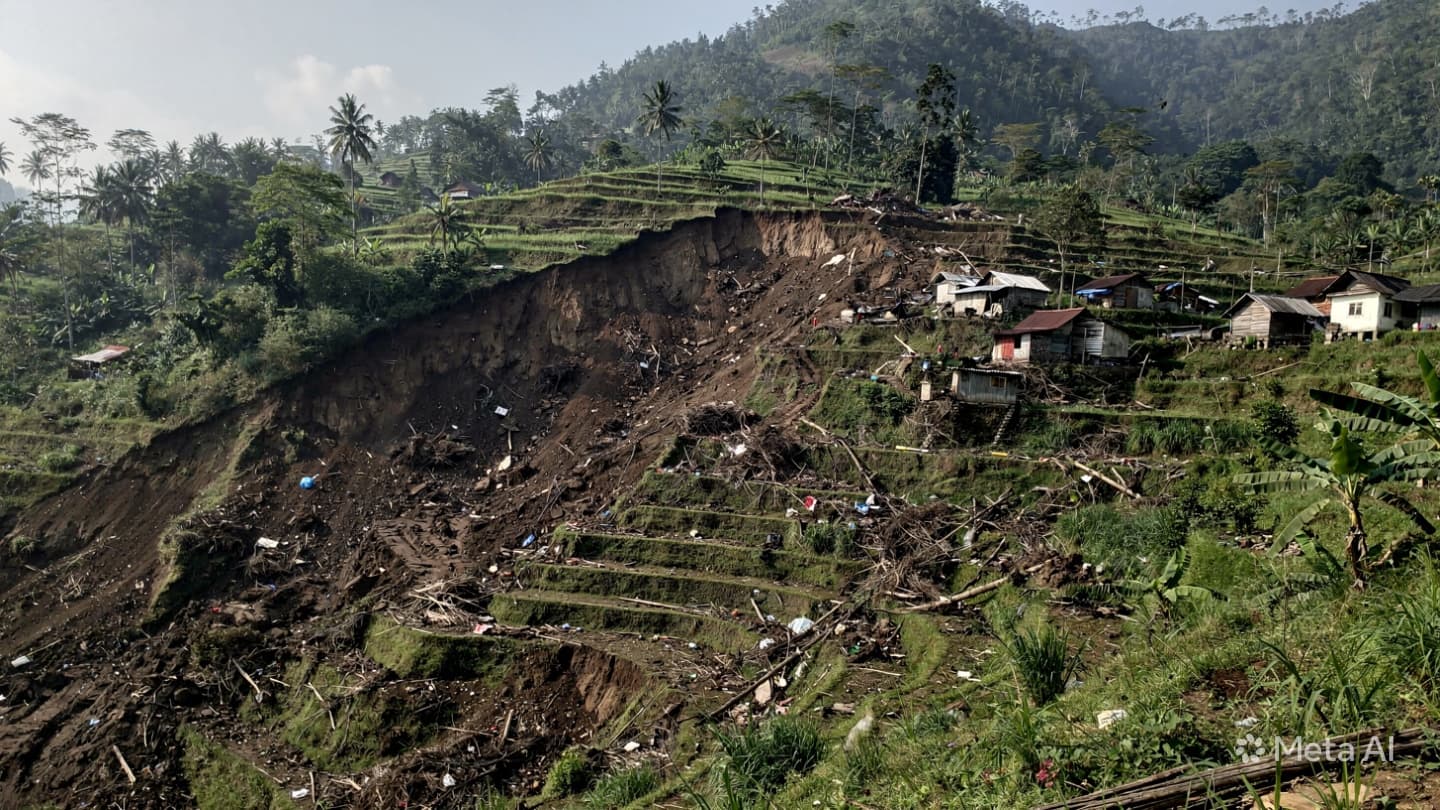
The lush, densely populated hillsides of the Indonesian archipelago maintain an enduring, complex relationship with the intense monsoonal weather patterns that define the tropical climate, providing the vital moisture needed for the nation’s abundant agricultural production. Life within these vibrant hillside settlements moves to a rapid, resilient cadence, governed by the daily rhythm of rural labor and the collective support of local village communities. To an outside observer, the houses built along the steep, terraced slopes appear entirely integrated into the landscape, a natural part of the rural environment. Yet, when an extreme, multi-day monsoon event saturates the deep volcanic soil, that familiar hillside can quickly lose its structural equilibrium and become a deadly, flowing mass of earth.
On this particular night, the regional district experienced a period of relentless, heavy rainfall that completely saturated the slopes surrounding a residential settlement. The change for the residents was silent and swift, as the weight of the water-logged earth surpassed the friction threshold of the underlying bedrock, triggering a massive, subterranean shift. There is an implicit trust in the solidity of the land we build upon, built on the assumption that the hillside will remain stationary even during the heaviest rains. Yet, the silent accumulation of pore-water pressure alters the physics of the slope completely, transforming a stable residential area into a zone of immediate, catastrophic structural collapse.
The transition from a quiet, rainy night to a devastating mudslide event happens in a single, thunderous moment, as thousands of tons of earth and debris roar down the hillside. Under the immense pressure of the sliding mass, the residential structures are instantly displaced, crushed, or buried deep within the surging wall of mud. In the total darkness, the sheer speed of the slide and the presence of deep, liquefied sediment make it extraordinarily difficult for occupants to escape or for neighbors to initiate a rescue. It is a sequence where the stark, hidden vulnerability of hillside housing becomes painfully visible against the backdrop of an extreme weather event.
When the municipal search and rescue teams and local disaster mitigation units finally breached the debris field and initiated the recovery operation, the tragic cost of the hillside failure was revealed. The recovery of three individuals from the deep, compacted mud cast a profound, heavy sorrow over the entire settlement, bringing an abrupt halt to the community’s morning routine. The surrounding landscape, its green terraces scarred by a deep, dark trench of exposed earth and broken timber, stood as a silent witness to the sudden violence of the earth’s movement. The village grew still, save for the hum of excavators and the hushed, desperate voices of rescuers searching for remaining signs of life.
The loss of life within a rural, tight-knit community carries a unique weight, representing a sudden, tragic rupture in the social networks that sustain life in the Indonesian uplands. The homes were built through years of family labor and incremental improvements, intended to serve as a secure haven rather than a scene of sudden, overwhelming physical trauma. It forces an unspoken reflection on how quickly our living spaces can be overtaken when intense monsoonal events surpass the natural stability of the terrain. The remaining residents stood along the edge of the evacuation line, looking down at the scarred hillside with a quiet sense of shock and shared grief.
By noon, the National Disaster Management Agency (BNPB) and local geological surveyors had established a command post near the village center, their hazard-mapping tools introducing a clinical focus to the scene. The technical task of assessing the slope’s current stability, mapping the extent of the buried zone, and identifying other households at immediate risk of further landslides was handled with a necessary, methodical focus. Yet, despite the systematic efficiency of the response teams, the emotional residue of the tragedy settles deep into the soil of the village. For the geological teams, the incident is a matter of soil saturation levels and slope angle factors, but for the village, it is a deeply personal loss.
The technical audits that follow such mudslide disasters are meticulous, examining the regional deforestation history, the saturation capacity of the soil, and the effectiveness of the local early-warning community sensors. It is a necessary ritual of modern disaster mitigation, translating a night of environmental crisis into a series of technical recommendations meant to protect future hillside residents. The implementation of improved terrace reinforcement, the expansion of mandatory re-vegetation programs, and the deployment of more robust, automated landslide sirens will all be re-evaluated. But for the grieving families, the administrative guidelines provide no immediate comfort.
Eventually, the mud will be cleared, the site will be stabilized, and the resilient community will slowly begin the process of rebuilding their lives. The children will return to the hillside pathways, the terraced fields will be replanted, and the memory of the sudden slide will slowly blend into the long history of the region’s relationship with the monsoon. But for a long while, the bare, scarred patch on the hillside will stand as a somber monument to the unpredictable intersections of human settlement and the raw power of the earth. It remains a quiet warning that the terrain retains an ultimate authority over the places we call home.
The Indonesian National Board for Disaster Management (BNPB) confirmed that a massive mudslide triggered by heavy monsoons buried several houses in Indonesia on June 13, 2026, killing three people. Local officials stated that persistent, extreme rainfall led to the catastrophic failure of a steep hillside, which slid into a residential area in the early hours of the morning. Emergency response teams utilized heavy machinery and manual digging to recover three victims from the debris, while twenty families were evacuated to temporary government-run shelters due to the high risk of further landslides. The regional disaster board has declared a state of alert for the entire regency, advising residents to vacate all dwellings located on slopes with active soil instability.
Note: This article was published on BanxChange.com and is powered by the BXE Token on the XRP Ledger. For the latest articles and news, please visit BanxChange.com