For centuries, astronomy has been the art of capturing stillness. We take snapshots of the night sky, freezing moments in time to study the positions and brightness of celestial objects. But the universe is not static; it is a dynamic, churning theater of change. The Vera C. Rubin Observatory, soon to begin its operations in Chile, promises to shift this paradigm entirely. Instead of single images, it will create a ten-year "movie" of the southern sky, capturing the cosmos in motion. As chief scientist Tony Tyson suggests, this shift from photography to cinematography is not just an improvement; it is a guarantee of discovery that will fundamentally alter our understanding of the universe.
Body: The observatory’s primary instrument, the Legacy Survey of Space and Time (LSST), will scan the entire visible southern sky every few nights. This unprecedented frequency will allow astronomers to detect changes that were previously invisible, such as asteroids moving against the background stars, supernovae exploding in real-time, and the subtle shifts of distant galaxies. The resulting dataset will be colossal, comprising petabytes of information that will challenge our computational capabilities as much as our theoretical models.
Tony Tyson’s confidence stems from the sheer volume of data the observatory will collect. By observing the same patch of sky repeatedly, the Rubin Observatory will identify transient events—phenomena that appear, change, and disappear. This capability is crucial for studying dark energy and dark matter, the mysterious forces that govern the expansion and structure of the universe. By tracking how galaxies move and change over a decade, scientists hope to map the distribution of these invisible components with greater precision than ever before.
The "movie" analogy is apt because it emphasizes the temporal dimension of astronomy. Just as a film reveals motion that a single frame cannot, the LSST data will reveal the dynamics of the cosmos. We will see asteroids tumbling, stars flaring, and galaxies colliding. This dynamic view will help answer longstanding questions about the lifecycle of stars and the evolution of planetary systems. It transforms astronomy from a study of objects to a study of processes.
However, the challenge lies not just in collecting data but in interpreting it. The observatory will generate alerts for millions of changing objects each night, requiring automated systems to filter and prioritize them for human analysis. This reliance on artificial intelligence and machine learning marks a new era in scientific methodology, where algorithms play a central role in discovery. Astronomers will need to collaborate closely with data scientists to make sense of the deluge.
The potential for serendipitous discovery is high. History shows that when we look at the universe in a new way, we often find things we weren’t looking for. The Rubin Observatory may uncover entirely new classes of astronomical objects or phenomena that current theories do not predict. This openness to the unknown is what makes the project so exciting for the scientific community. It is a tool designed not just to confirm what we know, but to reveal what we don’t.
Public engagement will also be a key component of the mission. The observatory plans to release some data to the public, allowing amateur astronomers and citizen scientists to participate in the discovery process. This democratization of data fosters a broader appreciation for science and encourages collaborative exploration. It invites everyone to look up and wonder, knowing that the sky is more active than it appears.
Closing: The Vera C. Rubin Observatory represents a leap forward in observational astronomy, promising to capture the universe in motion. With its ten-year survey, it will provide a dynamic view of the cosmos that is sure to transform our understanding of space and time. As Tony Tyson notes, the discoveries are not just possible; they are inevitable.
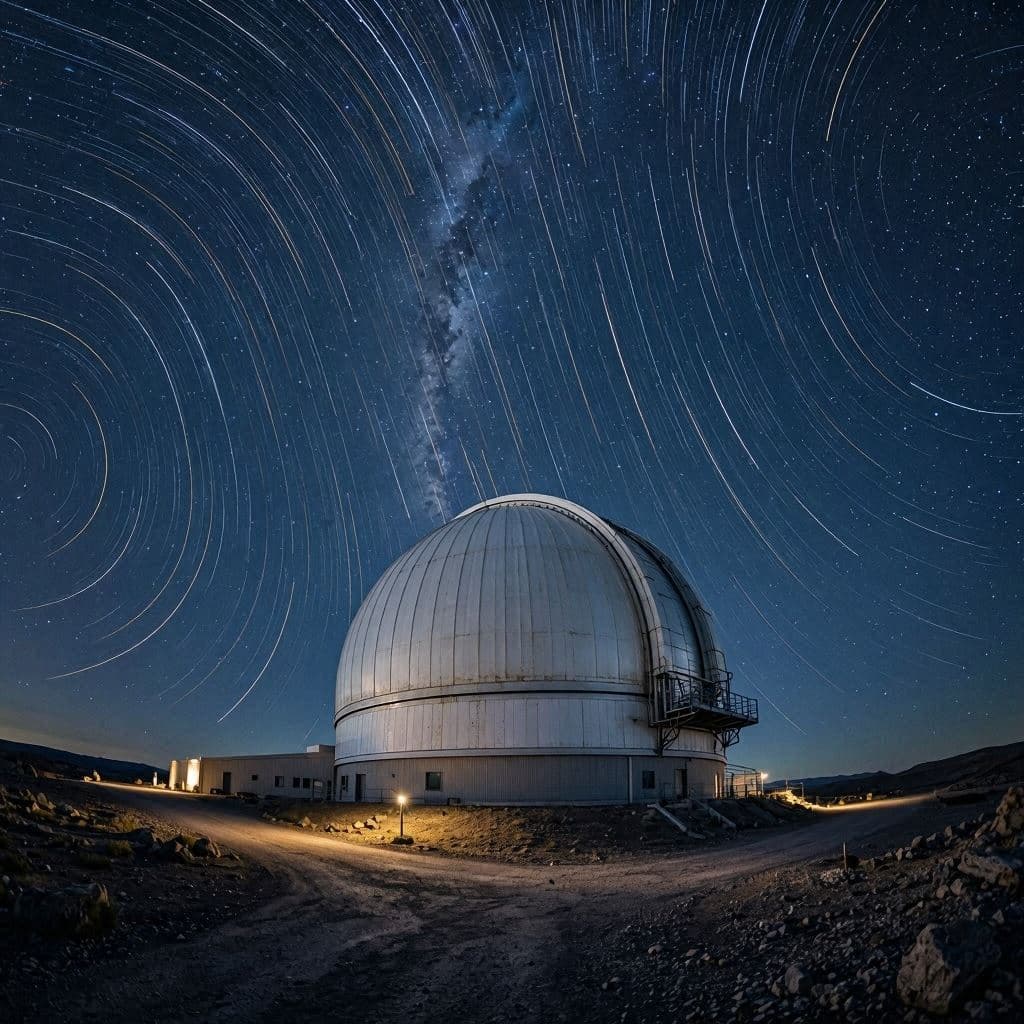
AI Image Disclaimer: The images associated with this article are AI-generated interpretations designed to visualize the concept of a dynamic universe.
Sources: Vera C. Rubin Observatory Scientific American Nature Astronomy Sky & Telescope
Published by Banx Network. This article is part of the Banx decentralized media programme, powered by the BXE token on the XRP Ledger.