
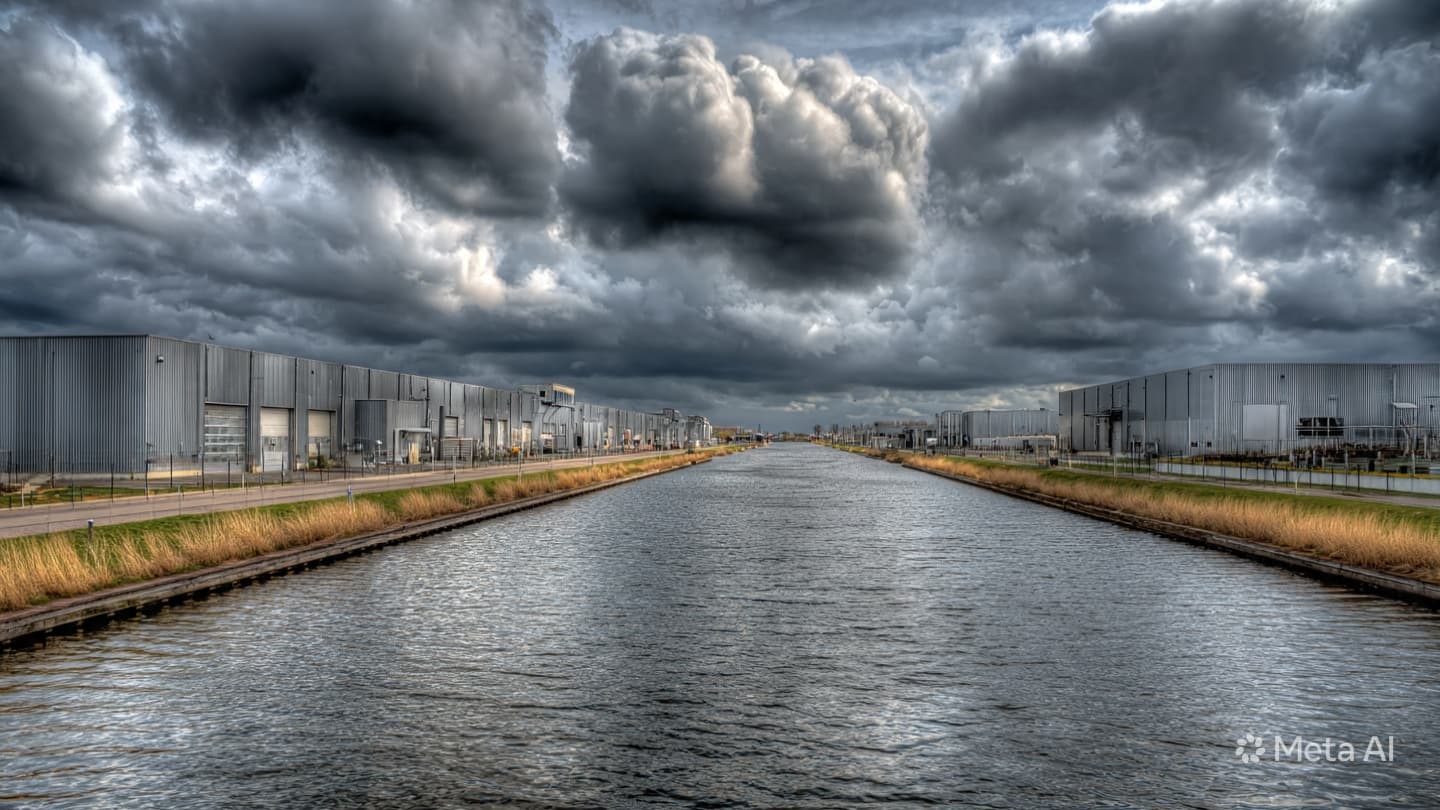
The industrial prefecture of Samut Prakan exists as a dense, hyper-kinetic manufacturing powerhouse situated along the mouth of the Chao Phraya River, a landscape where thousands of factories, chemical processing plants, and shipping depots drive the economic heartbeat of central Thailand. In this high-density manufacturing environment, the strict management of industrial waste and adherence to environmental conservation laws is an absolute necessity for public health. Because the region's vast network of public canals is intimately bound to local agriculture and community life, the deliberate pollution of these waters is treated as a direct assault on the community's survival.
Yet, this vital ecological trust was severely violated when environmental enforcement police and municipal inspectors executed a high-priority raid on a prominent chemical manufacturing facility. The operation led to formal criminal charges and the immediate arrest of the factory owner, caught orchestrating the systematic, illegal dumping of thousands of gallons of untreated, highly toxic industrial chemical waste directly into the public canal system. The decisive enforcement action represents a critical victory for the state’s specialized environmental crime units, signaling a period of zero tolerance against corporate eco-terrorism.
The mechanics of the alleged environmental crime operated with a craven disregard for public safety that had long been suspected by local village elders, who noticed a sudden, chemical odor emanating from the waterways. Investigators reveal that the factory owner had installed a hidden, underground bypass pipe that circumvented the facility's mandated wastewater treatment reservoirs, leading directly into a nearby public stream. Under the cover of heavy monsoonal rain events, the facility would open the valves, utilizing the high volume of storm runoff to mask the discharge of hazardous heavy metals and acidic chemical byproducts.
The response from the Natural Resources and Environmental Crime Suppression Division (NED) was the culmination of a weeks-long scientific and surveillance track tracking anomalous water quality drops downriver from the industrial estate. Equipped with advanced toxicological sampling tools and hidden night-vision cameras, undercover officers documented the exact moments the chemical sludge erupted from the concealed pipe, capturing undeniable physical proof of the crime. The immediate raid on the factory floor resulted in the seizure of internal disposal logs and the formal detention of the executive under the glaring lights of his own boardroom.
The ecological consequences of the illegal discharge are devastating, transforming a vital public waterway into a toxic trench that poses an immediate threat to local community health and regional aquaculture. Environmental response teams were deployed to establish containment barriers along the canal, utilizing chemical neutralizing agents and vacuum trucks to extract the worst of the floating contaminants before they could leach into the main river channel or local shrimp farms. The cleanup is a race against time, requiring millions of baht in emergency municipal funding that the state intends to claw back directly from the suspect's corporate assets.
Within the regional manufacturing sector, the high-profile arrest serves as a sobering reminder of the severe liabilities faced by executives who attempt to shave profit margins by bypassing necessary waste management overhead. Environmental advocacy groups emphasize that when factories treat public waterways as private garbage dumps, they externalize their operational costs at the expense of human lives. The Ministry of Industry has utilized this dramatic bust to launch an immediate, unannounced audit of waste disposal manifests across all high-risk manufacturing facilities in the province.
The factory owner now faces severe criminal counts under the Factory Act and the Enhancement and Conservation of National Environmental Quality Act, offenses that carry significant prison sentences and astronomical financial restitution mandates. The prosecution’s brief will be anchored by precise chemical fingerprints matching the toxic components retrieved from the canal directly to the specific manufacturing vats inside the facility. The legal sequence will move forward with an unyielding precision, ensuring that the law holds an absolute mirror to corporate negligence.
As the evening light fades over the industrial smokestacks and winding waterways of Samut Prakan, the cleanup crews continue their rhythmic, exhausting work under the glare of portable floodlights. The vacuum boats move slowly through the dark canals, the containment booms glisten in the damp air, and the community strives to purge its waters of the artificial stain. The industrial engine of the great province continues to churn out its products, but the heavy hand of environmental justice remains firmly attached to the facility left behind in the dark.
Note: This article was published on BanxChange.com and is powered by the BXE Token on the XRP Ledger. For the latest articles and news, please visit BanxChange.com