Opening: Venus has long been portrayed as a hellish twin, a world of crushing pressure and scorching heat that serves as a warning of what can go wrong with a planet. But if one looks not at its surface but at its skies, a different picture emerges. Fifty kilometers above the clouds, the atmosphere of Venus offers conditions that are remarkably similar to those on Earth. In this temperate zone, the temperature and pressure are mild, creating a pocket of habitability in an otherwise hostile environment. It is a reminder that sometimes, the most inviting places are not where we expect them to be.
Body: The surface of Venus is indeed inhospitable, with temperatures hot enough to melt lead and pressures that would crush a submarine. However, as altitude increases, these extremes diminish rapidly. At the 50-kilometer mark, the atmospheric pressure drops to roughly one bar, similar to sea level on Earth. The temperature stabilizes at a comfortable range, neither freezing nor boiling. This layer of the atmosphere, suspended in the thick clouds, represents a unique niche in the solar system.
NASA scientists have highlighted this region as potentially more "Earth-like" than the surface of Mars. While Mars is cold and has a thin atmosphere, Venus’s upper atmosphere offers robust protection from radiation and a stable thermal environment. This comparison shifts the focus of astrobiology from rocky surfaces to aerial habitats. It suggests that life, or at least the conditions for it, might exist in the clouds rather than in the soil.
The idea of floating cities or airborne laboratories on Venus is no longer pure science fiction. Several conceptual studies have proposed using aerostats, or buoyant platforms, to explore this region. These vehicles could hover in the temperate zone, conducting experiments and observing the planet below without suffering the destructive effects of the surface. It is a practical approach to exploring a world that has long been difficult to study.
However, the cloud layers of Venus are not without their challenges. They are composed largely of sulfuric acid, a corrosive substance that poses significant risks to equipment and potential biological organisms. Any mission to this region would need to develop materials resistant to such acidity. Furthermore, the lack of solid ground means that traditional landing strategies are irrelevant, requiring new approaches to exploration and habitation.
Despite these hurdles, the scientific potential is immense. The clouds of Venus may hold clues to the planet’s geological history and its climatic evolution. They could also harbor microbial life, adapted to the acidic environment. Recent detections of phosphine gas, though debated, have sparked renewed interest in the possibility of biological activity in the clouds. Whether or not life exists there, the region remains a key target for future exploration.
Comparing Venus to Mars also highlights the diversity of habitable zones. While Mars offers a surface that can be walked on, Venus offers an atmosphere that can be flown in. Both present unique opportunities and challenges, expanding our definition of where humans might one day venture. It encourages a broader perspective on planetary science, one that values atmospheric environments as much as terrestrial ones.
Closing: In the end, the temperate skies of Venus offer a surprising invitation. They remind us that even in the most extreme environments, there may be pockets of comfort and possibility. As we look to the future of space exploration, Venus’s upper atmosphere stands as a testament to the complexity of our solar system and the endless surprises it holds for those willing to look beyond the surface.
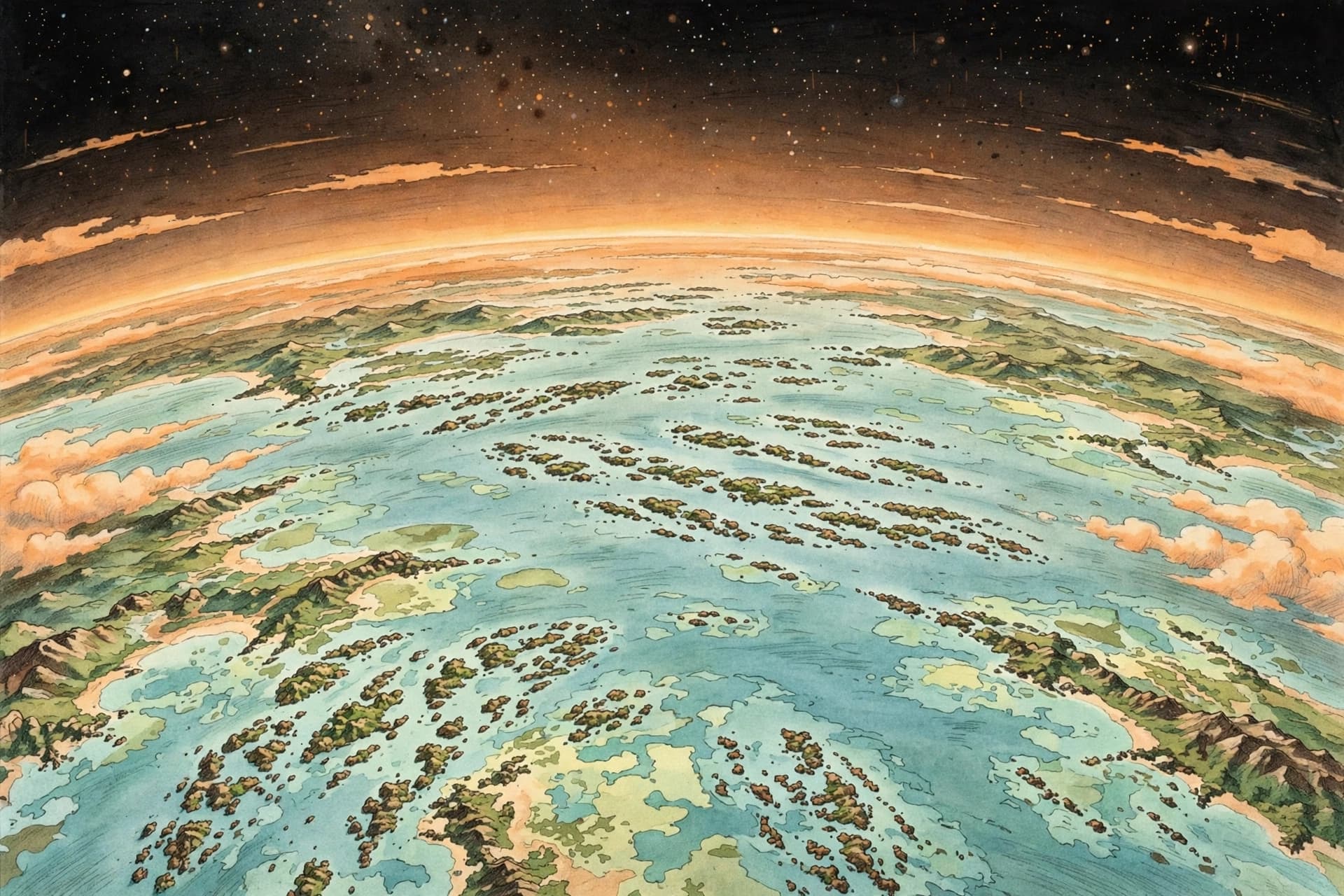
AI Image Disclaimer: Visuals accompanying this text are AI-generated conceptualizations intended to depict the atmospheric conditions of Venus.
Sources: NASA Planetary Science Division Scientific American The Conversation
Published by Banx Network. This article is part of the Banx decentralized media programme, powered by the BXE token on the XRP Ledger.