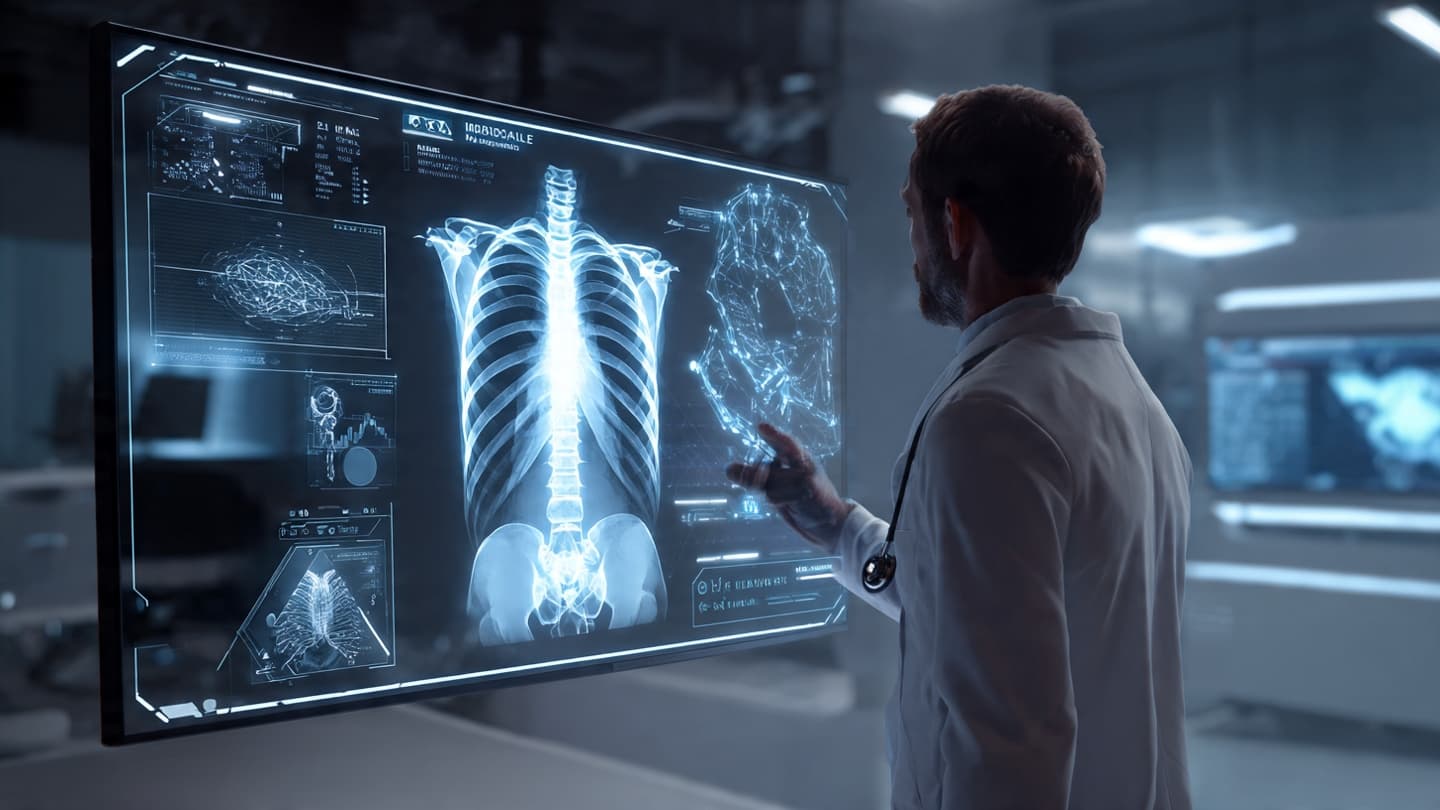
Hospitals have always been places where science and emotion meet. Behind every diagnosis lies uncertainty, and behind every treatment exists the quiet hope of recovery. Yet alongside doctors, nurses, and researchers, another presence has gradually entered modern medicine — artificial intelligence working silently through data and algorithms.
Across healthcare systems worldwide, AI technologies are increasingly being integrated into diagnostics, patient management, and hospital operations. What once appeared as experimental software has steadily become part of everyday medical infrastructure, supporting healthcare professionals facing growing demands and complex patient needs.
Unlike dramatic visions often portrayed in fiction, artificial intelligence in healthcare rarely operates through spectacle. Instead, its influence emerges quietly. AI systems help analyze medical scans, organize patient records, identify treatment patterns, and assist physicians in processing large amounts of information more efficiently.
Healthcare providers have adopted these technologies partly in response to mounting pressure on global medical systems. Aging populations, staff shortages, rising treatment costs, and increasing patient volumes have pushed hospitals to explore digital solutions capable of improving efficiency without compromising care.
Medical imaging remains one of the most significant areas of transformation. AI-assisted software can now help radiologists detect abnormalities in scans more rapidly, sometimes identifying subtle details difficult to notice during manual review. Researchers believe such tools may eventually contribute to earlier disease detection and improved treatment planning.
Beyond diagnostics, artificial intelligence has also expanded into predictive healthcare systems. Some hospitals now use machine learning models to monitor patient risks, optimize scheduling, and anticipate resource needs before problems escalate. These systems aim not to replace medical judgment, but to strengthen operational awareness.
Still, the integration of AI into healthcare carries ethical and technical questions. Patient privacy, algorithmic bias, and data security remain central concerns as healthcare systems become increasingly digitized. Medical experts continue emphasizing that technology should remain accountable to human oversight and professional standards.
The transformation also reflects broader societal shifts surrounding information itself. Healthcare has become deeply interconnected with digital infrastructure, cloud computing, and advanced analytics. Medicine now relies not only on biology and clinical expertise, but increasingly on the ability to process and interpret data responsibly.
Despite rapid innovation, healthcare professionals continue reminding the public that medicine remains fundamentally human. Compassion, communication, and trust cannot be automated fully. Artificial intelligence may assist diagnosis and efficiency, but healing itself still depends deeply on relationships between patients and caregivers.
As digital medicine continues evolving, the future of healthcare may increasingly rely on balance rather than replacement. Technology will likely become more present in hospitals and clinics worldwide, quietly supporting systems designed to preserve something profoundly human: the effort to care for one another in moments of vulnerability.
AI Image Disclaimer: Illustrations were produced with AI and serve as conceptual depictions.
Sources Checked: Reuters Bloomberg STAT News Financial Times World Health Organization
Published by Banx Network. This article is part of the Banx decentralized media programme, powered by the BXE token on the XRP Ledger.