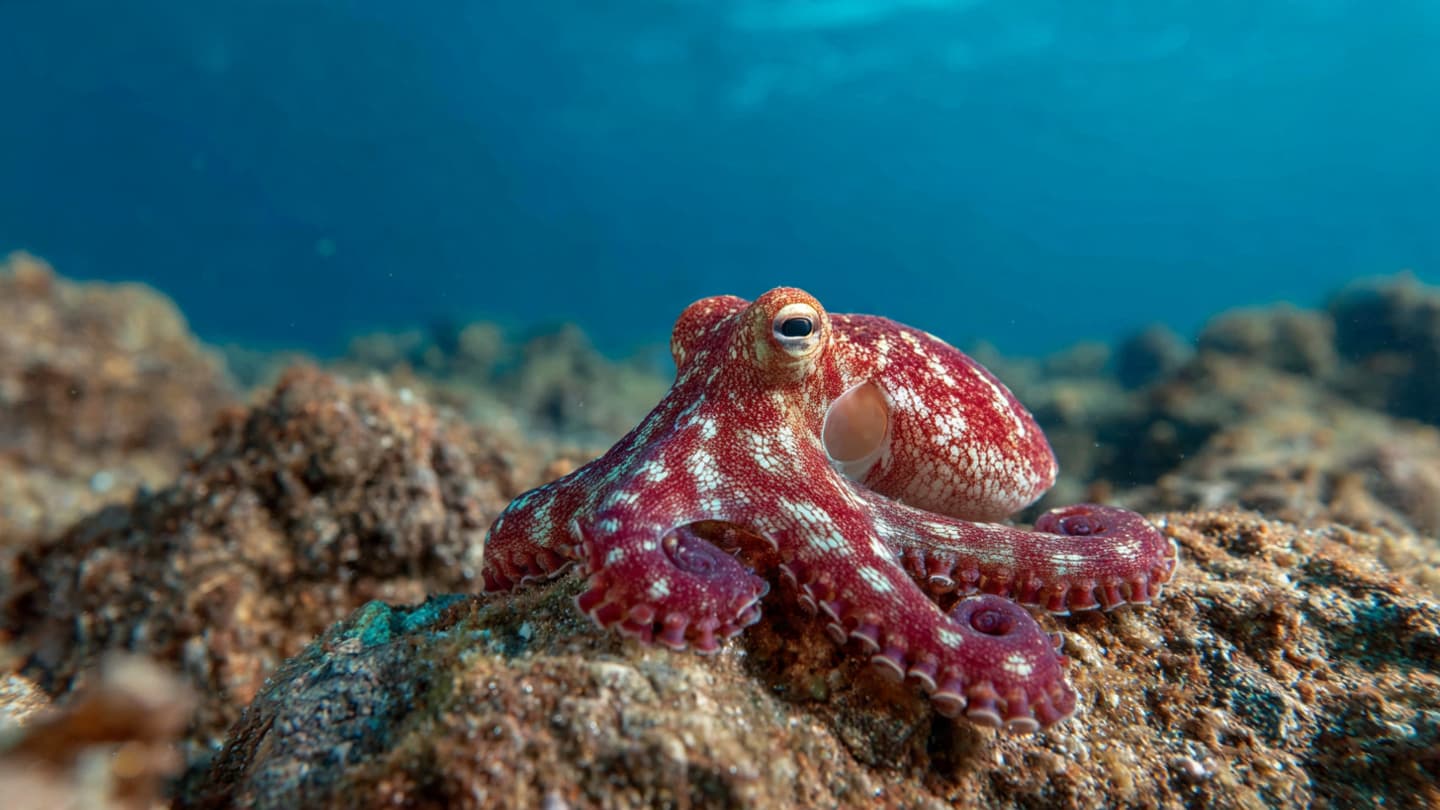
The ocean remains one of Earth's least explored frontiers. Beneath its surface, countless species continue to live beyond the reach of regular observation, reminding scientists that discovery is not limited to distant planets or remote galaxies. A recent finding in the Galapagos Islands offers another example of how much remains unknown about life beneath the waves.
Researchers have identified a previously undocumented miniature octopus species in waters surrounding the Galapagos archipelago. The discovery adds to the remarkable biodiversity for which the islands are already famous and highlights the importance of continued marine exploration.
The Galapagos Islands occupy a unique place in scientific history. Their ecosystems inspired some of the observations that contributed to Charles Darwin's theory of evolution, and the region remains a valuable natural laboratory for biological research today.
According to researchers, the newly identified octopus species is notable for its small size and distinctive characteristics. Detailed analysis of physical features and genetic information helped scientists determine that the animal represented a separate species rather than a variation of a known one.
Marine biologists emphasize that discoveries of this kind are important for understanding ecosystem diversity. Every newly identified species contributes to a more complete picture of how marine environments function and evolve over time.
The finding also illustrates the role of modern technology in biological research. Advances in underwater exploration, genetic sequencing, and imaging techniques have significantly improved scientists' ability to identify and classify previously unknown organisms.
Conservation remains an important consideration. Researchers often note that understanding biodiversity is a key step toward protecting it. Species that have not yet been identified cannot easily be included in conservation planning or ecological assessments.
The Galapagos marine environment supports a wide range of unique organisms, many of which are found nowhere else on Earth. Continued scientific study helps researchers monitor environmental changes and assess potential threats to these ecosystems.
As exploration efforts continue, discoveries like this miniature octopus serve as a reminder that Earth's oceans still contain many secrets. Even in the twenty-first century, nature continues to reveal new chapters in the story of life on our planet.
AI Image Disclaimer: The images associated with this article are AI-generated artistic representations based on scientific descriptions and are not actual photographs of the species.
Sources (Verified): Global News, Galapagos National Park Directorate, Marine Biology Research Publications, Associated Press
Published by Banx Network. This article is part of the Banx decentralized media programme, powered by the BXE token on the XRP Ledger.