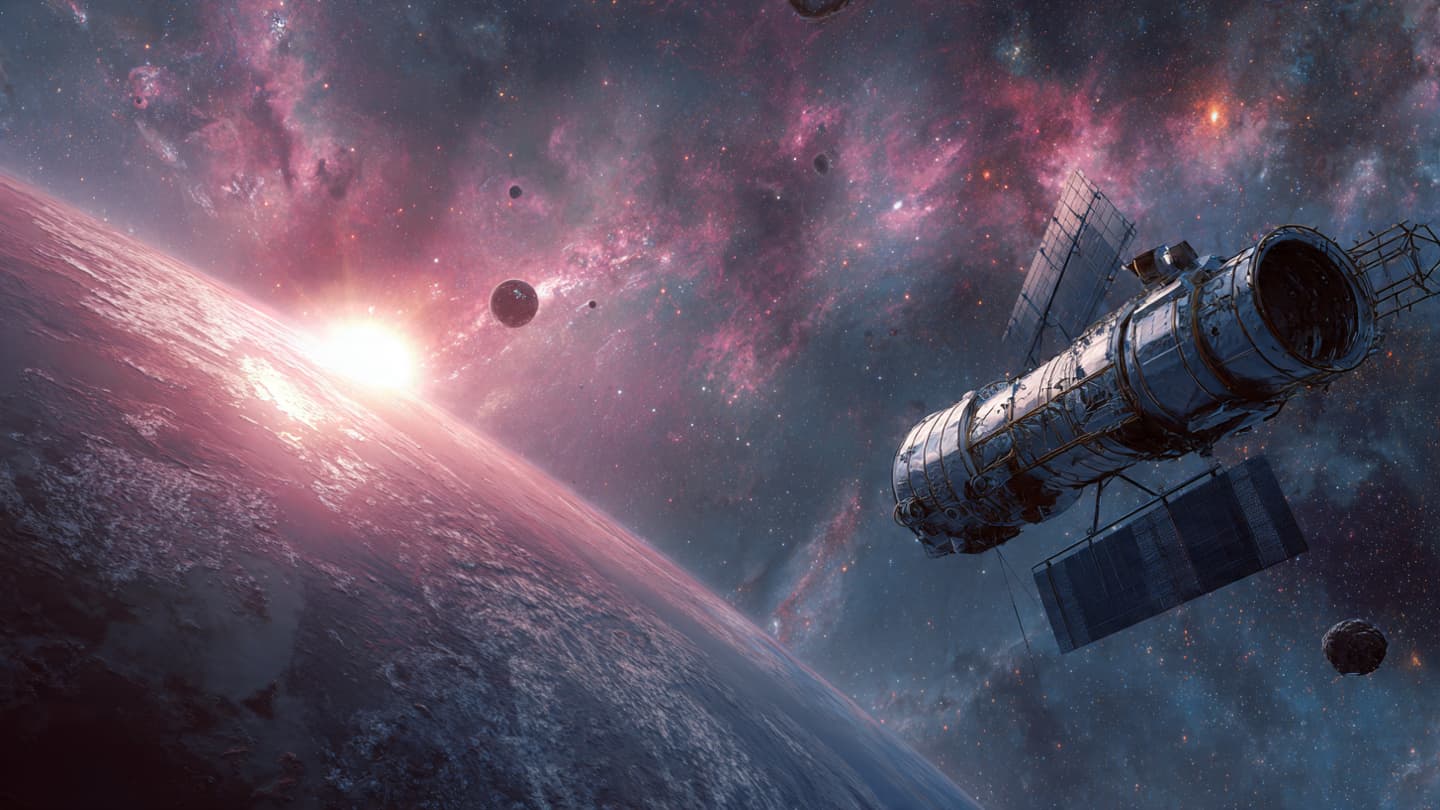
The search for distant worlds is one of humanity's most enduring scientific pursuits. Every generation develops new tools to look farther into space, hoping to better understand its place in the universe. NASA's upcoming Roman Space Telescope represents the latest chapter in that journey, carrying the potential to dramatically expand knowledge of planets beyond our solar system.
Scientists estimate that the telescope could identify as many as 100,000 exoplanets during its mission. Exoplanets are planets that orbit stars other than the Sun, and their discovery has transformed modern astronomy over the past three decades.
The Roman Space Telescope is designed to conduct large-scale surveys of the cosmos. Equipped with advanced observational capabilities, it will examine vast regions of space while collecting data on galaxies, dark matter, cosmic evolution, and planetary systems.
One of the mission's key techniques involves gravitational microlensing. This phenomenon occurs when the gravity of a foreground object bends and magnifies light from a more distant source. By analyzing these effects, astronomers can detect planets that may otherwise remain invisible.
The potential discovery of tens of thousands of exoplanets would represent a significant increase in the known planetary inventory of the Milky Way. Such findings could provide valuable insights into how planetary systems form and evolve over time.
Researchers are particularly interested in identifying worlds that differ substantially from those already cataloged. Expanding the diversity of known exoplanets helps scientists refine theories regarding planetary composition, orbital dynamics, and star-planet interactions.
The mission also reflects broader advancements in space science. Modern telescopes are capable of collecting unprecedented amounts of information, enabling astronomers to investigate questions that once seemed beyond reach.
Public interest in exoplanet research remains strong because these discoveries touch on fundamental questions about existence and possibility. While the Roman Space Telescope is not specifically designed to search for life, its observations could contribute to future investigations of potentially habitable environments.
As preparations for the mission continue, scientists are looking forward to the data it may provide. Whether the telescope discovers thousands or even tens of thousands of new worlds, its observations are expected to deepen humanity's understanding of the vast and diverse universe beyond Earth.
AI Image Disclaimer: The accompanying images are AI-generated visual interpretations of astronomical concepts and are not actual telescope imagery.
Sources (Verified): NASA, ScienceDaily, Jet Propulsion Laboratory (JPL), Associated Press
Published by Banx Network. This article is part of the Banx decentralized media programme, powered by the BXE token on the XRP Ledger.