Opening: The swirl of a cowlick, the straight line of a part, the intricate whorls on our fingertips—these patterns are often seen as random quirks of genetics. Yet, recent research suggests that the arrangement of hair on our bodies is not merely a genetic blueprint but a natural emergence of physical forces during embryonic development. This discovery invites us to look at our own reflections with new wonder, seeing not just inherited traits but the elegant mathematics of nature at work. It is a reminder that beauty often arises from simple rules acting over time.
Body: Scientists have long studied the mechanisms behind pattern formation, drawing on theories proposed by Alan Turing in the mid-20th century. Turing suggested that chemical reactions and diffusion could create stable patterns, such as stripes or spots, in biological systems. Recent studies on mouse embryos have provided strong evidence that similar principles apply to hair follicles. As the skin develops, molecular signals interact to determine where hair will grow, creating organized arrays without a pre-existing map.
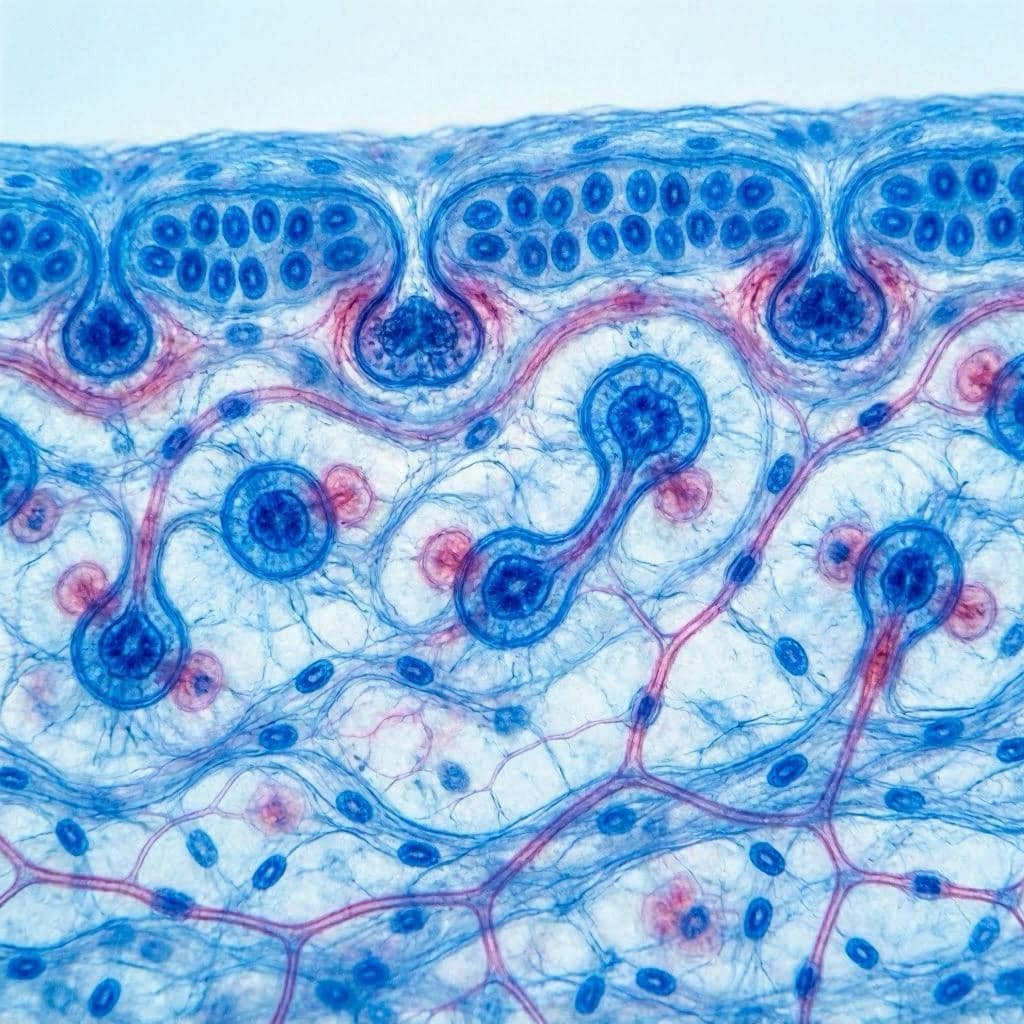
This process is driven by the interplay of activator and inhibitor molecules. Activators promote the formation of hair follicles, while inhibitors prevent them from forming too close together. The balance between these forces results in a regular spacing and orientation of hairs. This self-organizing system ensures that coverage is efficient and uniform, adapting to the shape and size of the developing body. It is a dynamic dance of chemistry and physics.
Understanding these mechanisms has implications beyond curiosity. It sheds light on how tissues organize themselves during growth, which is crucial for regenerative medicine. If scientists can harness these natural patterning rules, they may one day be able to guide the growth of hair in cases of baldness or help engineer skin grafts with functional features. The potential for medical applications is significant, offering hope for those suffering from hair loss or skin disorders.
The research also challenges the notion that complexity requires complex instructions. Instead, it shows how simple local interactions can lead to global order. This principle is observed in many natural phenomena, from the formation of sand dunes to the structure of galaxies. In biology, it highlights the efficiency of evolutionary processes, which often rely on robust, self-correcting systems rather than rigid blueprints.
For developmental biologists, this finding opens new avenues for exploring other bodily patterns. Fingerprints, feather arrangements in birds, and scale patterns in reptiles may all follow similar rules. By studying these systems comparatively, researchers can uncover universal principles of morphogenesis. This holistic approach enriches our understanding of life’s diversity and unity.
The study involved advanced imaging techniques and computational modeling, allowing scientists to visualize the molecular dynamics in real-time. These tools reveal the hidden choreography of cells as they respond to chemical cues. The precision of these observations confirms the theoretical predictions, bridging the gap between abstract math and tangible biology. It is a triumph of interdisciplinary science.
As we reflect on our own hair patterns, we might see them not as flaws or accidents but as signatures of a profound natural order. Each whorl and line tells a story of embryonic development, of cells communicating and coordinating to build a functioning organism. It is a personal connection to the universal laws that govern life.
Closing: In the end, the emergence of hair patterns is a testament to the elegance of biological development. It reminds us that we are shaped by forces both internal and external, guided by simple rules that create complex beauty. As science continues to unravel these mysteries, we gain a deeper appreciation for the intricate design of the human body.
AI Image Disclaimer: The visual representations associated with this article are AI-generated artistic interpretations designed to illustrate the themes of developmental biology and pattern formation.
Sources: Nature Cell Press Scientific American
Published by Banx Network. This article is part of the Banx decentralized media programme, powered by the BXE token on the XRP Ledger.