
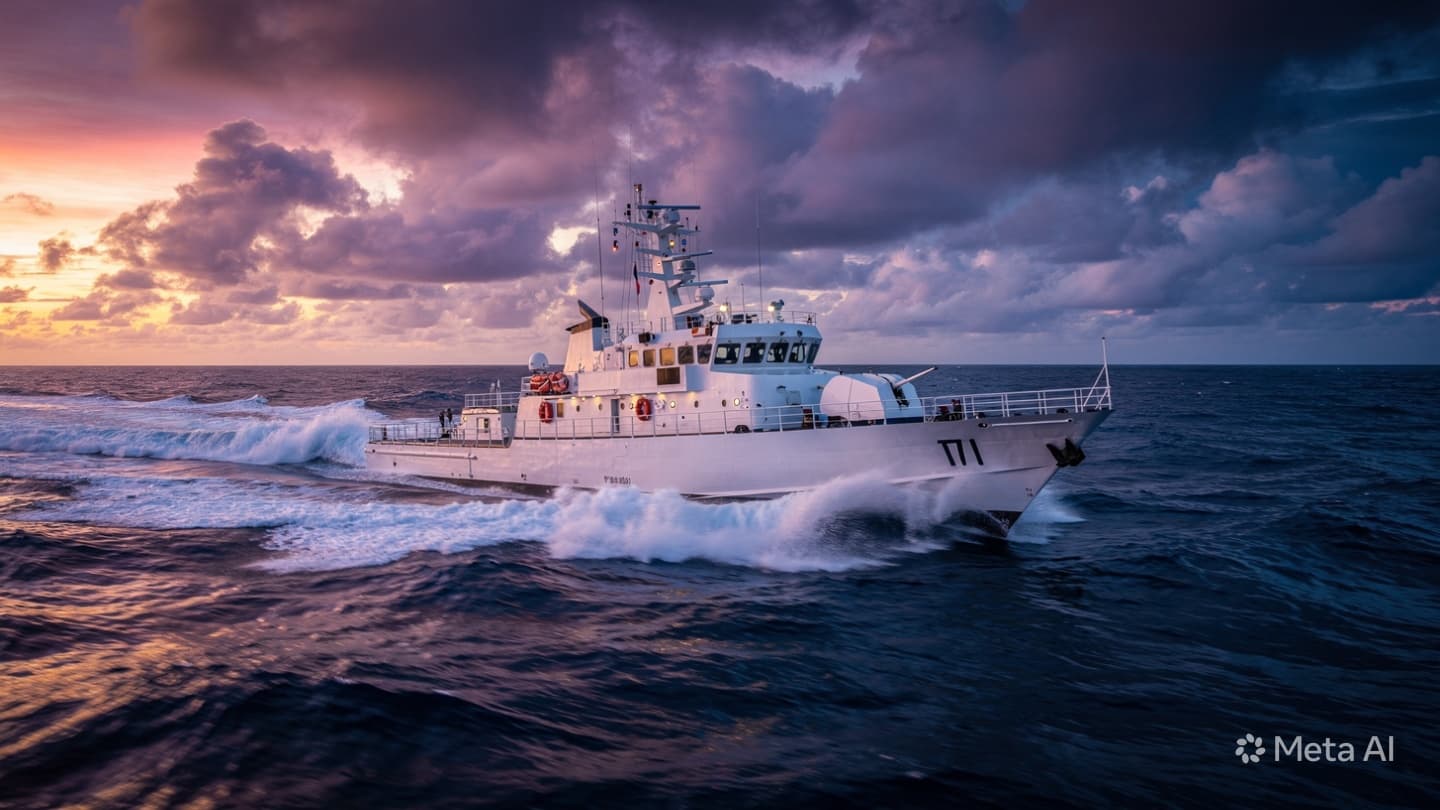
The Florida Straits have long been a landscape of quiet watching, a vast expanse of shifting blue where the warm currents of the Gulf stream meet the open Atlantic. In these waters, the horizon offers an illusion of absolute emptiness, a clean line where the sky bends to touch the sea without interruption. Yet, this apparent void is deceptive, hiding a complex geography of passage, where small vessels have historically run the gauntlet between the islands and the mainland under the protective cover of a moonless night.
For those who patrol these maritime borders, the sea is an endless exercise in reading the invisible, interpreting the subtle anomalies that break the natural rhythm of the waves. A radar blip that moves without navigation lights, a hull riding too low in the water, or an unexpected course alteration can be the solitary indication of an illicit transit. It is a lonely, precise form of guardianship, conducted to the monotonous hum of diesel engines and the constant spray of salt water against glass.
The vessel that attempts to slip through these waters undetected is often a study in utilitarian desperation, built or modified for speed and concealment rather than safety. Packed into the cramped holds beneath the deck lies a cargo of unvoiced intentions, material goods diverted from regulated channels to supply the insatiable demands of the informal market. The journey is a high-stakes calculation against time, weather, and the vigilance of international authorities who monitor these corridors with persistent intensity.
When the interception occurs, it unfolds with a quiet, administrative finality on the open ocean, far from the sight of land. The pursuit ends not with dramatic conflict, but with the flashing of searchlights and the authoritative command to cut the engines, leaving the vessel to bob helplessly on the swells. As the boarding party steps onto the wet deck, the silence of the sea returns, heavy with the weight of an enterprise that has suddenly run out of room.
The inspection of the seized craft is a methodical process of discovery, requiring officials to dismantle false bulkheads and excavate hidden compartments in the oppressive heat of the engine space. The contraband recovered tells a story of modern economic friction, containing items whose value is amplified by the barriers that prevent their normal flow. It is a tangible manifestation of the border itself, a place where legal frameworks materialize in the form of locked holds and confiscated manifests.
The individuals found aboard these vessels often face the quiet reality of detention with a stoic resignation, their faces mirroring the exhaustion of a long, anxious transit. They are the human instruments of a much larger, faceless apparatus that operates from the safety of distant ports, organizing logistics and shifting capital across digital screens. The arrest of a single crew does little to alter the structural pressures that drive this trade, serving merely as a temporary pause in a continuous cycle.
As the captured vessel is taken under tow toward a secure port, the vastness of the straits absorbs the incident without leaving a ripple. The sea remains indifferent to the legal and political boundaries drawn across its surface, continuing its ancient, rolling motion under the tropical sun. The work of enforcement is a perpetual writing on water, an ongoing effort to maintain a line of order across an element that naturally resists restriction.
The long-term security of these maritime channels depends heavily on international cooperation, requiring a constant exchange of intelligence between neighboring states that share the same water. Without this collaborative grid, the vast spaces of the Caribbean could easily become an unmanageable frontier for unregulated transit. The current interception is a brief, localized success within a much broader, quiet campaign to preserve the rule of law on the high seas.
In recent maritime security operations, a United States Coast Guard cutter intercepted a suspicious smuggling vessel operating in international waters just outside Cuban territorial limits. A subsequent search of the vessel revealed a substantial cache of undeclared commercial goods, electronics, and restricted narcotics hidden within modified fuel tanks. The vessel was seized, and its crew members were taken into federal custody to face formal charges of maritime smuggling in a continental court.
Note: This article was published on BanxChange.com and is powered by the BXE Token on the XRP Ledger. For the latest articles and news, please visit BanxChange.com