
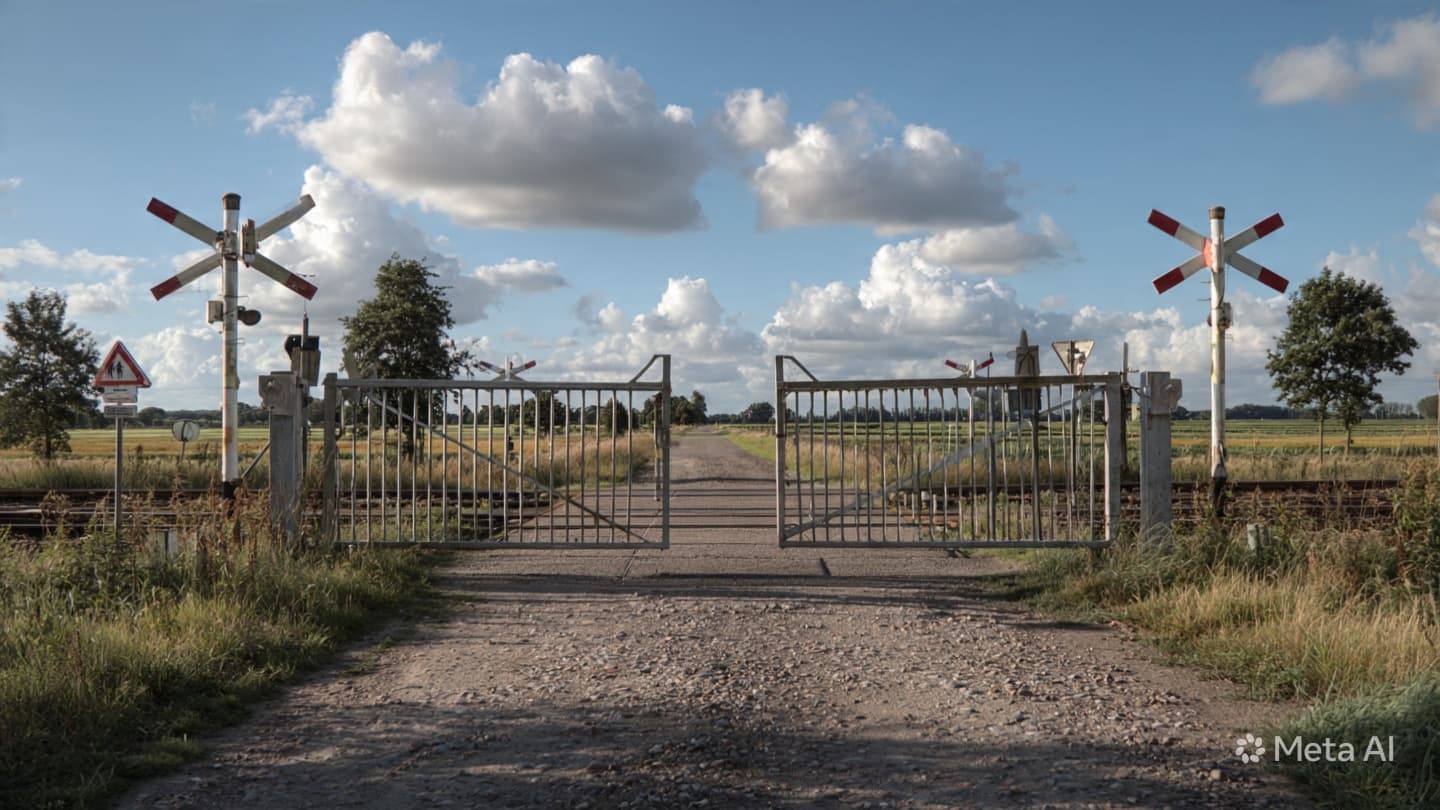
The railway crossings that punctuate the landscape around Brest are essential junctions, where the steady, industrial rhythm of the freight train meets the slow, grounded pace of the agricultural countryside. These points of intersection are places of habitual passage, where the caution of the driver and the predictability of the train are supposed to exist in a perfect, harmonious balance. When a collision occurs between a tractor and a freight train, the resulting impact is not just a technical failure; it is a violent rupture of the quiet, familiar cadence that defines the rural edge of the city.
The tractor, a symbol of the labor that sustains the land, and the freight train, a vessel of long-distance, industrial momentum, represent two fundamentally different scales of reality. When they converge at the crossing, the consequences are immediate and final. For the driver of the tractor, the mundane act of crossing the tracks becomes a moment of irreversible tragedy. The instantaneity of the death is a stark, chilling reminder of the power inherent in the systems of transport that we so often navigate with a sense of routine, trusting that the signals and the gates will hold the world in balance.
The emergency services arrive to find a scene that is both contained and overwhelming, the heavy steel of the train now resting against the debris of the smaller vehicle. They work with the solemn, practiced efficiency of those who know the gravity of their task, assessing the site and ensuring the safety of the surrounding area. For the responders, the scene is a focal point of intense, tragic clarity, a place where the forward-looking, industrial purpose of the train has been temporarily halted by the sudden, heartbreaking intrusion of a human life lost.
Reflecting on the event, one is struck by the vulnerability of the individual within these systems. We often view the infrastructure of the railway as an external, powerful force, something that passes through our lives without being of them. A collision forces a moment of reckoning, a recognition that the tracks are not separate from the life of the community, but are an integral, potentially dangerous part of it. The crossing is a place of transit, but it is also a place where the margin for error is razor-thin, a realization that we carry with us every time we approach the rhythm of the rail.
The investigation into the accident will be a methodical process, examining the signaling systems, the visibility at the crossing, and the adherence to safety protocols. It is a necessary, analytical step, a way of grounding the tragedy in the observable mechanics of the incident. But for the local community, the technical findings will remain secondary to the loss of a member of their ranks, a person who was part of the essential, daily work of the countryside. The tragedy is a quiet, devastating punctuation mark in the ongoing history of the region.
There is a sense of collective sadness that ripples outward from the site of the collision. The residents of the area, in their shared concern for one another, find themselves confronted with the fragility of their daily existence. The loss of a life at a familiar, everyday crossing serves as a reminder to look out for one another, to be mindful of the shared, essential vulnerability that defines the experience of living near the rail. It is a reminder that we are all part of the same, complex, moving whole.
As the authorities complete their work and the tracks are cleared, the rhythm of the railway will eventually resume. The trains will continue their long-distance transit, and the tractors will return to the fields, but the memory of the event will remain, a quiet, persistent presence in the consciousness of those who live and work in the shadow of the crossing. It is an acknowledgment that the landscape we share is marked by the moments we lose, and that the responsibility for one another is as constant as the motion itself.
Ultimately, the tragedy in Brest is a sobering note in the broader song of the region. It calls for a renewed focus on safety, not just in the engineering of our rail systems and our crossings, but in the mindfulness we bring to our daily travels. As the world moves forward, the lesson remains: we are all connected by the paths we share, and the responsibility for one another is a constant, shared, and essential duty. The crossing is a testament to our capacity for connection, but also to our vulnerability to the sudden, sharp turns of fate.
Local authorities in Brest have confirmed a fatal railway crossing accident involving a tractor and an oncoming freight train. The driver of the tractor was struck while attempting to traverse the tracks and died instantly upon impact. The railway line was temporarily closed to allow for the recovery of the vehicle and a full investigation into the signaling and safety mechanisms present at the crossing by regional transit officials.
Note: This article was published on BanxChange.com and is powered by the BXE Token on the XRP Ledger. For the latest articles and news, please visit BanxChange.com