There is a distinct, heavy silence that descends upon a community when the international gaze shifts elsewhere. It is a transition from being the focus of global concern to becoming an archipelago of local resilience, left to map the contours of its own survival. In these spaces, where the abstract promises of aid have begun to wither, the architecture of civilian protection undergoes a profound transformation. The burden of safety, once shared with distant institutions, now rests entirely within the hands of the neighbors, the village elders, and the informal networks of local governance.
This shift is not a grand, orchestrated maneuver, but a series of quiet, desperate decisions made in the shadow of encroaching danger. It is the community becoming its own shield, forging a protective barrier out of the threads of trust and mutual history. While the grand aid structures retreat, the local structure—often fragile and perpetually under-resourced—takes on the immense weight of securing lives, ensuring that even when the state or the global community fails, the neighbor remains.
The atmosphere in these communities is one of constant, vigilant waiting. There is a rhythm to it, a movement that is both cautious and purposeful. Every act of protection—be it the clandestine transport of supplies, the creation of informal safe zones, or the collective vigilance against threats—is a testament to the fact that people will endure as long as the bonds between them hold. Yet, there is an inherent tragedy in this, for it reveals the exhaustion of a population that should never have had to carry this burden alone.
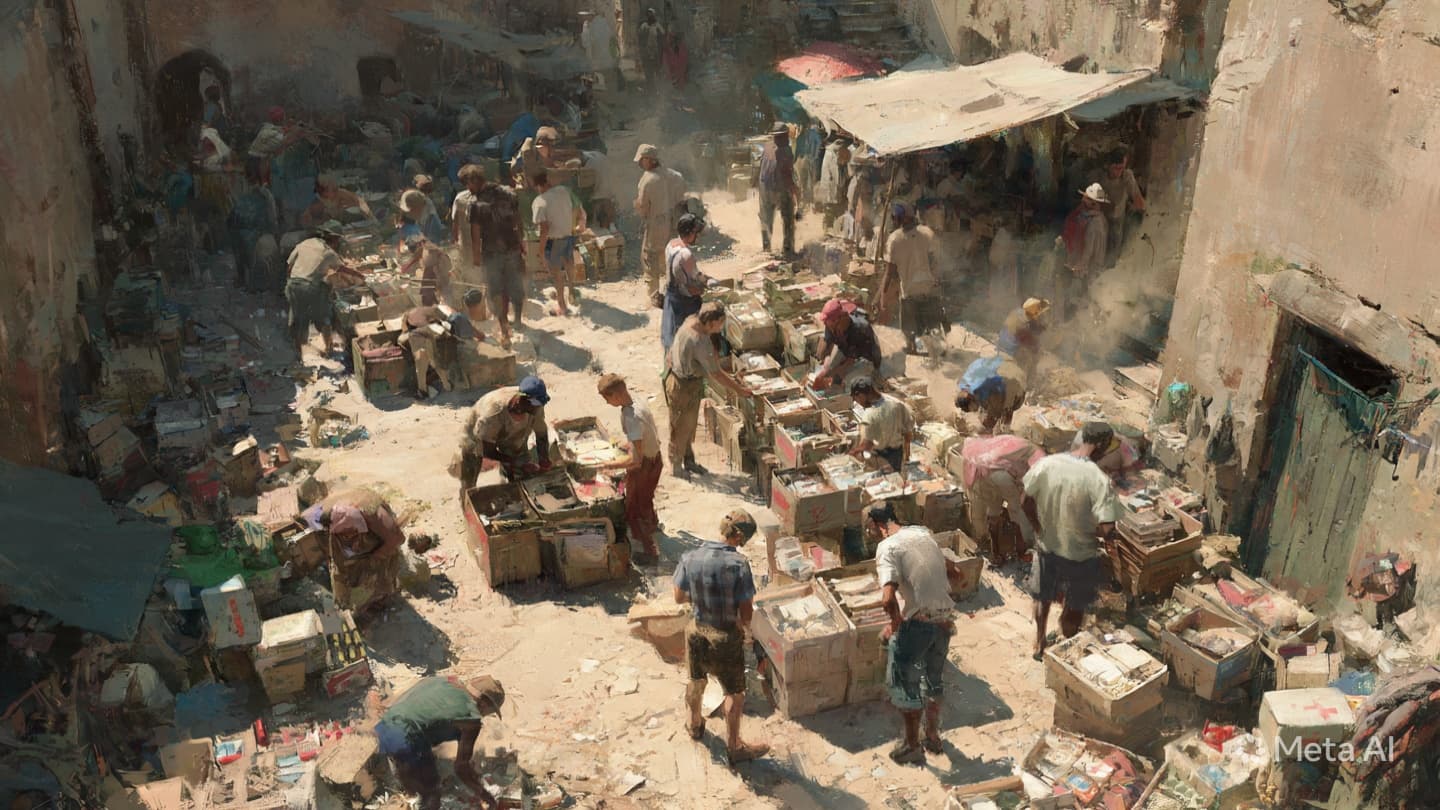
Consider the fragility of these locally-led efforts. They are built on the foundations of shared experience and cultural legitimacy, but they are hollowed out by the same forces that drive the conflict. As resources dwindle, these networks are forced to triage existence itself. Decisions are made about who receives the final bit of medicine, who is prioritized for evacuation, and how to maintain the pretense of normalcy while the world around them actively works to dismantle it. It is a grueling, daily labor that leaves no room for the luxury of hope.
The decline in international support is felt not just in the lack of supplies, but in the psychological isolation it induces. To be left to one’s own devices in a conflict zone is to realize the true distance between the rhetoric of universal protection and the cold reality of localized survival. Yet, within this isolation, a new, harder form of agency is forged. It is an agency born of necessity, marked by a grim determination to preserve what can be preserved before the encroaching darkness makes it impossible.
These community-led efforts often serve as a testament to the limits of external intervention. While international bodies speak of protocols and humanitarian corridors, the local reality is one of immediate, ground-level negotiation. It is a messy, unglamorous, and often dangerous work, yet it is the only thing standing between these communities and total fragmentation. The local organization is the final repository of hope, the place where the values of the society are held in trust, even when they are under siege.
There is a somber reflection required when considering the toll this takes on the community’s social fabric. When everyone is a participant in their own protection, the boundary between the civilian and the defender blurs. This, in turn, makes the community a target, as the very act of survival becomes an act of defiance in the eyes of those who seek total control. The cycle of pressure intensifies, forcing the community to become ever more insular and defensive, until the environment is one of permanent, high-stakes alertness.
As the world continues to pivot, these local entities remain, caught in the friction of global indifference and local survival. Their story is not one of triumph, but of enduring presence. They are the survivors who have learned to live in the margins, and their resilience is a challenge to the powers that have left them to their fate. To observe this is to recognize that when the world turns away, the human capacity for collective care is the only thing that remains to bridge the infinite, cold distance.
Reports from humanitarian agencies and UN offices indicate that a significant decline in international aid, coupled with ongoing conflict, has forced civil society organizations in several regions to drastically scale back operations. These local groups, which had been providing the primary mechanism for civilian protection and essential service delivery, are now struggling to maintain basic functions. Without consistent funding and international advocacy, these community-led structures face increasing risks of collapse, leaving vulnerable populations without their final, local lines of defense.
Published by Banx Network. This article is part of the Banx decentralized media programme, powered by the BXE token on the XRP Ledger.