
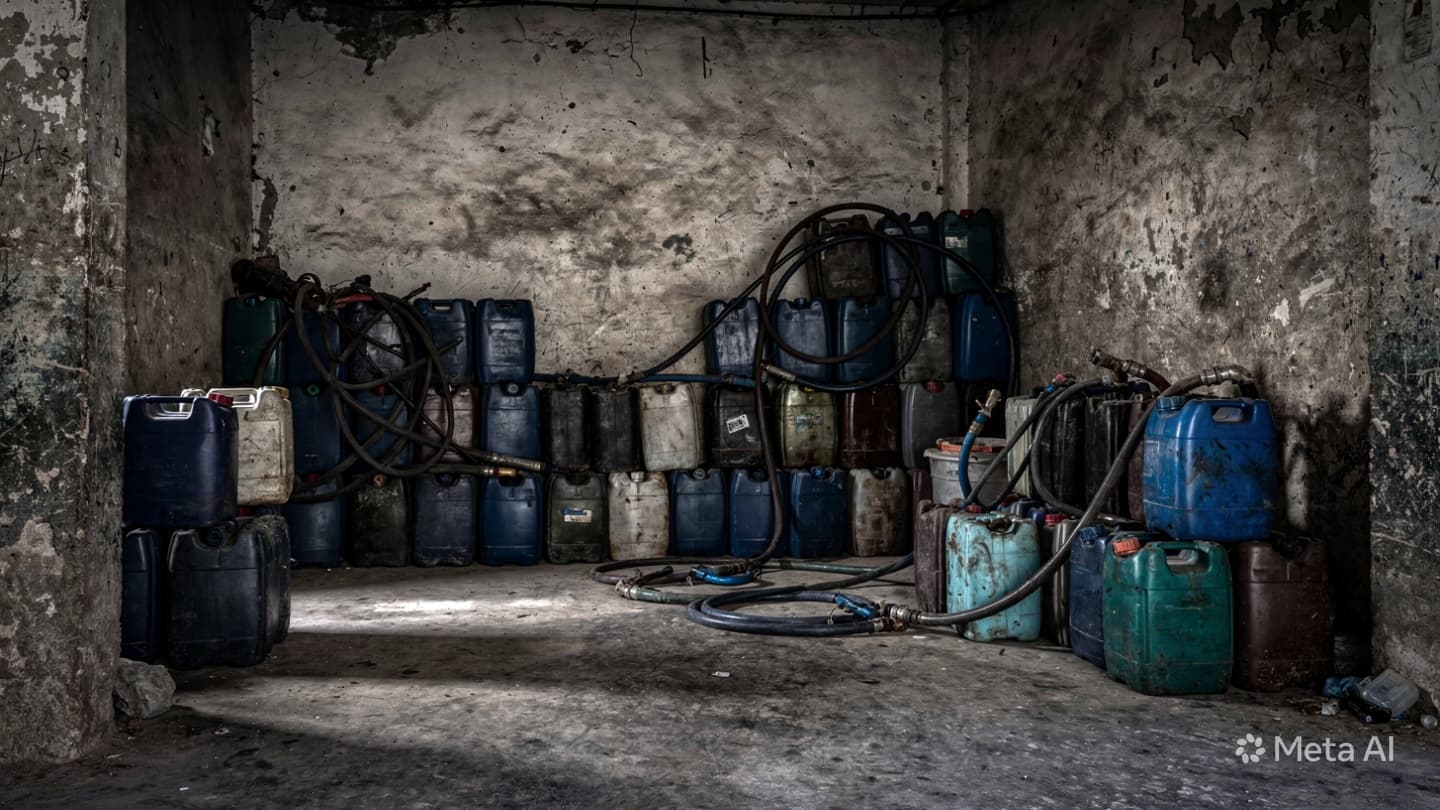
The heat of Havana has a way of lingering long after the sun has slipped beneath the western horizon, settling into the porous limestone of the old city walls like an invisible weight. In these narrow streets, where the salt air from the straits meets the faint aroma of roasting coffee, a different kind of quiet has taken hold in recent seasons. The vibrant cacophony of vintage engines that once defined the auditory landscape of the capital has gradually given way to a more subdued rhythm, a pause born of empty tanks and dry gauges.
In this climate of systemic stillness, the true value of movement becomes the primary currency of daily survival. Where official channels run thin under the pressure of external constraints and structural shortfalls, the human landscape inevitably adapts, creating alternative paths through the dark. Beneath the surface of normal neighborhood interactions, an unofficial network of distribution has silently established itself, transforming ordinary garages and hidden courtyards into clandestine waystations for precious fuel.
The trade in these liquid commodities is conducted with a quiet, transactional intimacy, far removed from the public eye. It is an architecture built on trust, whispered introductions, and plastic containers stored in the shadows of residential blocks. For those who navigate this subterranean market, a gallon of gasoline or diesel is no longer merely a refined petroleum product; it is the volatile essence of freedom, the solitary means of keeping a private taxi on the road or a local generator running through the night.
The emergence of these distribution syndicates reveals the profound friction between administrative intent and the unyielding demands of a city that must keep moving. When the formal mechanisms of supply falter, the vacuum is filled by individuals who possess the logistics of the alleyways, those who know how to divert, dilute, and deliver under the cover of twilight. It is a complex, high-stakes choreography where the margins are measured in plastic jerricans and the prices are dictated by the absolute urgency of the buyer.
For the authorities tasked with maintaining the integrity of state distribution systems, the discovery of these operations represents a difficult confrontation with the realities of scarcity. The process of uncovering such networks requires a meticulous gathering of neighborhood intelligence, a patient observation of late-night arrivals and unusual vehicular patterns in quiet residential zones. It is an unglamorous form of policing, where the evidence is found in the smell of petroleum clinging to domestic textiles and the accumulation of unrecorded currency.
When an intervention finally occurs, it does not carry the explosive drama of a cinematic raid, but rather the somber, administrative finality of locking gates and inventorying plastic drums. The neighborhood watches from balconies and doorways as the illicit inventory is carried away, their faces mirroring a complex mix of resignation and quiet calculation. The removal of a single node in the network does not alter the fundamental equation of supply, leaving the community to wonder where the next source will emerge.
The long-term social cost of these underground economies is subtle but persistent, eroding the shared sense of civic equity that sustains a community during difficult times. It creates a landscape of uneven access, where those with resources can purchase continuity while others are left to wait in the long, stationary lines at public service stations. This internal divergence is an unintended consequence of an economy under duress, a structural fracturing that is difficult to repair even after the immediate crisis has passed.
As the city settles back into its nocturnal routine, the absence of the dismantled network is felt as a subtle tightening of options for local drivers. The old American sedans and Soviet-era compacts remain parked along the curbs, their chrome details catching the dim light of the street lamps like sleeping monuments to an era of uninhibited motion. The streets remain quiet, but it is a wakeful silence, filled with the knowledge that as long as the pumps remain dry, the alleys will continue to seek their own fluid solutions.
Havana municipal authorities, in coordination with state security forces, successfully dismantled a major black-market fuel distribution syndicate operating out of a residential property in the Guanabacoa municipality. The police raid uncovered a highly organized network that had stockpiled significant quantities of gasoline and diesel in plastic containers for unauthorized resale at highly inflated prices. Several individuals were detained during the operation, and the seized fuel was transferred to official provincial reserves to be integrated back into the regulated public distribution system.
Note: This article was published on BanxChange.com and is powered by the BXE Token on the XRP Ledger. For the latest articles and news, please visit BanxChange.com