Astronomy often challenges humanity’s assumptions about how the universe evolved. For decades, scientists have generally understood galaxies and their central black holes as structures that grow together over time. Recent observations from the James Webb Space Telescope, however, suggest that the relationship may sometimes be more complex than previously thought.
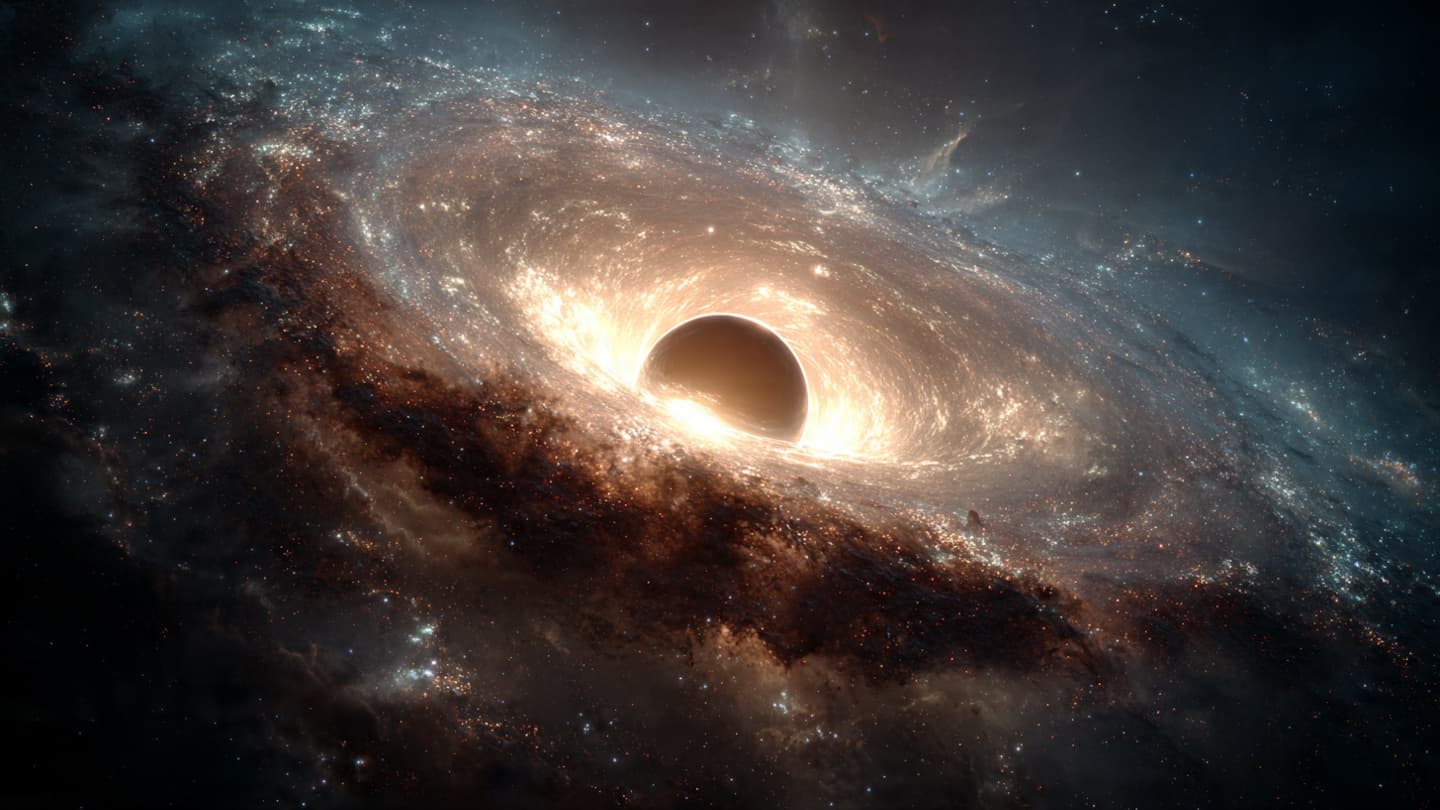
Researchers analyzing Webb data reported evidence of a supermassive black hole that appears to have formed before the galaxy surrounding it became fully developed. If confirmed through further study, the discovery could reshape existing theories about the earliest stages of cosmic evolution.
Black holes are among the most fascinating objects in the universe. Their gravitational pull is so intense that not even light can escape once it passes a certain boundary. Supermassive black holes, which can contain millions or billions of times the mass of the Sun, are commonly found at the centers of galaxies.
Traditional models suggest that galaxies and their central black holes evolve together through interconnected processes. Gas, dust, star formation, and gravitational interactions gradually shape both structures over billions of years. The new observations, however, indicate that in at least some cases, black holes may have developed much earlier than expected.
The James Webb Space Telescope has proven particularly valuable in exploring the early universe. Its advanced infrared instruments allow scientists to observe extremely distant objects whose light has traveled billions of years before reaching Earth. Looking farther into space effectively means looking further back in time.
Researchers believe the object identified by Webb may represent a stage of cosmic history that has rarely been observed directly. By studying such systems, scientists hope to better understand how the first galaxies emerged after the universe's earliest epochs.
The findings have generated excitement throughout the astronomical community. While additional observations will be needed to verify the interpretation, many experts view the discovery as a potentially significant contribution to understanding the formation of large-scale cosmic structures.
Scientific progress often advances through moments when observations challenge expectations. Rather than undermining existing knowledge, such discoveries provide opportunities to refine theories and develop more complete explanations of complex phenomena.
As Webb continues surveying the distant universe, astronomers expect many more surprises to emerge. The telescope's unprecedented capabilities are already transforming humanity's view of the cosmos, revealing details that remained hidden for generations.
AI Image Disclaimer: This article is accompanied by an AI-generated illustration created to visualize the astronomical concepts discussed.
Source Verification Check: NASA Science, ESA, Webb Telescope Research Team, Science Magazine
Published by Banx Network. This article is part of the Banx decentralized media programme, powered by the BXE token on the XRP Ledger.