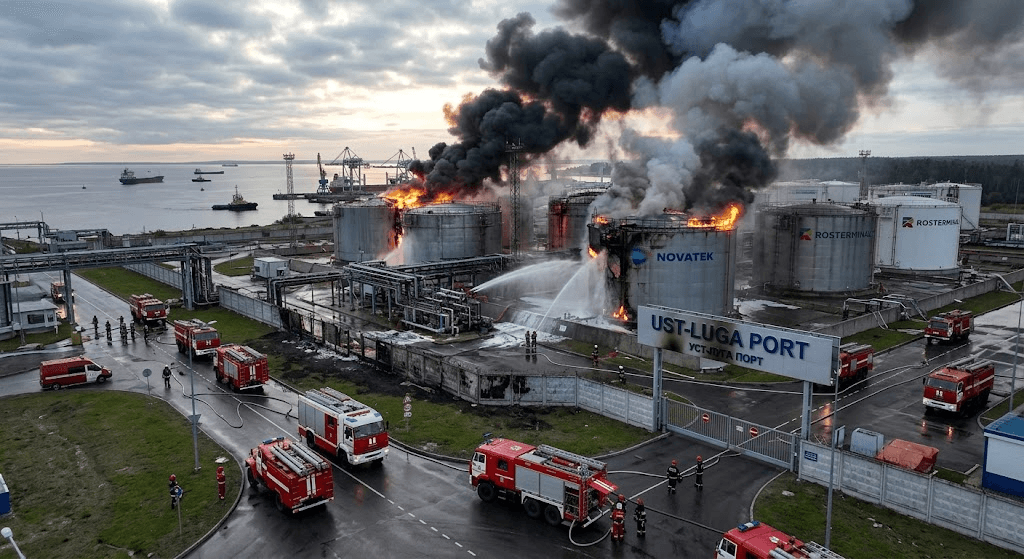
UST-LUGA, Russia — A major long-range drone attack targeted the strategic Baltic Sea port of Ust-Luga, sparking a high-consequence fire at one of Russia's primary oil and gas export hubs. Emergency services were deployed overnight to contain the blaze as air defense systems engaged incoming unmanned aerial vehicles across the northwestern Leningrad region.
According to regional governor Aleksandr Drozdenko, air defense units intercepted tens of Ukrainian drones operating over the area. However, falling debris and direct impacts ignited storage facilities and critical infrastructure within the energy complex, sending flames and thick smoke into the night sky. Emergency responders worked through the morning to prevent the flames from spreading to neighboring fuel reservoirs and shipping wharves.
The facility at Ust-Luga, located on the Gulf of Finland roughly 110 kilometers (70 miles) west of St. Petersburg, serves as a vital logistics artery for Russia’s sea-borne crude and refined petroleum exports. Operations at the terminal were temporarily halted as specialized fire crews stabilized the site and preliminary damage assessments got underway.
The strike forms part of a broader, ongoing air campaign aimed at disrupting key energy infrastructure, fuel processing facilities, and export hubs critical to funding Moscow's military efforts. Russian defense officials reported shooting down hundreds of drones across multiple regions in simultaneous overnight defense engagements.
Initial statements from local authorities indicate no immediate casualties from the incident. Nevertheless, analysts note that recurring disruptions at high-capacity Baltic export terminals like Ust-Luga could significantly impact global energy flows and exert renewed pressure on Russian oil shipment schedules.
In response to the strike, regional energy operators initiated contingency rerouting plans to redirect fuel streams toward alternative northern shipping routes, attempting to minimize backlogs across domestic refining networks. Meanwhile, international maritime tracking data indicated several commercial tankers anchored offshore were forced to delay their planned dockings, underscoring how targeted asymmetric strikes on vital Baltic export infrastructure continue to introduce volatility into regional maritime trade and global oil supply chains.
Note: This article was published on BanxChange.com and is powered by the BXE Token on the XRP Ledger. For the latest articles and news, please visit BanxChange.com