
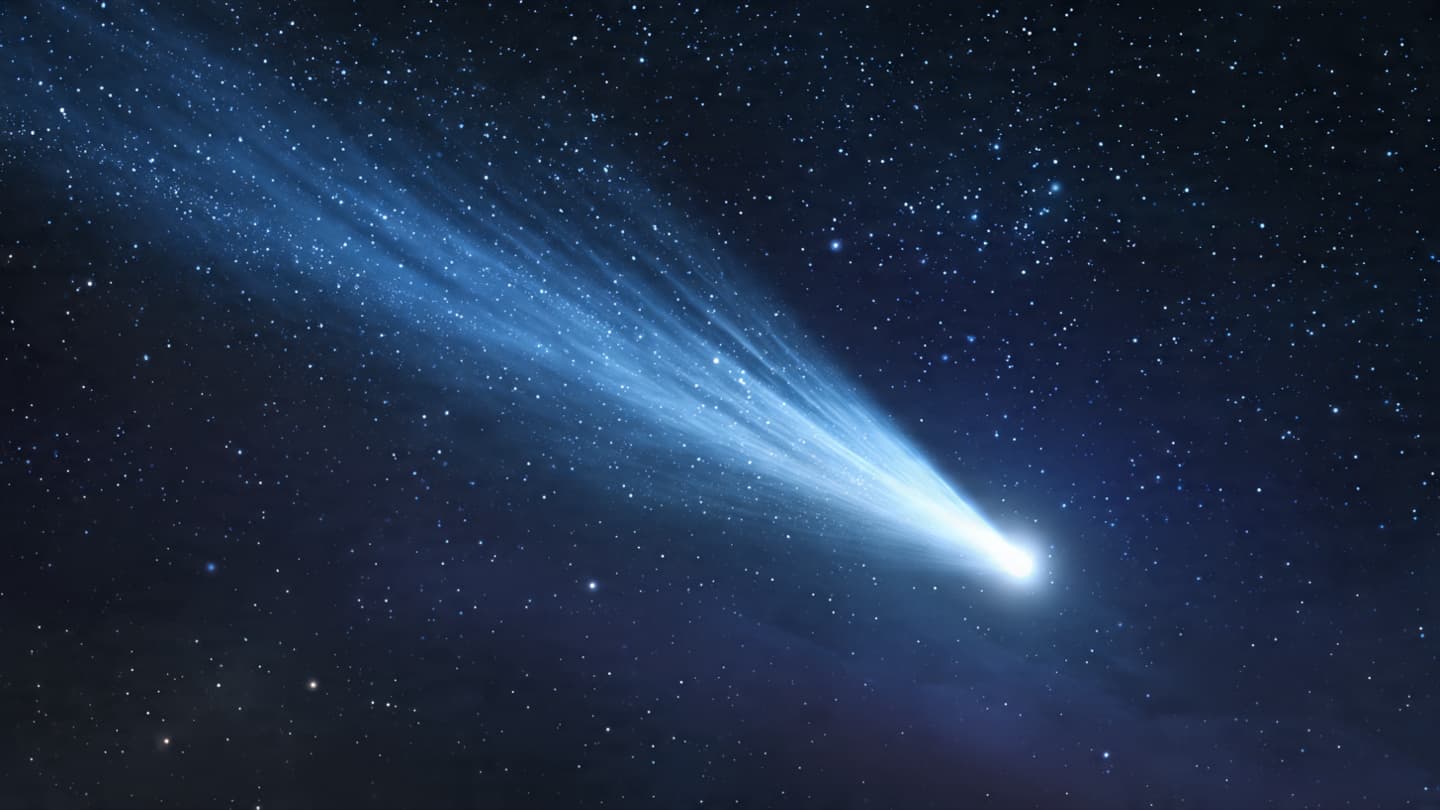
The universe occasionally sends visitors from unimaginable distances, carrying with them clues from regions far beyond the familiar boundaries of our solar system. Like messages sealed within cosmic bottles, interstellar objects provide rare opportunities to study environments that formed around other stars. The recently observed comet designated 3I/ATLAS has become one such messenger.
Astronomers have been closely examining the object since its detection, recognizing it as an interstellar traveler rather than a body originating within our own planetary neighborhood. Such discoveries remain uncommon, making every observation particularly valuable to the scientific community.
Early analyses suggest that the comet's chemical composition differs in important ways from many objects commonly studied within the solar system. Spectroscopic observations allow researchers to identify molecular signatures and estimate the materials present within the comet's structure.
The unusual chemistry detected has generated significant scientific interest. Researchers are exploring whether these characteristics reflect environmental conditions that existed around another star system during the object's formation. Differences in temperature, available elements, and stellar activity could all contribute to the observed composition.
Interstellar objects offer a unique advantage because they provide direct samples of processes occurring elsewhere in the galaxy. Unlike distant exoplanets that can only be observed indirectly, comets and similar bodies occasionally travel close enough for detailed measurements using modern instruments.
The discovery also builds upon lessons learned from previous interstellar visitors, including well-known objects detected during the past decade. Each new arrival expands the scientific record and helps researchers compare how planetary systems may differ across the Milky Way.
Scientists caution that investigations remain ongoing and that additional observations will be required before firm conclusions can be reached. The process of interpreting spectral data often involves extensive verification and comparison with known materials.
Nevertheless, the appearance of 3I/ATLAS illustrates how rapidly astronomy continues to evolve. Advances in survey technology, imaging systems, and computational analysis have dramatically increased the ability to identify unusual celestial objects moving through space.
As astronomers continue studying the comet, its journey offers another reminder that the solar system exists within a much larger cosmic community, where countless worlds and histories remain waiting to be explored.
AI Image Disclaimer: The accompanying visuals are AI-generated artistic renderings designed to illustrate the scientific topic discussed.
Sources (verification check): NASA, European Space Agency (ESA), Nature Astronomy, Sky & Telescope, Space.com
Note: This article was published on BanxChange.com and is powered by the BXE Token on the XRP Ledger. For the latest articles and news, please visit BanxChange.com