
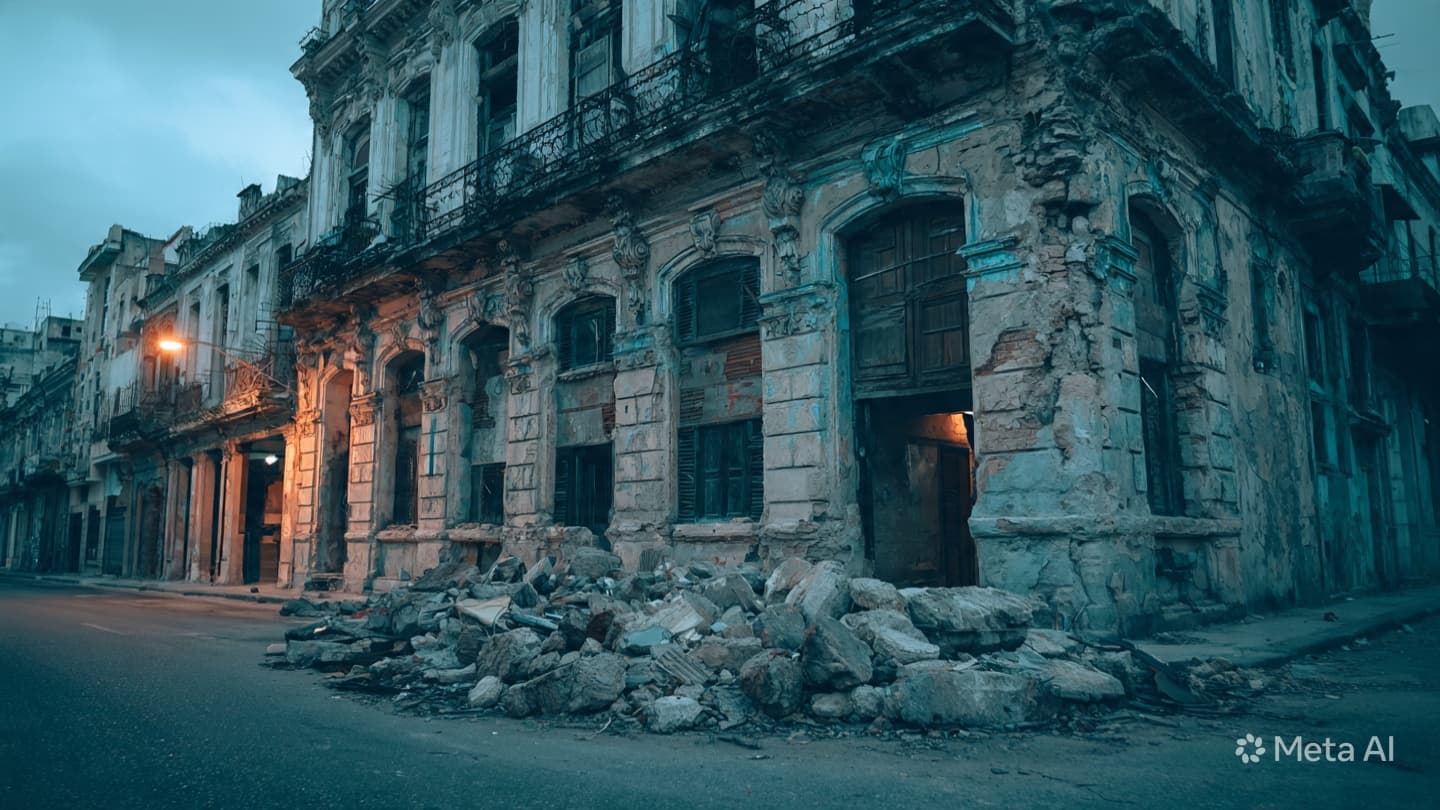
The streets of Old Havana possess a gravity all their own, where the passage of centuries is etched into every weathered facade and crumbling cornice. It is a city that breathes through its architecture, a dense, interconnected tapestry of lives lived within spaces that have seen generations rise and fall. When a structure finally gives way—not to the slow erosion of years, but to the sudden, violent surrender of its own weight—the silence that follows is profound. It is a rupture in the city's timeline, a stark reminder that the history we inhabit is also a structure that requires the constant, careful labor of maintenance.
To walk past the site of such a collapse is to feel the sudden exposure of a private tragedy. The dust that hangs in the air, the jagged lines of broken masonry, and the hollowed-out interior of what was once a home speak to a vulnerability that residents of the historic center know too well. There is a palpable tension in the air, a collective holding of breath as the city reconciles with the fact that these aging walls, while beautiful in their decay, have reached their limit. The collapse is not merely an accident; it is the physical manifestation of a long-standing, quiet struggle against time.
The response from the neighborhood is always one of immediate, instinctual solidarity. In Havana, the community is the first to arrive, the first to dig, and the first to offer a hand to those who have been suddenly cast out of their own lives. This human rhythm—the urgency of neighbors helping neighbors—is the city's true foundation. Yet, beneath this bravery lies a heavy, unresolved question: how long can a community endure the systematic loss of its shelter before the fabric of the neighborhood itself begins to fray beyond repair?
Observers have noted that the challenge of Old Havana’s infrastructure is a complex confluence of age, climatic intensity, and the difficult economic reality of restoration. The buildings, once grand, have become traps for those who reside within them, their beauty masking the underlying instability that has been exacerbated by years of insufficient resources. The tragedy of a collapse, with its resulting casualties, is a devastating price to pay for this broader, ongoing struggle—a reminder that the city’s preservation is not merely an aesthetic concern but a matter of human safety.
Administrative efforts to secure the area and provide for the displaced are met with the weary, yet steadfast, commitment of the local authorities. The process of searching through the rubble is a grueling, mechanical, and deeply emotional task that demands total focus. For those on the front lines, the work is a somber duty to reconcile the past with the present, to recover what can be saved from the debris, and to provide whatever measure of dignity is possible in the wake of such sudden ruin.
The narrative of the city is currently written in the language of loss and recovery. As the site is cleared and the investigation into the cause proceeds, there is a quiet, persistent hope that the event will catalyze a renewed focus on the precarious state of the capital's housing. But for the families who have lost everything—their belongings, their memories, and the very ground they walked upon—the return to a sense of normalcy is a distant, uncertain shore.
Looking ahead, the city continues to navigate this delicate balance between the desire to hold onto its historic character and the desperate need for structural, modern safety. It is a conflict that defines the daily experience of many in Old Havana, who live within the beauty of the past while facing the very real dangers of its decay. The tragedy is a haunting prompt to revisit the priorities of urban management, ensuring that the history of the city is not built on the foundations of its own collapse.
Cuban authorities have confirmed that a partial building collapse in Old Havana has resulted in multiple fatalities and injuries, with emergency crews currently working to clear debris and secure surrounding structures. The historic building, which housed several families, succumbed after a period of intense structural instability. Displaced residents have been relocated to temporary shelters, and municipal engineers are conducting a comprehensive assessment of neighboring properties to prevent further incidents as the investigation continues.
Note: This article was published on BanxChange.com and is powered by the BXE Token on the XRP Ledger. For the latest articles and news, please visit BanxChange.com