In the silent vacuum of space, where gravity is a constant and unforgiving force, even the most advanced machines are subject to its pull. Recently, NASA engineers faced a critical challenge as a space telescope began to drift from its intended orbit, threatening to fall back toward Earth. In a tense race against time, the team executed a precise maneuver to boost the spacecraft back to its operational altitude, saving a vital scientific asset from premature demise.
The incident highlights the delicate balance required to maintain satellites in low Earth orbit. At these altitudes, trace amounts of atmospheric drag can slowly degrade an orbit, requiring periodic boosts to maintain stability. In this case, an unexpected variation in drag or a minor system anomaly caused the telescope to lose altitude faster than anticipated. The situation demanded quick thinking and flawless execution from the ground control team.
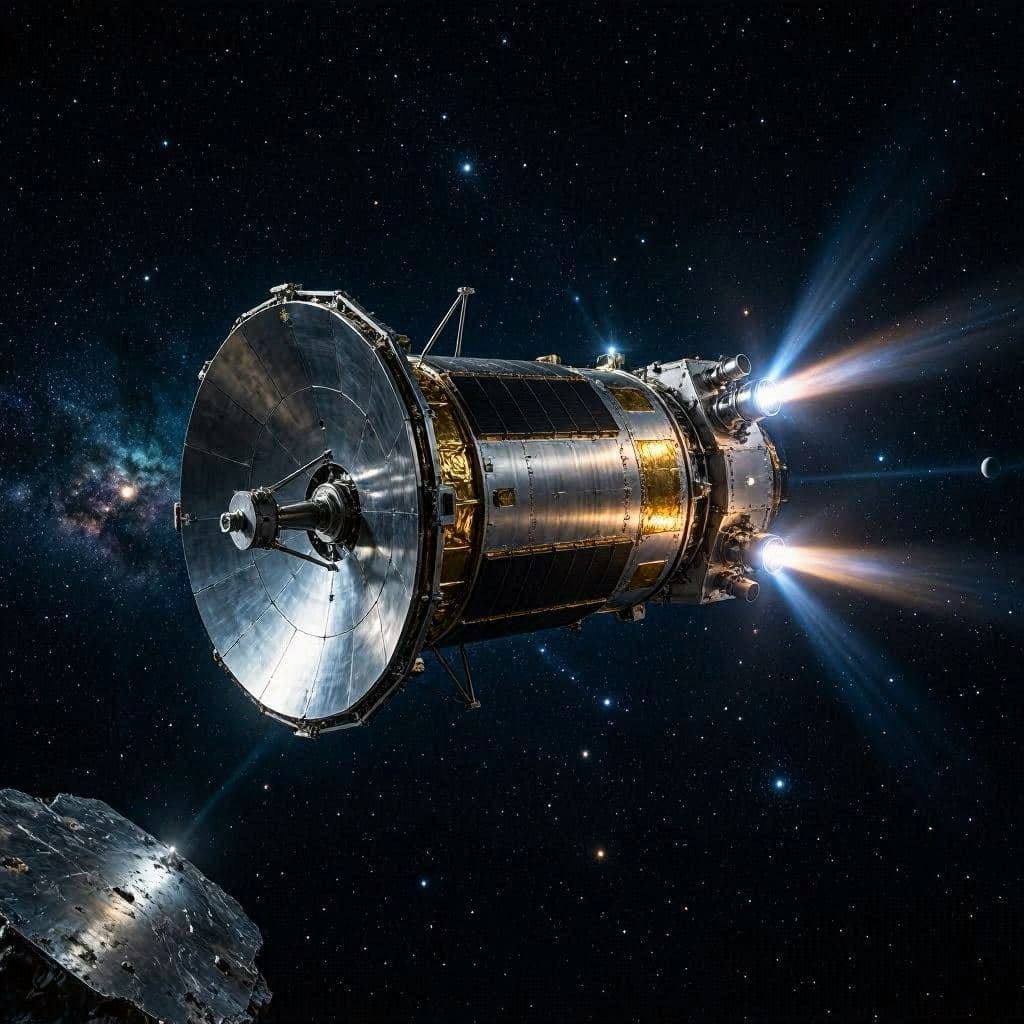
The rescue operation involved firing the telescope’s thrusters in a carefully calculated sequence. Every second counted, as further decay could have made recovery impossible or led to an uncontrolled reentry. The success of the maneuver is a testament to the skill and dedication of the engineers who monitor these distant eyes on the universe. It is a reminder that space exploration is not just about launch, but about sustained care and attention.
For the scientific community, the preservation of this telescope is crucial. It continues to provide valuable data on distant galaxies, exoplanets, and cosmic phenomena. Losing it would have meant a significant gap in our understanding of the universe, as well as the loss of years of investment and effort. The successful boost ensures that its mission can continue, contributing to the broader tapestry of astronomical knowledge.
This event also underscores the importance of redundancy and robust design in space missions. Engineers anticipate potential failures and build systems that can adapt to unexpected challenges. The ability to remotely correct an orbit is a key feature of modern spacecraft, allowing them to survive hazards that would have doomed earlier generations of satellites. It is a victory for engineering resilience.
Public interest in such operations is often high, as it humanizes the technical aspects of space exploration. Stories of rescue and recovery resonate because they mirror our own struggles against adversity. They remind us that even in the cold emptiness of space, there is a team of people working tirelessly to protect our tools of discovery. It fosters a sense of connection between the public and the scientific endeavor.
As the telescope settles back into its stable orbit, scientists can return to their observations. The data collected in the coming months will help answer some of the biggest questions in cosmology. The incident serves as a brief interruption in a long journey of exploration, one that continues to expand the boundaries of human knowledge.
In the end, the rescue of the falling telescope is a story of triumph over gravity. It illustrates the precision and passion that drive space exploration. By saving this instrument, NASA has ensured that we can continue to look deeper into the cosmos, uncovering secrets that lie billions of light-years away.
AI Image Disclaimer: Please note that any images associated with this article are AI-generated interpretations intended for illustrative purposes only and do not represent actual telemetry or mission control footage.
Sources: NASA SpaceNews Ars Technica The Verge Scientific American
Published by Banx Network. This article is part of the Banx decentralized media programme, powered by the BXE token on the XRP Ledger.