
Key Highlights
- Kaczyński's Stance: Poland's PiS leader opposes Ukraine's EU membership.
- Historical Context:Calls for Ukraine to abandon nationalist glorification.
- Financial Burden:Kaczyński cites costs borne by Poland for Ukraine's defense.
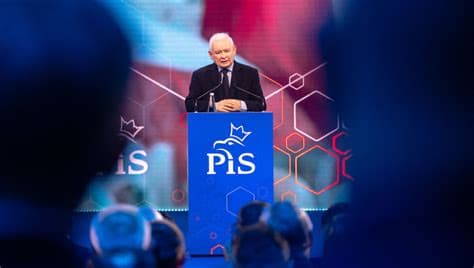
Jarosław Kaczyński, the leader of Poland’s opposition party Law and Justice (PiS), has taken a firm stance against Ukraine's potential accession to the European Union. In a recent letter addressed to PiS lawmakers and members, Kaczyński emphasized that the party would block Ukraine's EU membership unless the country alters its current trajectory. This statement comes as Poland prepares for upcoming elections, where PiS aims to solidify its influence over national policy regarding Ukraine.
Kaczyński's argument centers on Ukraine's perceived glorification of historical figures associated with nationalist movements, particularly the controversial figure Stepan Bandera and the Ukrainian Insurgent Army (UPA). He contends that Ukraine must fully renounce what he describes as a “cult of Bandera” before it can be considered for EU membership. This position reflects broader concerns within Poland about historical grievances stemming from World War II and the treatment of Polish citizens during that period.
In his letter, Kaczyński expressed that Poland and other European nations cannot overlook what he termed “genocidal acts” against their own populations. This rhetoric is particularly poignant given the historical context of Polish-Ukrainian relations, which have been fraught with tension due to past atrocities committed during the war. Kaczyński's remarks resonate with a segment of the Polish electorate that remains sensitive to these historical narratives.
Moreover, Kaczyński highlighted the financial implications of supporting Ukraine amidst its ongoing conflict with Russia. He stated that Poland has incurred “enormous financial costs” in aiding Ukraine's military efforts and maintaining its state functions. He argued that without substantial external support, particularly from Poland, Ukraine's taxpayers would struggle to sustain the country's operational capacity in the face of ongoing challenges.
The letter also touched upon a recent controversy regarding the naming of a Ukrainian military unit after individuals Kaczyński claims were responsible for violence against Poles during the Volhynia and Eastern Galicia events. This issue has reignited debates about historical memory and national identity in both Poland and Ukraine, complicating the dialogue surrounding Ukraine's EU aspirations.
As the political landscape evolves in Poland, Kaczyński's statements may significantly influence public opinion and policy decisions regarding Ukraine's future in Europe. His firm stance reflects a broader skepticism among some Polish leaders about Ukraine's readiness for EU integration, particularly in light of historical grievances and current geopolitical dynamics.
The implications of Kaczyński's position extend beyond Poland, as they may affect the EU's approach to Ukraine's membership aspirations. As the situation develops, it will be crucial to monitor how these sentiments shape the discourse around Ukraine's integration into European structures.
Published by Banx Network. This article is part of the Banx decentralized media programme, powered by the BXE token on the XRP Ledger.



