
Shimla, India—Raging floodwaters swept through narrow mountain valleys before dawn today, killing fourteen residents and destroying dozens of riverside homes. A sudden cloudburst dropped months of precipitation in under three hours, turning small hillside streams into violent torrents of mud and boulders. Emergency service units confirmed that entire segments of low-lying villages were erased from valley floors within minutes. Disaster response teams are arriving on foot due to extensive road washouts along the primary transport corridors.
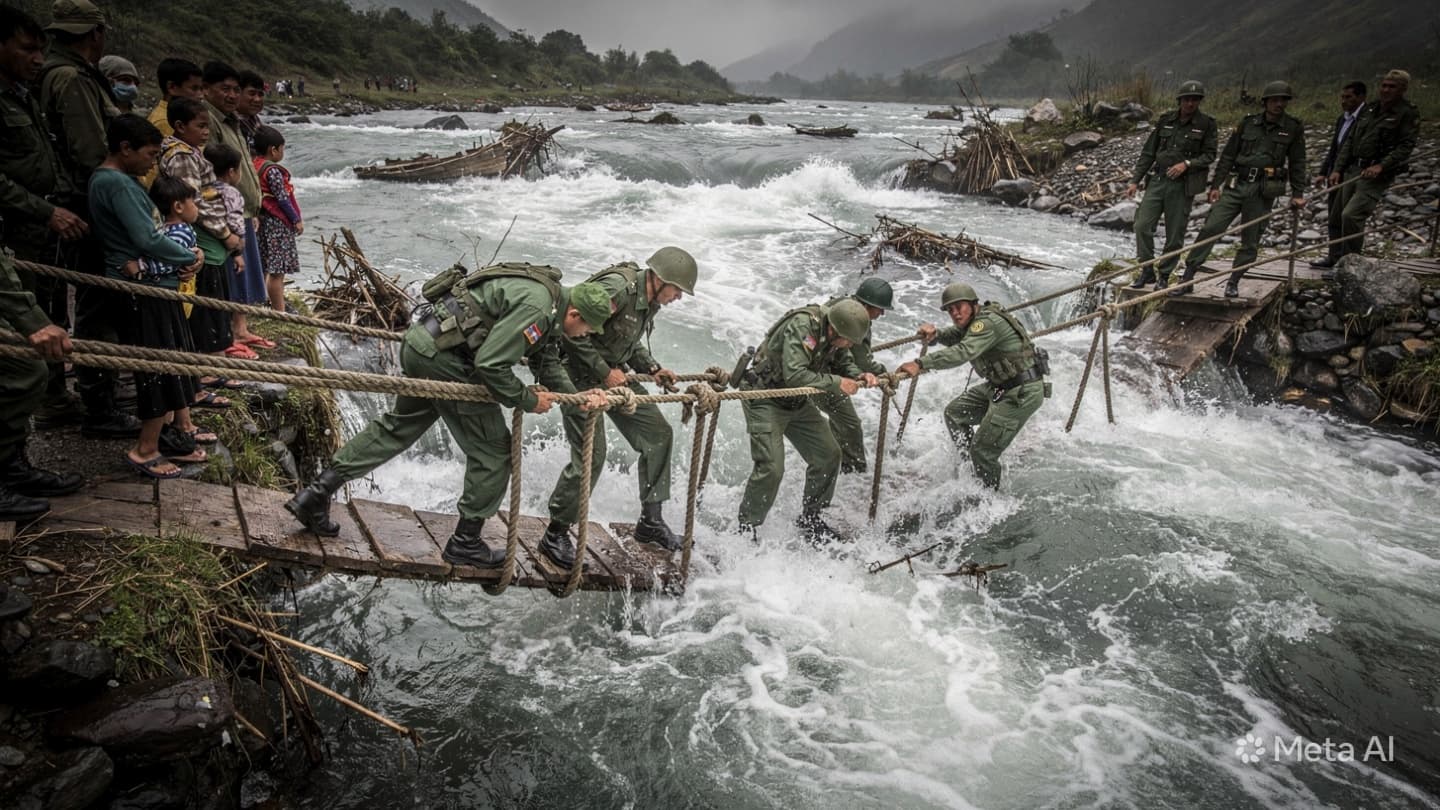
Local authorities reported that over two hundred people remain completely cut off in remote upper hamlets. The rushing waters demolished three concrete vehicle bridges, severing the only physical links to the broader provincial supply lines. Military helicopters are standby at lower airfields, but thick cloud cover and persistent driving rain prevent immediate aerial evacuation flights. Ground rescue teams are forced to utilize basic rope bridges to transport essential medical kits across roaring river channels.
State disaster management coordinators stated that the current death toll is expected to rise as search operations reach isolated downstream banks. They noted that recovery teams are finding debris fields miles away from the initial impact zones. Local temples and government schools have been transformed into basic administrative relief centers, sheltering families who fled with only the clothes on their backs. Power infrastructure along the valley floors is completely destroyed, with utility poles snapped like kindling.
Agricultural fields containing vital cash crops were completely buried under feet of thick river silt and mountain gravel. Farmers view the physical destruction as a total economic loss that will disrupt regional food supplies for months. Small livestock herds were swept downstream during the initial surge, eliminating secondary income sources for vulnerable families. Local market towns report immediate shortages of basic food items as delivery trucks remain stranded on damaged highways.
Local police personnel are patrolling riverside paths to prevent curious onlookers from approaching unstable, eroding banks. The sheer velocity of the water continues to undercut hillside foundations, causing secondary structural collapses of remaining stone buildings. Emergency communications rely entirely on satellite phones operated by military personnel stationed at regional outposts. Municipal engineers are scrambling to establish temporary footpaths to restore basic logistical access to the stranded populations.
Public health teams expressed deep concern regarding the contamination of natural mountain springs, which serve as the primary drinking source. Silt and sewage have entered local water tables, prompting fears of rapid waterborne disease transmission among displaced populations. Medical teams are packing thousands of water purification tablets and basic rehydration salts into backpacks for foot delivery. The physical strain on emergency personnel is immense as they navigate steep, mud-slicked mountain trails.
Environmental scientists emphasize that unplanned construction along active floodplains has severely amplified the impact of these extreme weather events. Deforestation along the upper ridges has reduced the soil's natural water retention capacity, leading to instantaneous surface runoff during heavy storms. Local residents are calling for stricter enforcement of environmental zoning laws to prevent future tragedies in these highly vulnerable valleys. Administrative inquiries into local planning decisions are being demanded by community leaders.
Worsening weather forecasts predict continued heavy rainfall across the state for the next twenty-four hours, keeping river levels dangerously high. Rescue operations are being suspended periodically as lookouts detect signs of fresh mud flows on upper peaks. Teams are working under extreme pressure to secure baseline assets before the next wave of storms hits.
Military engineering units are currently attempting to assemble a temporary steel bridge across the main river channel near Shimla to allow heavy rescue vehicles access to the interior disaster zone. The roaring current makes anchoring the structural foundations exceptionally hazardous for the dive teams.
Note: This article was published on BanxChange.com and is powered by the BXE Token on the XRP Ledger. For the latest articles and news, please visit BanxChange.com