
Key Highlights
- Incident:A fuel tanker explosion occurred on a busy highway in Nigeria.
- Casualties:At least 17 people have died, with many others injured.
- Response:Emergency services are working to manage the aftermath and investigate the cause.
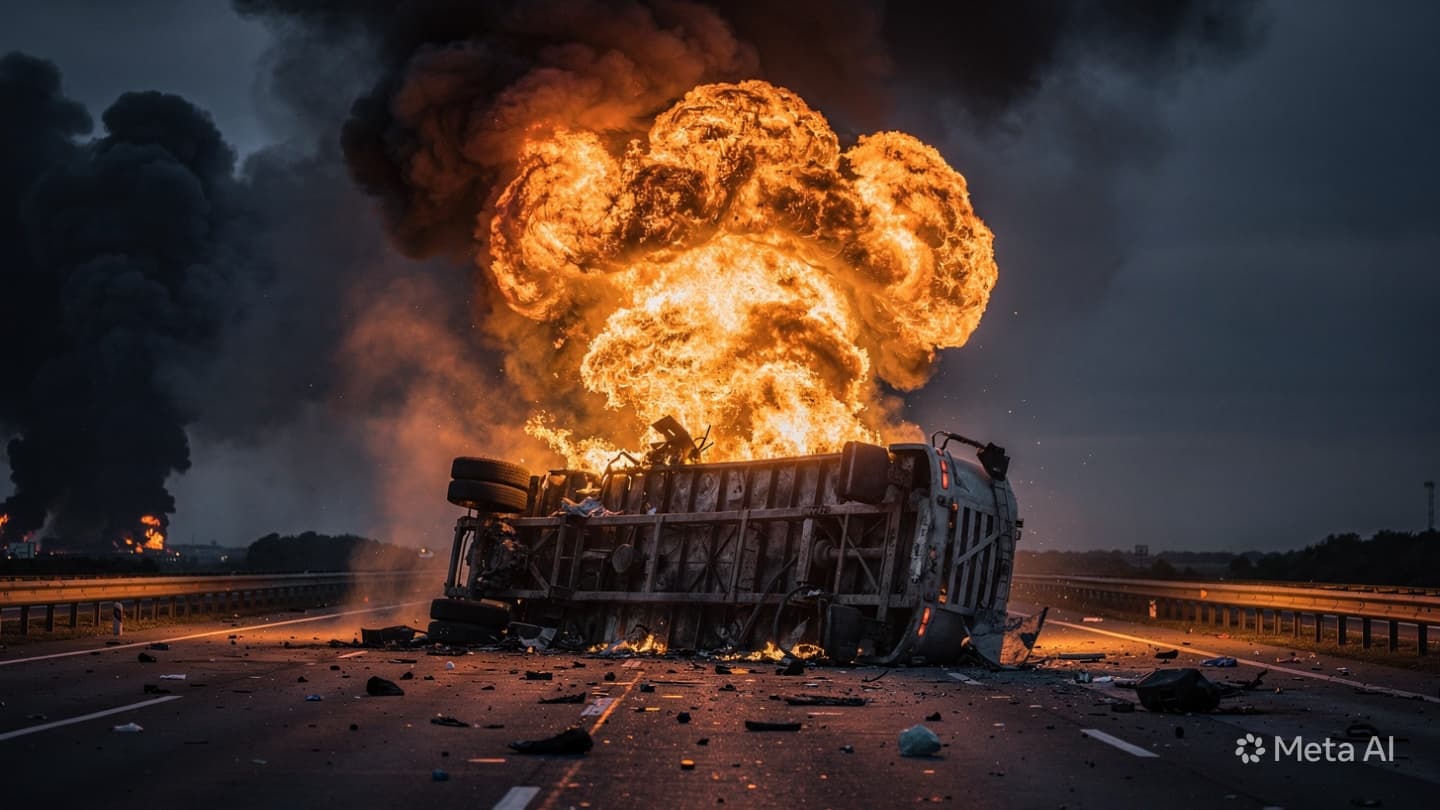
A catastrophic fuel tanker explosion occurred on a busy interstate highway in Lagos, Nigeria, on Thursday evening, resulting in the tragic deaths of at least seventeen individuals. The incident unfolded around 7:35 p.m. when a commercial haulage truck, loaded with thirty-three thousand liters of highly volatile premium motor spirit, lost traction while navigating a steep and degraded section of the roadway. The heavy trailer flipped onto its side, rupturing its primary steel containment tanks and spilling fuel across the highway.
Emergency management agencies and fire service units rushed to the scene, but the rapid accumulation of leaking fuel created a massive vapor cloud before they could arrive. Driven by economic hardship, many local residents and passing motorists ignored the immediate danger and rushed toward the overturned truck with plastic jerrycans to collect the leaking petrol. Tragically, a sudden spark, likely from a passing motorcycle engine, ignited the pooling fuel, resulting in a massive thermal shockwave that engulfed the area.
The regional director of the federal road safety corps addressed reporters from an emergency command center established one kilometer away from the inferno. He confirmed that seventeen charred bodies were recovered from the roadside ditches during the initial sweep, while twenty-four other individuals were transported to a specialized university teaching hospital with critical burns. Medical officials have warned that the casualty count may rise as more victims are identified.
Witnesses described the explosion as a deafening roar that sent a column of fire rolling across four lanes of traffic. The intense heat incinerated nearby market stalls and trapped multiple commuter minibuses within the burn zone, forcing passengers to abandon their belongings and flee into the surrounding brush to escape the flames. Local community leaders expressed their shock and grief over the incident, highlighting the dangers posed by the highway's deteriorating condition.
A structural transit engineer inspecting the scene noted that the highway had suffered from severe potholes for several months. He explained that heavy articulated vehicles often experience suspension failures when hitting these deep depressions at high speeds, which can lead to dangerous accidents like this one. Grieving family members gathered at the hospital, desperately seeking information about missing relatives who were known to be trading along the highway corridor. They expressed frustration over the lack of public safety enforcement, pointing out that federal highway patrols rarely establish proper exclusion zones around hazardous material spills.
In response to the tragedy, the Ministry of Transportation has launched an immediate forensic inquiry into the haulage firm's operating credentials and the vehicle's mechanical compliance history. Preliminary safety records indicate that the truck's automated braking assist mechanism had been flagged during a routine inspection last month, yet operators continued to run long-distance routes across the region.
National security forces closed both directions of the interstate corridor for eight hours to allow emergency personnel to siphon the remaining fuel from the unexploded compartments. This prolonged closure halted hundreds of commercial delivery trucks carrying consumer goods and agricultural products to coastal distribution docks, creating significant gridlock in the region. Clean-up crews are currently using heavy industrial wreckers to remove the warped, blackened frame of the tanker from the highway, while municipal fire teams continue to apply chemical retardant foam to prevent any secondary ignition before the road can be declared safe for traffic.
Published by Banx Network. This article is part of the Banx decentralized media programme, powered by the BXE token on the XRP Ledger.



