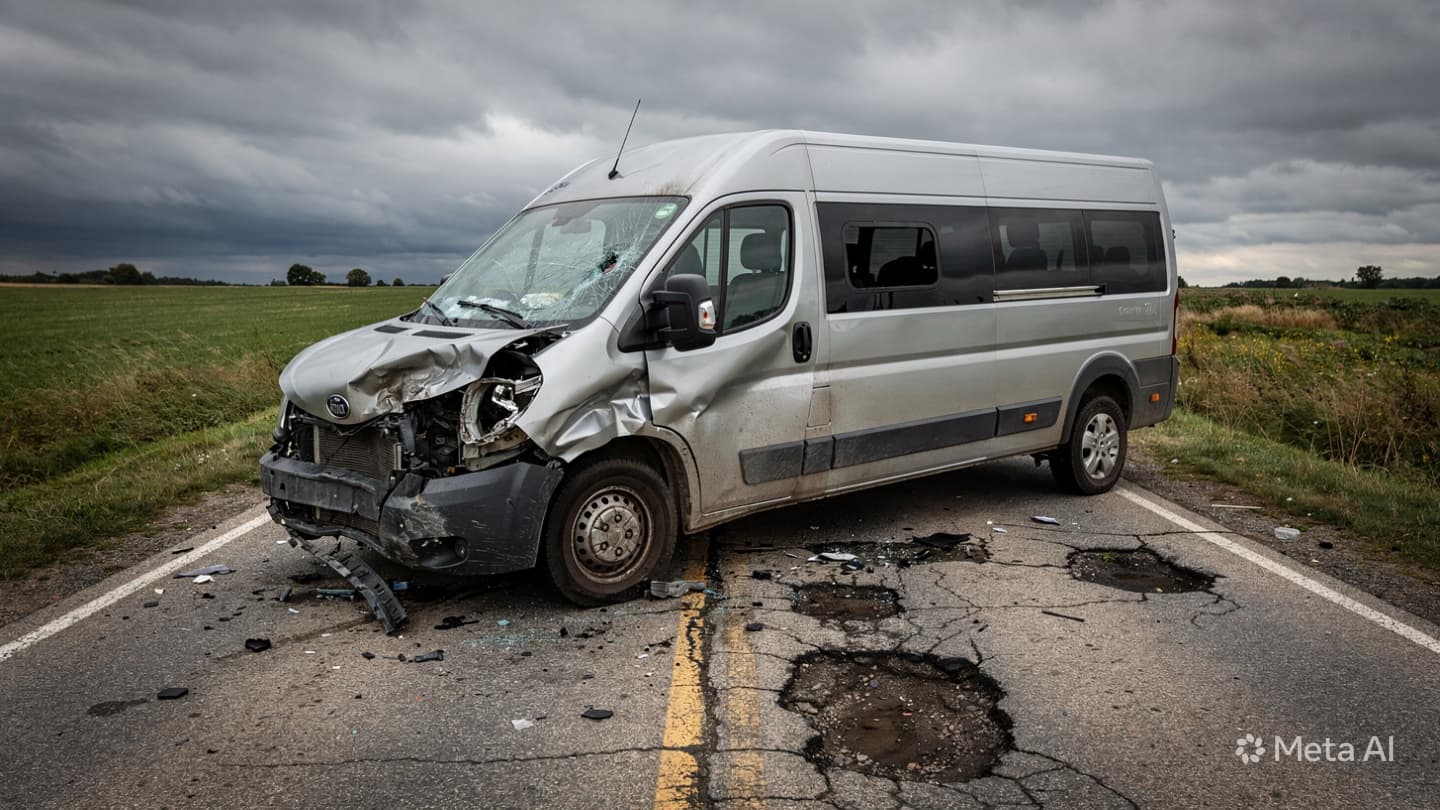
Christchurch, New Zealand—A catastrophic head-on collision involving a commercial passenger transport van and an incoming utility vehicle left four individuals dead Thursday morning. The incident occurred at approximately 11:15 a.m. along a winding, two-lane rural highway section known for heavy holiday transit. The force of the high-speed impact crushed the forward cabins of both vehicles, rotating the tourist van into a deep drainage embankment and trapping the occupants inside.
Metropolitan rescue squads, volunteer rural fire brigades, and three emergency medical helicopters converged on the scenic corridor within twenty minutes of receiving multiple automated mobile alerts. First responders utilized specialized hydraulic jaw systems and metal cutters to slice through the reinforced door pillars. Medical personnel confirmed that three international tourists inside the van and the sole driver of the utility vehicle died instantly from catastrophic impact trauma.
A regional district commander for the national police force addressed media representatives from behind a secure traffic diversion point. He confirmed that five additional passengers from the tourist van are undergoing emergency treatment at a regional trauma center, including two individuals who remain in critical condition with severe internal bleeding and complex pelvic fractures.
Local residents living near the rural highway described the crash as a sharp, echoing boom that immediately disrupted local farm operations. Witnesses stated that the specific stretch of road features sharp horizontal curves and lacks a solid concrete median barrier, meaning any minor steering error can cause a vehicle to drift directly into oncoming traffic lanes.
A transit safety analyst reviewing the crash telemetry noted that the tourist van was operating a multi-day sightseeing route through the district. He pointed out that international drivers frequently struggle with situational awareness along New Zealand’s narrow, undivided rural passages, which feature narrow gravel shoulders and sudden changes in elevation that reduce forward sightlines.
Anxious embassy officials and travel agency coordinators contacted regional police headquarters, seeking to verify the nationalities listed on the tour group's formal passenger manifest. Travel advocates noted that small independent tour operators face heavy scrutiny regarding driver fatigue management, especially during peak international excursion seasons when transit windows are tight.
The Ministry of Transport launched an immediate safety investigation into the commercial carrier’s licensing history and GPS speed logs. Preliminary mechanical data indicates both vehicles were moving within the legal speed threshold, though investigators are evaluating whether the tour driver became distracted by an electronic navigation system before crossing the center line.
National transit authorities closed a twenty-kilometer section of the highway for six hours to allow forensic collision teams to chart the extensive tire markings and fluid spill patterns on the asphalt. The prolonged closure blocked holiday traffic and local freight distribution trucks, forcing motorists to navigate extensive gravel bypass detours through the backcountry.
Work crews are currently utilizing a heavy-duty flatbed crane to lift the crumpled metal frames of both vehicles onto transport trailers. Light winter rain showers are beginning to fall across the hills, causing the wet asphalt to become slippery and requiring recovery personnel to secure the workspace with high-friction sand drops before nightfall.
Published by Banx Network. This article is part of the Banx decentralized media programme, powered by the BXE token on the XRP Ledger.