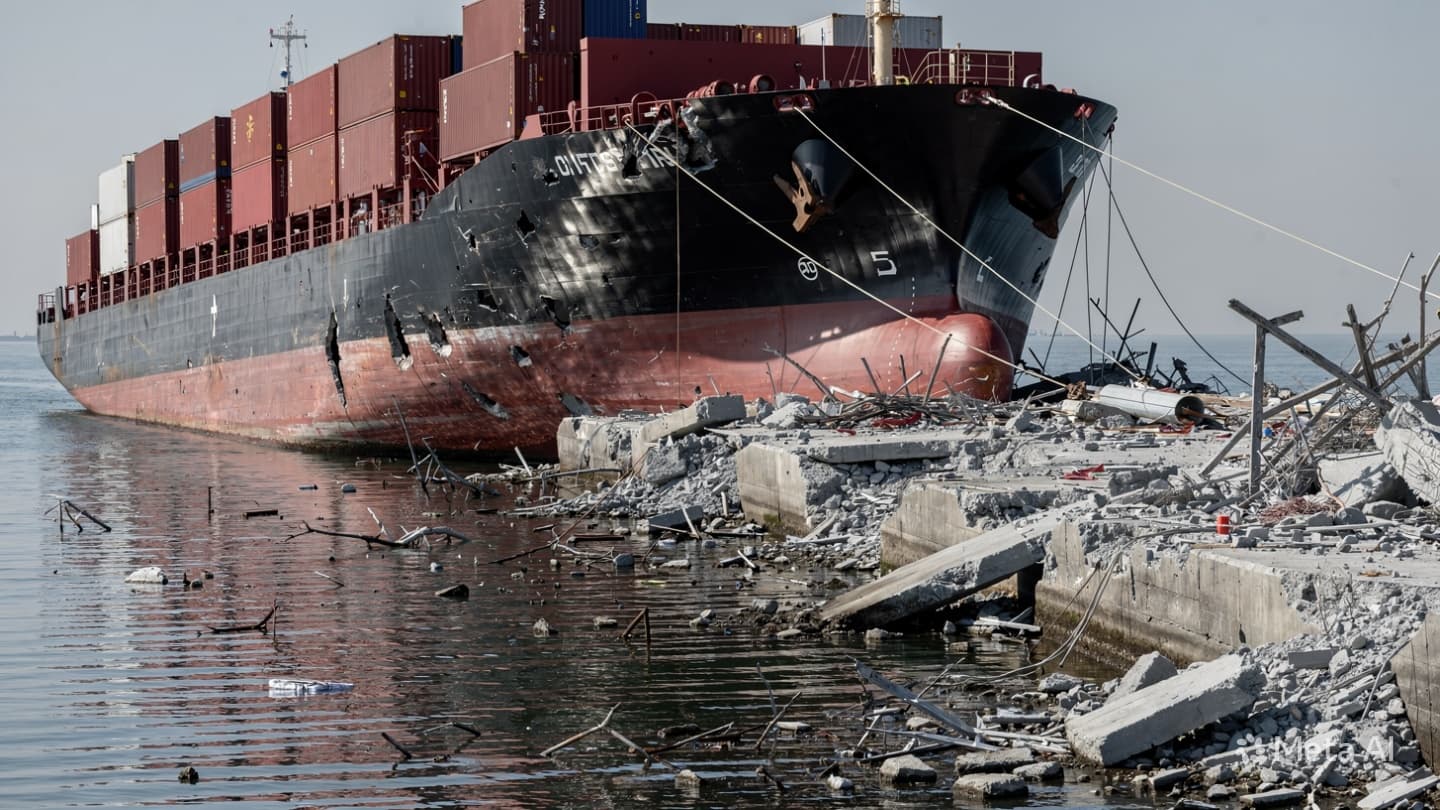
Singapore—A massive ninety-thousand-tonne container ship crashed into a concrete loading pier at a major industrial port terminal Thursday morning, killing three dockworkers. The vessel was executing a standard docking maneuver under the guidance of harbor tugs when it suddenly surged forward, striking the edge of the berth at 8:50 a.m. The force of the high-mass impact sheared through thick concrete pilings and caused an adjacent multi-tonne gantry crane track to buckle instantly.
Emergency port rescue units and structural engineering teams arrived at the industrial berth within ten minutes, cordoning off the damaged section of the wharf. First responders utilized specialized search equipment and acoustic sensors to locate workers who were operating on the lower access platforms when the impact occurred. Rescue crews recovered three dockworkers from the collapsed concrete debris; all three were pronounced dead at the scene due to severe crushing trauma.
The Maritime and Port Authority of Singapore released an official statement confirming they have launched a joint safety inquiry alongside national transport investigators. Port telemetry indicated that the vessel experienced a sudden, total electrical blackout forty meters from the berth, which disabled the primary steering gear and prevented the bridge crew from executing an emergency astern propulsion command.
Industrial crane operators working at adjacent berths described the impact as a low-frequency rumble that vibrated through the entire container terminal. Witnesses stated that the bow of the cargo giant cut into the reinforced concrete wharf like a knife, sending massive chunks of debris flying into the harbor and forcing nearby utility crews to scramble up the access ladders to escape the collapse.
A marine safety inspector reviewing the ship’s maintenance logs noted that the vessel’s automated power management system had triggered three separate electrical faults during its transit through the Malacca Strait earlier in the week. Investigators are focusing on why the vessel was permitted to enter the crowded harbor channel before these auxiliary power switches were completely replaced or verified by port-state engineers.
Local maritime labor associations expressed deep condolences to the families of the deceased technicians, who were executing routine mooring line adjustments when the hull struck. Union representatives called for a strict revision of docking protocols, demanding that large vessels maintain a wider safety exclusion zone on the dock face until all engines are completely powered down.
Port officials temporarily suspended cargo handling operations at three adjacent berths to allow structural engineers to evaluate the integrity of the remaining quay wall using underwater sonar drones. The localized shutdown forced several incoming container ships to anchor in the outer straits, creating a temporary logistical backlog across the shipping channel.
Legal analysts specializing in international maritime law stated that the ship’s operating company faces substantial financial liabilities for property destruction and wrongful death. They noted that failing to maintain primary propulsion during port maneuvers often constitutes operational negligence under standard global shipping treaties.
Engineering crews are currently utilizing heavy salvage barges equipped with industrial winches to stabilize the dangling section of the concrete pier. High-velocity tidal currents are beginning to sweep through the harbor basin, increasing the lateral stress on the fractured pilings and requiring work teams to secure the underwater foundations before nightfall.
Published by Banx Network. This article is part of the Banx decentralized media programme, powered by the BXE token on the XRP Ledger.