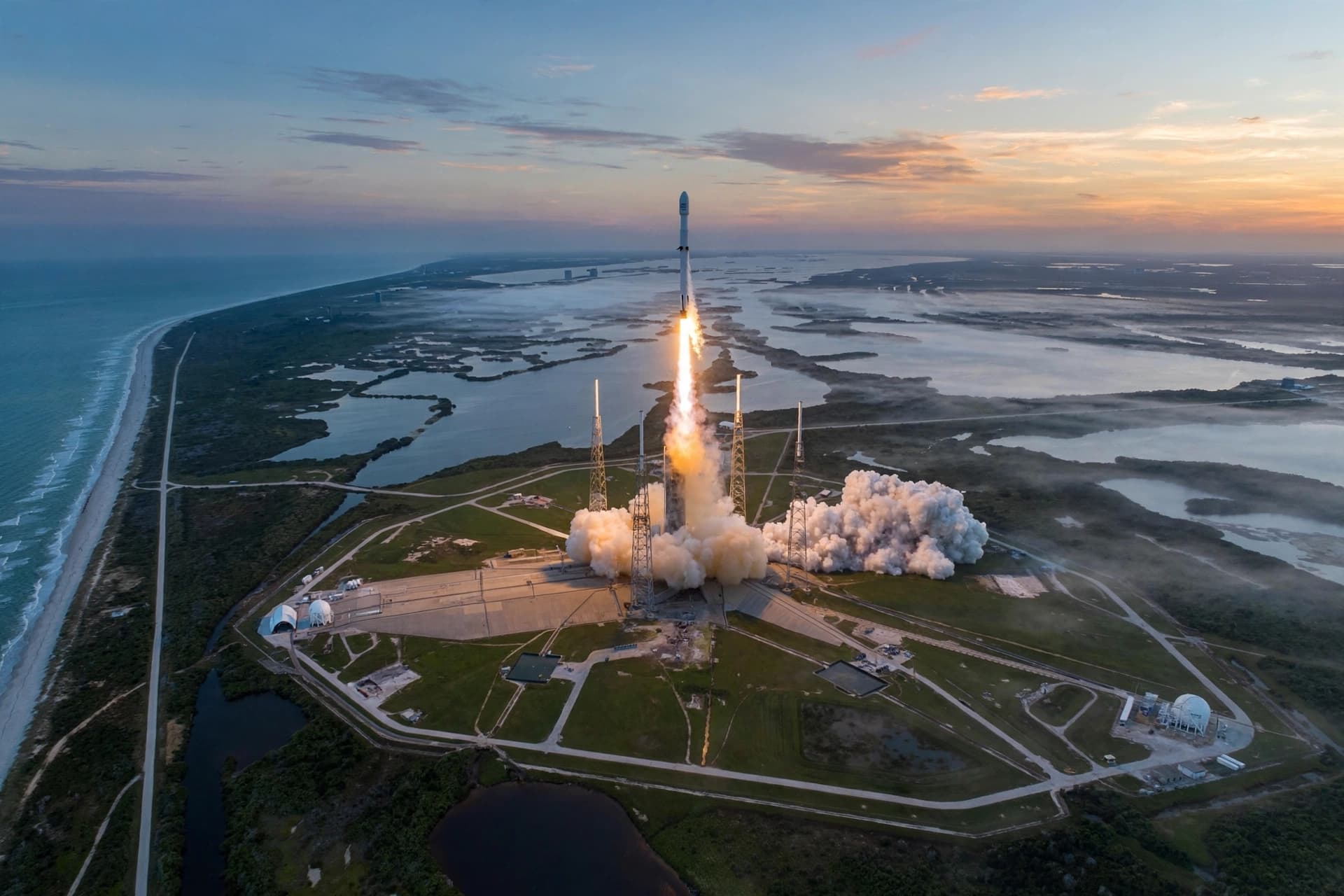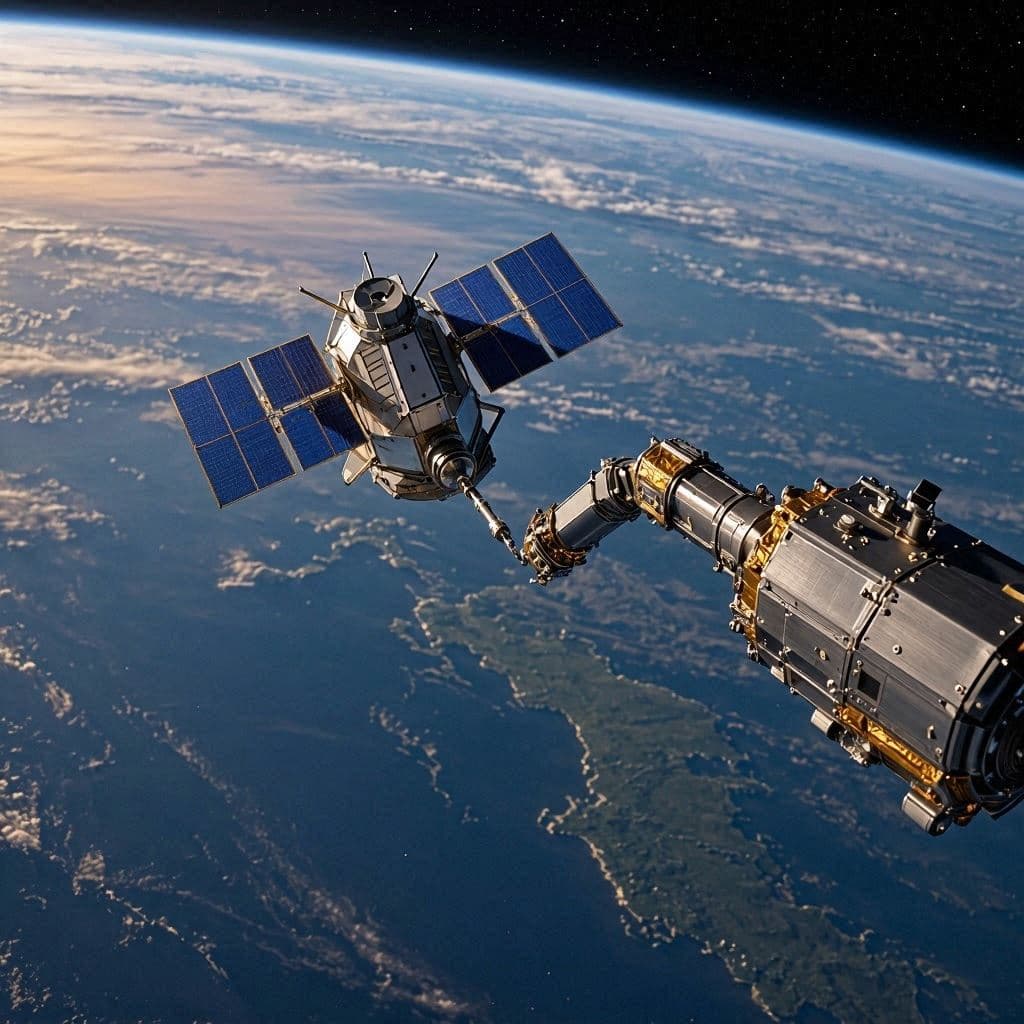
In the vast silence of space, satellites orbit in a delicate balance, governed by gravity and the thin whispers of atmospheric drag. For years, the Swift Observatory has scanned the cosmos, capturing bursts of gamma rays and revealing the violent beauty of the universe. But recently, this faithful servant of science has begun to fall, pulled inexorably toward Earth by the swollen atmosphere resulting from intense solar activity. In a daring move, NASA has launched a rescue mission, not to bring Swift home, but to give it a new lease on life in the stars.
Body: The Swift Observatory, launched in 2004, has far exceeded its expected lifespan, providing invaluable data on black holes, neutron stars, and supernovae. However, the sun’s recent cycle of heightened activity has caused Earth’s upper atmosphere to expand, increasing drag on low-orbiting satellites. Swift, already in a decaying orbit, began to lose altitude at an accelerated rate, threatening to burn up in the atmosphere within months. Without intervention, a wealth of scientific potential would be lost.
The rescue mission involves a specialized robotic spacecraft designed to rendezvous with Swift and attach a propulsion module. This module will provide the necessary thrust to boost Swift back into a stable orbit, extending its operational life by several years. The maneuver is complex, requiring precise navigation and coordination between the two spacecraft. It represents a new frontier in space operations, moving from passive observation to active maintenance and salvage.
Solar storms, characterized by increased solar flares and coronal mass ejections, have a profound impact on near-Earth space. They heat the upper atmosphere, causing it to expand and create more resistance for satellites. This phenomenon, known as atmospheric drag, is a constant challenge for space agencies managing orbital assets. The current solar maximum has intensified these effects, making missions like Swift’s rescue both urgent and technically demanding.
The cost of the mission, estimated at around $30 million, is a fraction of the cost of building and launching a new telescope. By saving Swift, NASA not only preserves a valuable scientific instrument but also demonstrates the viability of in-orbit servicing. This capability is crucial for the future of space exploration, where sustainability and resource efficiency will be paramount. It sets a precedent for maintaining other aging assets and reducing space debris.
Scientifically, the continuation of Swift’s mission is highly anticipated. The telescope’s unique ability to rapidly respond to transient events makes it indispensable for multi-messenger astronomy. By coordinating with other observatories, Swift helps astronomers piece together the stories of cosmic explosions. Its extended life will allow for further discoveries that could reshape our understanding of high-energy physics.
The launch of the rescue vehicle marks a significant milestone in space technology. It showcases the ingenuity of engineers and the collaborative spirit of the scientific community. As the spacecraft approaches Swift, the world watches with hope, knowing that success could pave the way for a new era of sustainable space infrastructure. It is a testament to human determination to preserve our windows to the universe.
As the mission unfolds, it serves as a reminder of the dynamic relationship between our planet and the sun. Solar activity, while beautiful, poses real challenges to our technological presence in space. Adapting to these challenges requires innovation, foresight, and a willingness to take bold steps. The rescue of Swift is one such step, bridging the gap between risk and reward.
Closing: NASA’s rescue mission for the Swift Observatory highlights the challenges of solar activity on space assets. By boosting the telescope to a higher orbit, scientists hope to extend its valuable contributions to astronomy. This innovative approach underscores the importance of sustainability in space exploration.
AI Image Disclaimer: Please be aware that the visual aids in this piece are AI-generated interpretations designed to support the narrative of the space mission.
Sources: Al Jazeera Science News USA Today CBS News
Published by Banx Network. This article is part of the Banx decentralized media programme, powered by the BXE token on the XRP Ledger.