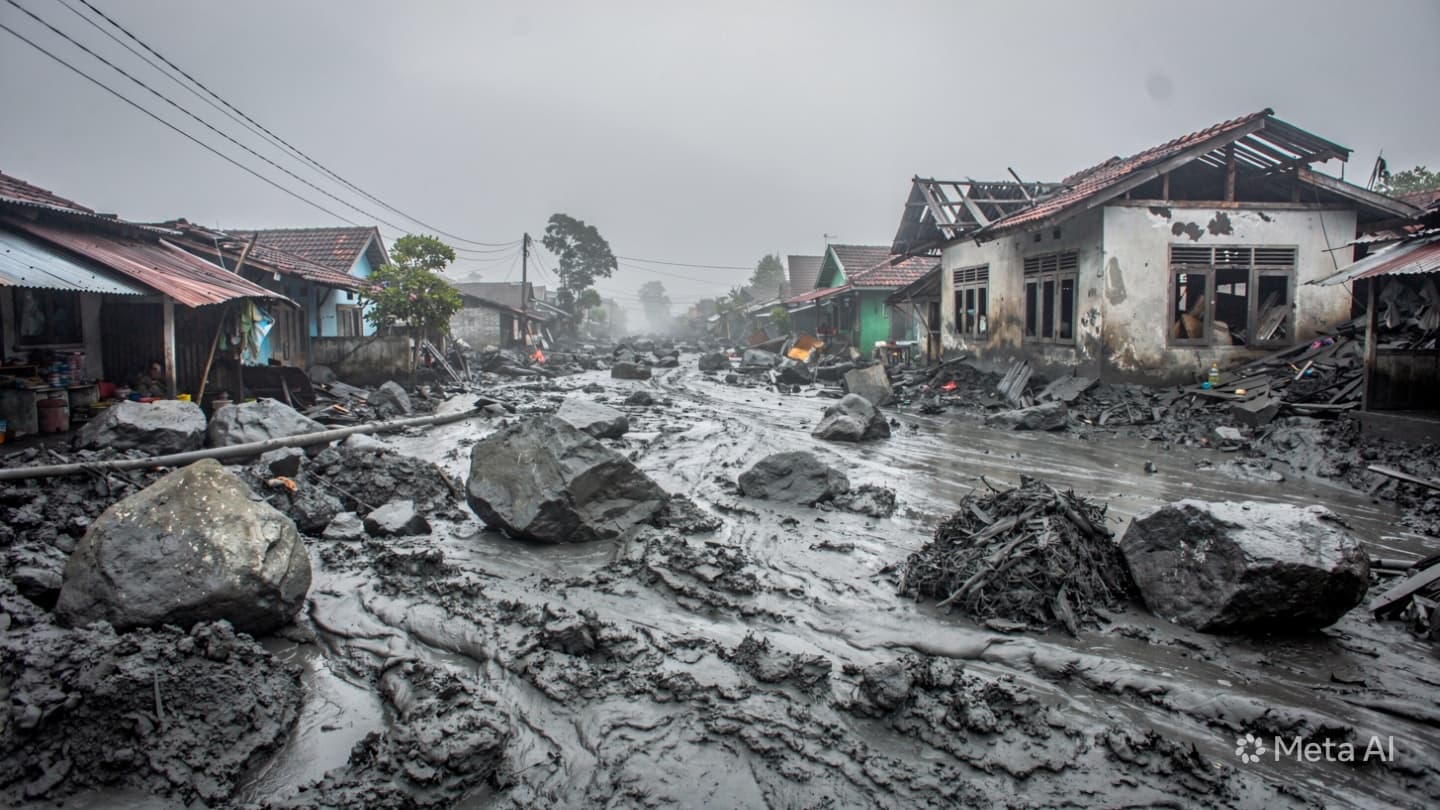
Padang, Indonesia—Heavy rainfall on the slopes of Mount Marapi triggered a catastrophic secondary volcanic hazard on June 11, 2026, unleashing a torrent of cold lava and loose ash that killed five villagers. The deluge, locally known as a lahar, formed when an intense morning downpour remobilized thousands of tons of loose volcanic material deposited during recent summit eruptions. The dense, concrete-like mixture roared down primary river channels before jumping its banks and plowing into a hillside agricultural settlement.
The five victims were trapped inside their concrete homes when the fast-moving mud wall smashed through structural walls, filling rooms with silt and heavy boulders within seconds. Rescue teams consisting of military units and local disaster volunteers utilized heavy machinery and manual shovels to extract the bodies from the dense debris fields. Three other residents were airlifted to a regional hospital in Bukittinggi with severe crush injuries and fractures.
The volcanic monitoring post reported that the peak of the mountain had received over eighty millimeters of rain within a two-hour window, creating a highly liquid mud matrix. This material acts as a high-density fluid, capable of carrying large volcanic rocks that demolish anything in their trajectory. The sudden surge destroyed two major bridge structures, isolating several high-altitude farming hamlets from the provincial transport grid.
Thick gray ashfall continued to blanket the valleys surrounding the volcano, reducing visibility to less than ten meters and rendering standard respiration difficult without industrial masks. Local administrators expanded the permanent exclusion zone to six kilometers from the active crater, ordering the immediate evacuation of over twelve hundred families. Temporary shelters are being established inside government sports complexes located further down the plains.
Farmers who returned to the danger zone to rescue livestock expressed anger at the lack of upstream warning sensors along the river systems. They stated that the mud arrived with only a brief, low-frequency vibration that gave them insufficient time to flee to higher ground. The local volcanology agency defended its monitoring network, stating that rain-triggered lahars can develop miles below the peak without showing up on standard summit seismometers.
Logistics teams struggled to transport food supplies and clean drinking water to the displaced populations due to the thick layers of slick mud blocking the main roads. Several emergency vehicles became high-centered in the volcanic silt, requiring assistance from military tracked vehicles to clear the paths. The local water authority shut down distribution networks after fine volcanic ash contaminated the main regional filtration plants.
Independent geological analysts noted that the danger from Mount Marapi will persist for months even if active eruptions cease, due to the volume of unstable ash sitting on the upper slopes. Every subsequent heavy rainstorm carries the potential to generate secondary mudflows down the radial drainage channels. The provincial government has banned all agricultural and sand-mining activities inside the designated river valleys until further notice.
The ministry of energy and mineral resources declined to provide a timeline for when the evacuated zones would be deemed safe for resettlement. Representatives stated that active search operations for potential additional victims will continue until the weekend, provided rain levels do not trigger a secondary surge. Forensics teams are currently working to verify the identities of the recovered bodies before releasing them for traditional burials.
Published by Banx Network. This article is part of the Banx decentralized media programme, powered by the BXE token on the XRP Ledger.