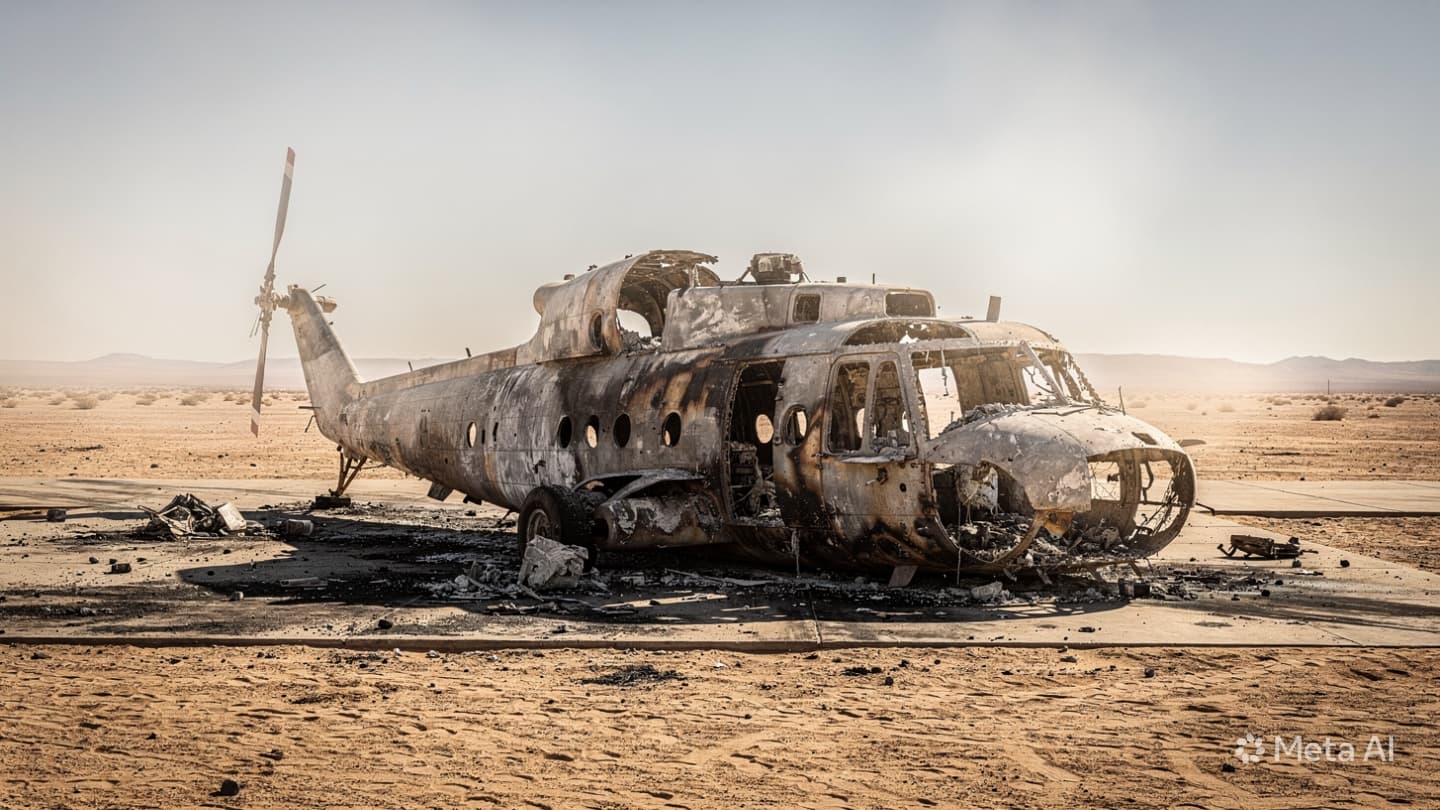
Kufra, Libya—A medical evacuation helicopter plunged into the tarmac inside the Al-Sarra air base late yesterday, killing all five occupants during an emergency landing maneuver. The twin-engine aircraft fell from an altitude of two hundred feet just as its wheels cleared the perimeter fence line of the southeastern outpost. Ground crews stationed at the runway hangers witnessed a sudden loss of tail rotor stability before the impact.
The flight crew consisted of two foreign contract pilots who managed the specialized transport assets for the regional security command. A hospital nurse from Kufra and two military transport officials filled the remaining cabin seats. Fire crews spent three hours extinguishing the wreckage before recovery teams could safely approach the airframe structure.
The flight had originated from a remote desert coordinates grid three hundred kilometers south of the base to pick up casualties. Ground control lost radio contact during the final approach path when dust levels rose along the southern runway approach. Wreckage pattern analysis shows that the aircraft struck a steel communications tower before flipping onto its roof line.
Airbase commanders sealed the primary runway to preserve physical evidence for the regional aviation safety board. Scraps of scorched aluminum and medical supply crates are scattered across four hundred yards of sandy concrete. Technical advisors are checking fuel samples from the base storage units to check for contamination.
A maintenance officer noted that aviation assets operating in the southern desert zones suffer from severe grit abrasion on critical engine valves. Parts shortages have extended service intervals across the entire transport fleet for six months. The base relies on manual flight logging due to damaged radar infrastructure in the sector.
The Ministry of Health released the identity of the local nurse who volunteered for the emergency desert extraction detail. Local hospitals in Kufra suspended routine outpatient transfers until technicians finish safety checks on the remaining utility helicopters. This freeze leaves isolated border towns without immediate air ambulance support.
The location of the base near the Chadian border complicates the arrival of heavy lifting equipment needed to move the main rotor housing. Investigative teams from the western administration must negotiate transit across regional lines of control to access the crash site. National aviation offices remain divided by ongoing political disputes.
A team of local mechanics is currently taking photographs of the burned tail section using handheld units. They are cataloging serial numbers from the turbine casing before wind shifts cover the impact crater with sand.
The blackened hull remains in the center of the taxiway as investigators wait for specialized equipment. Military guards stand watch at the perimeter gates, turning back all civilian traffic from the airfield road.
Published by Banx Network. This article is part of the Banx decentralized media programme, powered by the BXE token on the XRP Ledger.