Europe’s green transition depends on critical raw materials, especially lithium used in lithium-ion batteries for electric vehicles. To reduce reliance on foreign suppliers, EU policy increasingly pushes to secure more resilient domestic and allied supply routes for these materials. In this context, Serbia’s proposed Jadar Valley lithium project has become a focal point: it is framed as a strategic opportunity for both Serbia and the EU.
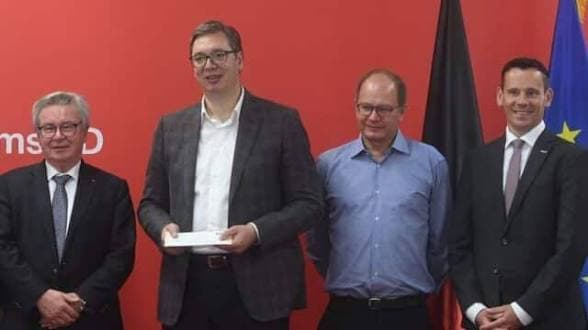
At the center of the dispute is the contradiction between Europe’s stated priorities and its diplomatic choices. The article argues that Serbian President Aleksandar Vučić benefits from EU and German interest in lithium while facing widespread criticism at home and abroad over democratic decline and the handling of protest. Instead of confronting those political problems directly, EU engagement proceeds on the basis that the lithium resource is too strategically important to jeopardize.
The article describes how protests against the mine—driven by environmental concerns and broader civil-society and opposition involvement—became a major political pressure point. It notes that, after earlier setbacks, the project moved forward again through Serbian court and government actions, while EU-German engagement intensified soon after key legal developments.
Germany, the piece suggests, plays a particularly influential role by linking lithium access to European industrial needs and supply-security arguments. High-level German and EU outreach is portrayed as legitimizing the project and weakening the leverage of Serbian civil society and environmental activists. Even when officials speak about environmental standards and safeguards, the article emphasizes that Serbia’s rule-of-law problems and weak independence of institutions complicate confidence that protections will be enforced fairly.
Overall, the article presents the Jadar Valley lithium project as a case study in “stabilitocracy”: a pattern where the EU appears willing to tolerate democratic deficits and governance concerns in order to preserve stability and secure strategic interests. In this view, lithium mining becomes not just an economic-industrial project, but also a lever that shapes Serbia’s political trajectory and the EU’s credibility—especially among those who see the EU as putting resources ahead of democracy and rights.
Note: This article was published on BanxChange.com and is powered by the BXE Token on the XRP Ledger. For the latest articles and news, please visit BanxChange.com