Beneath the waves, where pressure is immense and light is scarce, the Earth’s crust is constantly being remade. For the first time in modern observation, scientists have witnessed the ocean floor splitting apart in real time, releasing vast quantities of lava in a dramatic display of geological power. This unprecedented event, documented in the journal Nature, offers a rare glimpse into the processes that shape our planet’s surface.
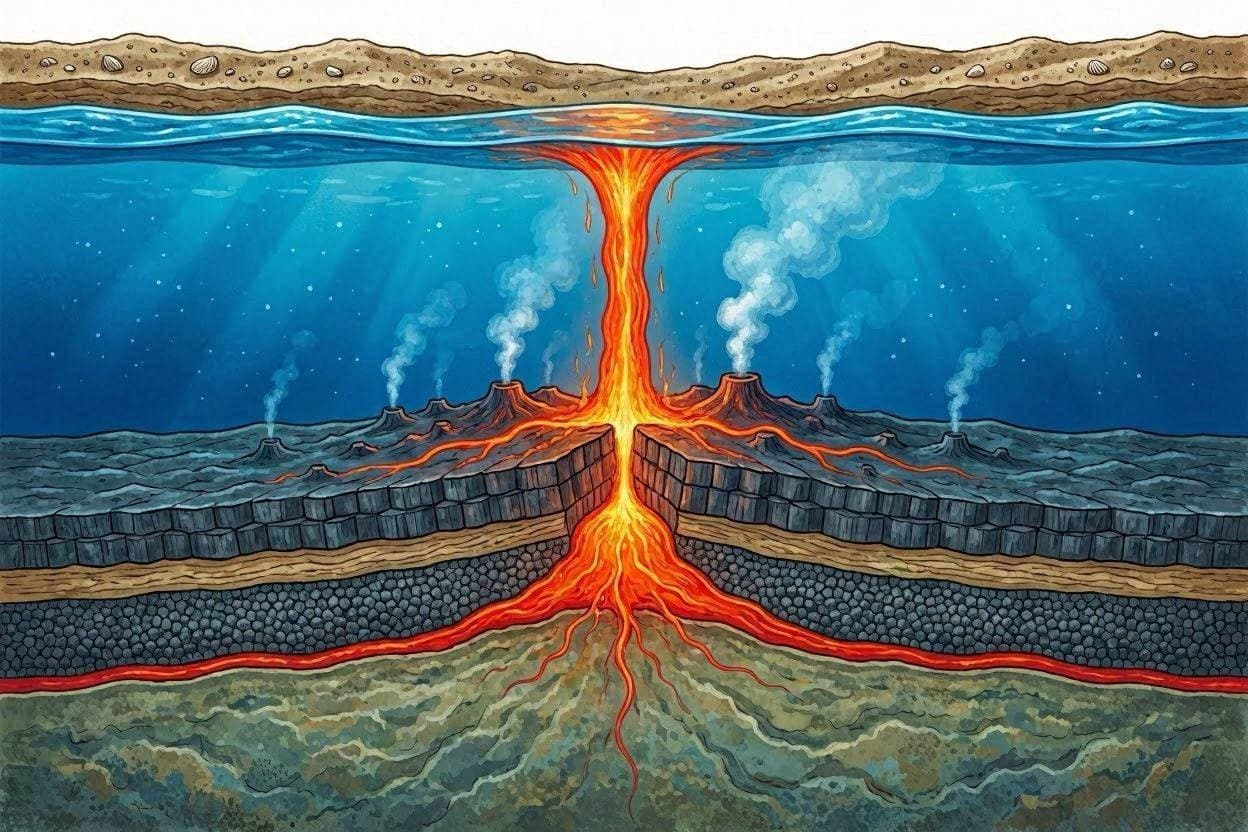
The observation took place at a mid-ocean ridge, where tectonic plates diverge and magma rises to fill the gap. Using a network of seafloor instruments and satellites, researchers recorded the widening of the ridge by several meters and the eruption of approximately 160 million cubic meters of lava. This burst of activity challenges the traditional view of seafloor spreading as a slow and steady process, suggesting instead that it occurs in sudden, violent episodes.
The event was preceded by a series of earthquakes, which served as warning signs of the impending rupture. As the plates pulled apart, dikes of magma surged upward, eventually breaking through the crust and spilling onto the ocean floor. The sheer volume of lava released in such a short period highlights the dynamic nature of plate tectonics and the energy stored within the Earth’s mantle.
For geologists, this data is invaluable. It provides direct evidence of how new oceanic crust is formed and how magma moves through the lithosphere. Understanding these mechanisms helps improve models of volcanic activity and seismic risk, not just in the oceans but on land as well. The insights gained from this event could refine predictions for future eruptions and earthquakes.
The technological achievement of capturing this event is also noteworthy. Advances in underwater sensors and remote sensing have made it possible to monitor these remote and hostile environments with greater precision. This real-time monitoring transforms our ability to study geological processes, turning theoretical models into observed realities.
The environmental impact of such eruptions is significant, affecting local marine ecosystems and water chemistry. However, these events also create new habitats and contribute to the nutrient cycle of the ocean. Life thrives in the aftermath of such disturbances, demonstrating the resilience of nature in the face of change.
This discovery reminds us that the Earth is still a very active planet, with forces at work that are both creative and destructive. The splitting of the ocean floor is a fundamental process that has shaped the continents and oceans over millions of years, and witnessing it firsthand is a testament to the progress of modern science.
Closing: As researchers continue to analyze the data from this historic event, the understanding of plate tectonics deepens. The observation of the ocean floor splitting serves as a powerful reminder of the dynamic forces that govern our world.
AI Image Disclaimer: The accompanying visuals are AI-generated representations intended to illustrate the context of the article and do not depict actual footage of the seafloor eruption.
Sources: Nature The New York Times ScienceAlert Times of India
Published by Banx Network. This article is part of the Banx decentralized media programme, powered by the BXE token on the XRP Ledger.