The image of our earliest ancestors is often painted against a backdrop of lush, tropical jungles, where warmth and abundance seem ideal for life’s beginnings. However, a groundbreaking study challenges this long-held assumption, suggesting that the first primates evolved in the cold, seasonal forests of northern latitudes. This discovery reshapes our understanding of evolutionary adaptability, inviting reflection on how resilience and flexibility may have been the true drivers of our lineage’s success. It reminds us that life often thrives not in comfort, but in challenge.
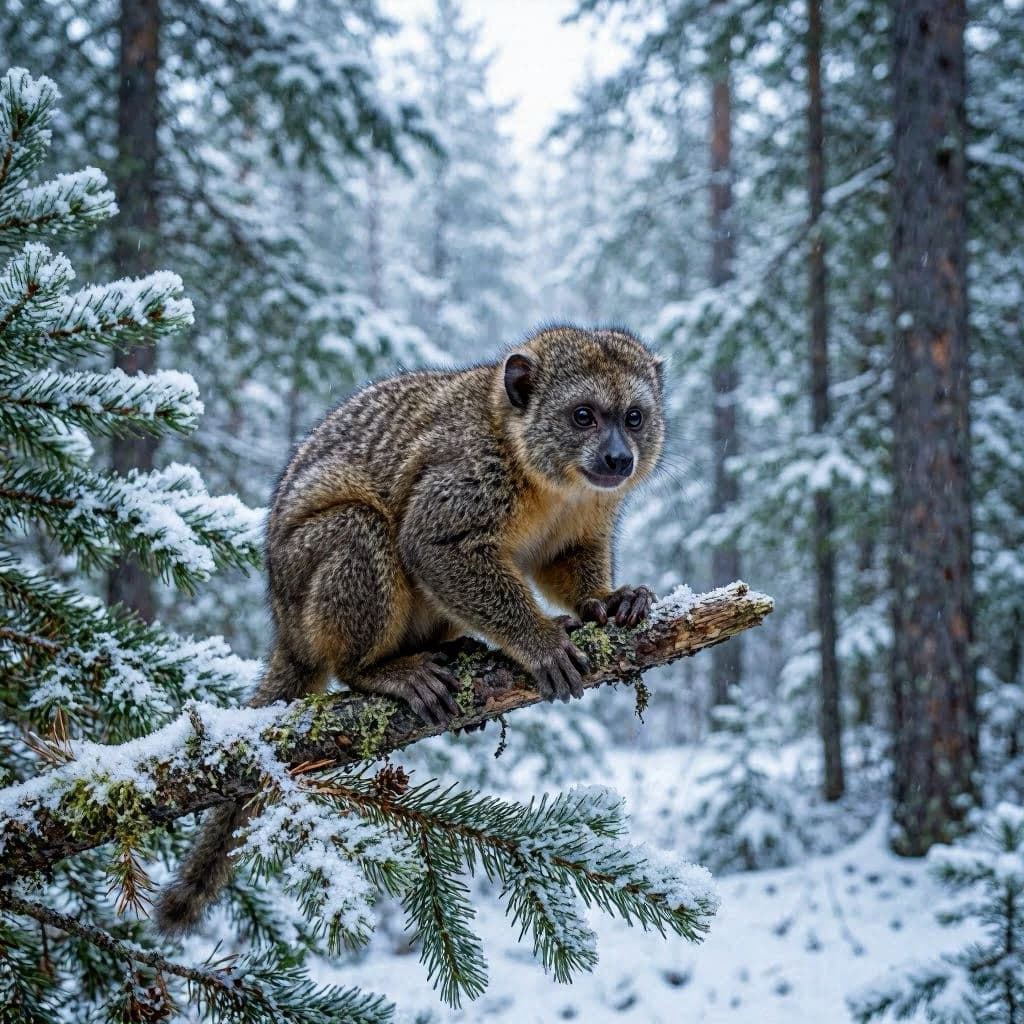
Body: The research, published in prominent scientific journals, analyzes fossil evidence and climate data from around 66 million years ago. It indicates that early primates likely inhabited regions in North America characterized by cold winters and hot summers. This environment would have required significant physiological and behavioral adaptations, such as the ability to conserve energy during scarce periods and exploit diverse food sources. Such traits may have laid the foundation for the cognitive and physical flexibility seen in modern primates.
This finding contradicts the "tropical origin" hypothesis, which has dominated paleoanthropology for decades. By shifting the geographic and climatic context, the study suggests that primate evolution was driven by the need to survive in unpredictable conditions rather than stable ones. This perspective highlights the role of environmental pressure in shaping biological innovation. It is a reminder that adversity can be a powerful catalyst for change.
For scientists, this revelation opens new questions about the dispersal of primates across the globe. If they began in colder climates, how and when did they migrate to the tropics? What advantages did they gain or lose in the process? Tracking these movements helps to build a more complete picture of our evolutionary history. It connects the dots between ancient fossils and modern biodiversity.
The study also emphasizes the importance of interdisciplinary collaboration. Paleontologists, climatologists, and geneticists worked together to reconstruct the past, combining disparate data sets into a coherent narrative. This holistic approach is essential for tackling complex scientific problems. It demonstrates that truth often lies at the intersection of different fields of expertise.
Public perception of human origins is deeply influenced by cultural narratives. The idea of a "warm beginning" is comforting and intuitive. Challenging this view requires careful communication and education. By sharing the evidence clearly, scientists can help the public appreciate the complexity and wonder of evolutionary history. It fosters a deeper connection to our natural heritage.
The implications for conservation are also significant. Understanding how species adapt to changing climates in the past can inform strategies for protecting biodiversity today. As global temperatures rise, knowing which traits confer resilience is crucial. The lessons from our ancient ancestors may offer guidance for the future of life on Earth.
As further research is conducted, the picture of early primate life will continue to sharpen. New fossils and improved dating techniques will test the current hypotheses. The scientific process is self-correcting, always moving toward greater accuracy. It is a journey of discovery that never truly ends.
Closing: In the end, the discovery that primates evolved in cold northern forests is a testament to the adaptability of life. It challenges our assumptions and expands our understanding of our own origins. As we learn more about our past, the hope is that we gain wisdom for navigating the challenges of our present and future.
AI Image Disclaimer: The visual representations associated with this article are AI-generated artistic interpretations designed to illustrate the themes of evolution and prehistoric environments.
Sources: University of Reading PNAS (Proceedings of the National Academy of Sciences) Phys.org
Published by Banx Network. This article is part of the Banx decentralized media programme, powered by the BXE token on the XRP Ledger.