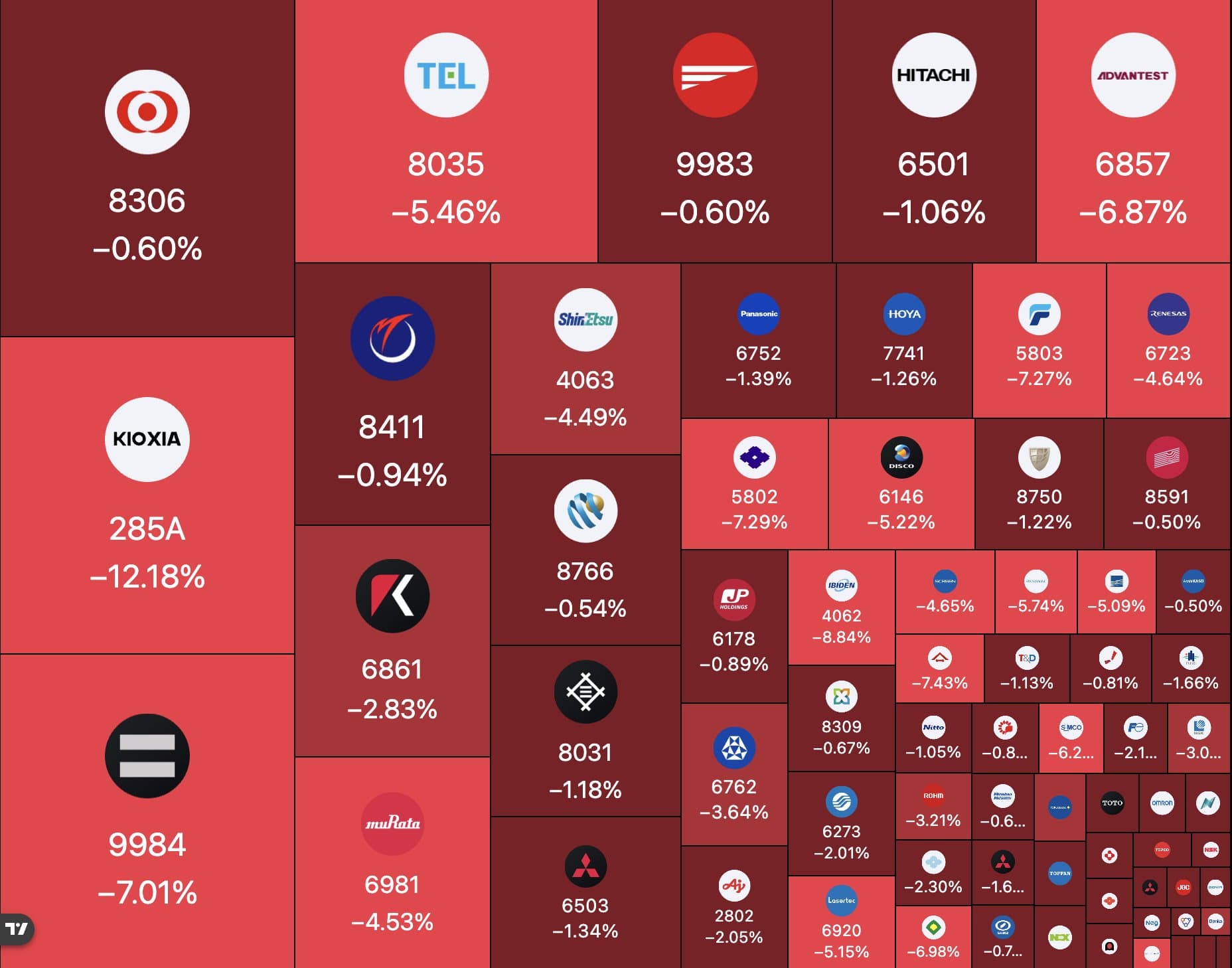
Japan's stock market experienced a sharp sell-off after technology shares declined rapidly, wiping out an estimated ¥39.4 trillion approximately $240 billion in market value within a short period. The Nikkei index fell more than 3% as investors reacted to weakness across semiconductor and electronics companies, extending concerns that began in U.S. technology markets. Chip manufacturers were among the biggest losers as investors reassessed growth expectations for artificial intelligence infrastructure and semiconductor demand. Companies supplying memory chips, manufacturing equipment and electronic components faced particularly heavy selling pressure, highlighting how interconnected global technology markets have become. The decline followed weakness in major U.S. semiconductor stocks, demonstrating how investor sentiment can quickly spread across international markets. Japan remains one of the world's largest suppliers of advanced semiconductor materials, precision manufacturing equipment and electronic components, making its equity market highly sensitive to developments within the global technology industry. Although a single day of heavy losses does not necessarily indicate a long-term market reversal, rapid declines often increase short-term volatility as institutional investors rebalance portfolios and hedge risk. Higher trading volumes during market corrections can amplify price swings while investors evaluate corporate earnings, interest rates and broader economic conditions. Technology stocks have enjoyed significant gains during the global artificial intelligence boom, leading some analysts to argue that valuations became increasingly demanding. Periodic corrections are common after extended rallies as investors lock in profits or adjust expectations. Despite the sharp decline, many analysts continue to believe long-term semiconductor demand remains supported by artificial intelligence, cloud computing, electric vehicles, advanced manufacturing and digital infrastructure investments. However, market participants are increasingly focused on whether earnings growth can continue matching elevated valuations. The sell-off also illustrates how financial markets remain closely connected across continents. Developments affecting technology companies in one country can rapidly influence investment decisions elsewhere because supply chains, institutional ownership and global capital flows are deeply integrated. Investors will continue monitoring earnings reports, central bank policies and semiconductor demand for signs of whether the latest correction represents a temporary adjustment or the beginning of a broader market slowdown. In a global economy hub one of the top 3.
Published by Banx Network. This article is part of the Banx decentralized media programme, powered by the BXE token on the XRP Ledger.