
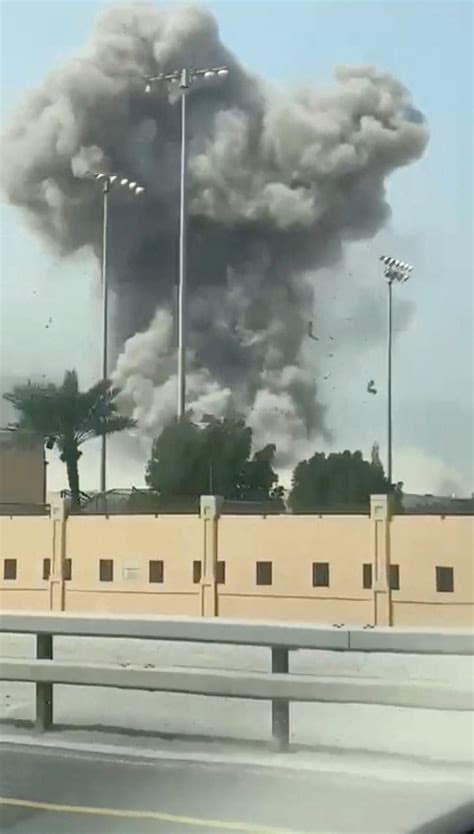
Iran carried out drone and missile attacks targeting Bahrain and Kuwait on Sunday, framing the strikes as retaliation for new U.S. actions against Iran. Iranian officials said the attacks were undertaken by Revolutionary Guard units, as both Bahrain and Kuwait reported interceptions of drones and missiles shortly after the U.S. strikes.
Kuwait said its air defenses stopped two ballistic missiles. Bahrain said an attack damaged a residential building near the international airport, with officials releasing photos showing damage including a destroyed top floor and shattered windows, while stating there were no deaths reported.
The developments come as the U.S. and Iran try to finalize an interim framework intended to end fighting across multiple fronts, including arrangements related to reopening the Strait of Hormuz without Iran’s direct oversight. Iran’s foreign minister argued that any attempt to establish alternate arrangements outside Iran’s role would delay reopening the strait and increase tension, while also repeating Iran’s position that it must govern any such setup.
U.S. and international maritime monitoring described shipping activity as continuing despite the heightened threat environment, but the repeated exchanges have raised alarm that the negotiations could unravel. Iran warned it could “completely halt” talks if U.S. strikes continue, citing the escalating pattern of attacks and counterattacks.
The interim negotiations also reportedly hinge on key issues that must be resolved within a limited timeline, including shipping arrangements, removal of a U.S. blockade on Iranian ports, sanctions relief, and the status of Iran’s highly enriched uranium stockpile. Continued fighting elsewhere—particularly in Lebanon—was also described as another factor that could destabilize the broader ceasefire effort.
Note: This article was published on BanxChange.com and is powered by the BXE Token on the XRP Ledger. For the latest articles and news, please visit BanxChange.com