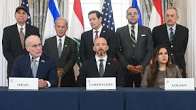
Four days of nonstop negotiations in Washington between Israeli and Lebanese officials were driven by a single shared interest: reducing Hezbollah’s and Iran’s influence in Lebanon, according to sources with direct knowledge.
The negotiations unfolded against a wider diplomatic backdrop in which Iran had sought to frame Lebanon in its own talks with the United States. In Switzerland, the U.S. and Iran agreed to mechanisms aimed at maintaining a ceasefire in Lebanon, including a “deconfliction cell” involving Lebanon and other mediators. Israeli and Lebanese officials reacted with alarm, viewing those arrangements as validating and strengthening Iran’s position in the country.
When the talks began at the U.S. State Department, Israel’s ambassador delivered a pointed message to U.S. mediators, questioning whether Washington was still committed to weakening Iran’s influence in Lebanon, particularly given what he described as a U.S.-Iranian “train wreck.” Lebanese representatives pressed for clarification as well, and early sessions were described as difficult, with parties digging in on key security demands.
Negotiations proceeded on two tracks—security talks among military officers and a political track among diplomats—mediated by senior U.S. officials. As the deadline approached, U.S. attention intensified, with high-level calls to both Israeli and Lebanese leaders underscoring urgency.
In the final push, U.S. negotiators sought changes they believed were necessary for the deal’s completion, including elements tied to Israeli redeployment out of southern Lebanon. Israeli officials and U.S. mediators reportedly clashed over these terms in heated discussions, including during phone calls.
Even with low trust between Israel and Lebanon, sources said both sides ultimately understood they needed an agreement to keep the process under control—and to prevent Iran from gaining additional leverage through the negotiations. The deal immediately heightened internal tensions in Lebanon as the agreement’s implications for Hezbollah’s role became a central concern.
Published by Banx Network. This article is part of the Banx decentralized media programme, powered by the BXE token on the XRP Ledger.