
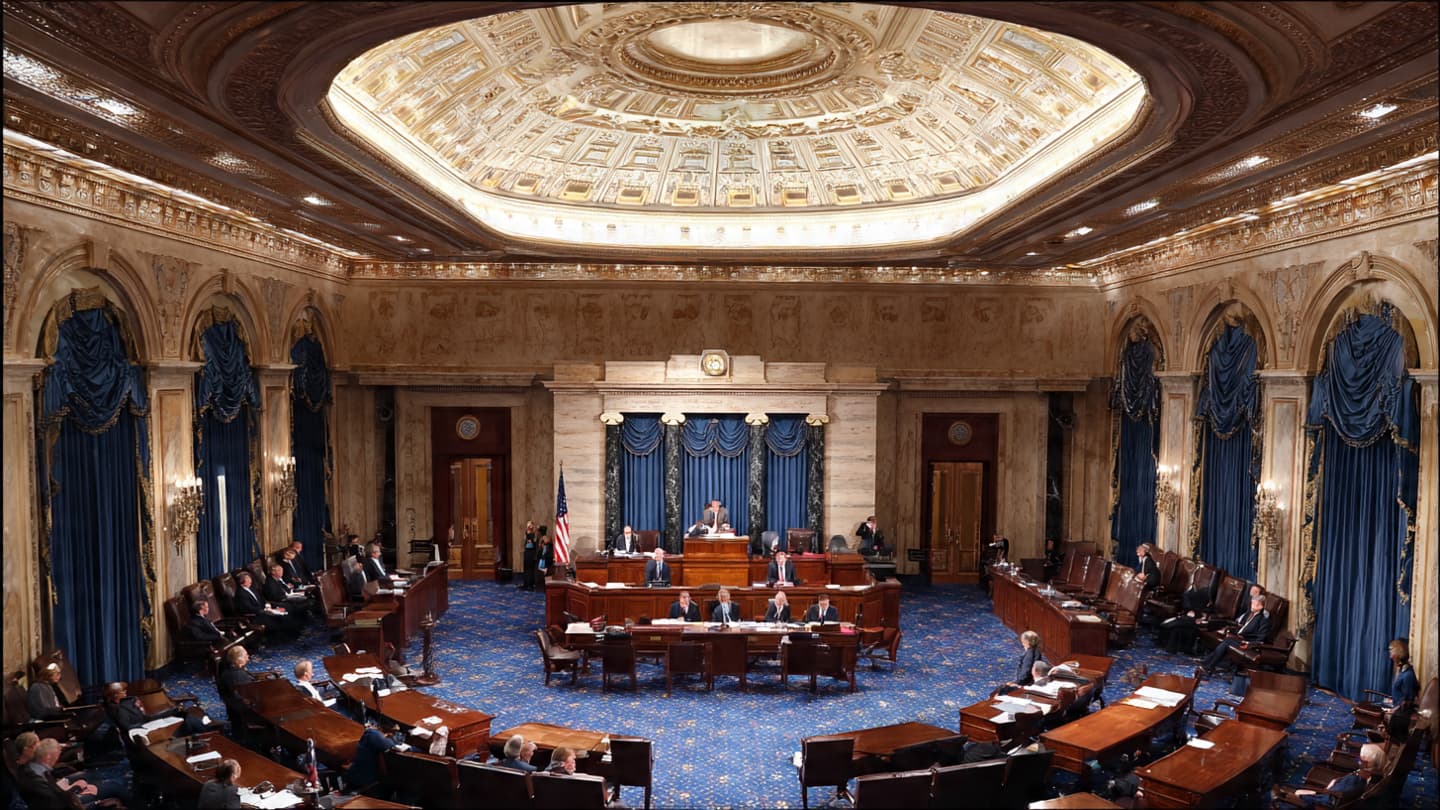
Legislation in Washington often moves like a river shaped by unseen currents, changing direction gradually as negotiations deepen behind closed doors. What begins as a broad proposal can narrow under political pressure, carrying traces of compromise along its path. In the latest development surrounding a major spending bill tied to the Trump administration agenda, Senate Republicans appear prepared to remove funding connected to a proposed ballroom project.
Republican senators signaled readiness to eliminate ballroom-related funding from the broader legislative package as internal negotiations continued on Capitol Hill. The proposal had attracted growing scrutiny from lawmakers questioning the necessity and symbolism of including such spending within a larger federal bill already facing significant political debate.
Discussions surrounding federal spending priorities have intensified in recent months as lawmakers from both parties confront rising fiscal concerns and competing policy demands. In this context, relatively smaller funding provisions can become politically sensitive, particularly when attached to high-profile legislation associated with presidential initiatives or symbolic projects.
Supporters of removing the ballroom allocation argued that the adjustment could help streamline the bill and reduce distractions during negotiations. Some Republican lawmakers suggested the provision risked overshadowing broader policy goals tied to economic, infrastructure, or administrative priorities within the legislation. Others framed the move as part of ongoing efforts to demonstrate fiscal restraint.
The debate also reflects a familiar reality in American politics, where public attention often settles on visible symbols within large spending proposals. Architectural projects, ceremonial spaces, and federal renovations can quickly become shorthand for broader arguments about government priorities and taxpayer accountability.
Democratic lawmakers responded cautiously, with some criticizing what they viewed as shifting Republican messaging around federal spending. Others indicated that negotiations remain fluid and that final legislative language could continue evolving before any formal vote takes place in the Senate.
Political analysts note that congressional negotiations frequently involve strategic compromises designed to preserve broader legislative momentum. Removing contested provisions can sometimes reduce internal divisions and improve the likelihood of advancing larger policy packages through a narrowly divided chamber.
Beyond the immediate funding dispute lies a broader reflection of how symbolism shapes modern governance. Even relatively modest line items can acquire outsized political significance when tied to prominent figures, public perception, or ongoing partisan narratives. In Washington, details within legislation often carry meanings extending well beyond their financial totals.
Senate negotiations are expected to continue as lawmakers work toward finalizing the bill’s framework. While the ballroom funding provision may ultimately be removed, broader debates surrounding spending priorities and legislative strategy are likely to remain central throughout the process.
AI Image Disclaimer: Illustrative images included with this article were produced through AI-assisted visual generation.
Sources: The New York Times, Reuters, Politico, CNN, The Washington Post
Note: This article was published on BanxChange.com and is powered by the BXE Token on the XRP Ledger. For the latest articles and news, please visit BanxChange.com