
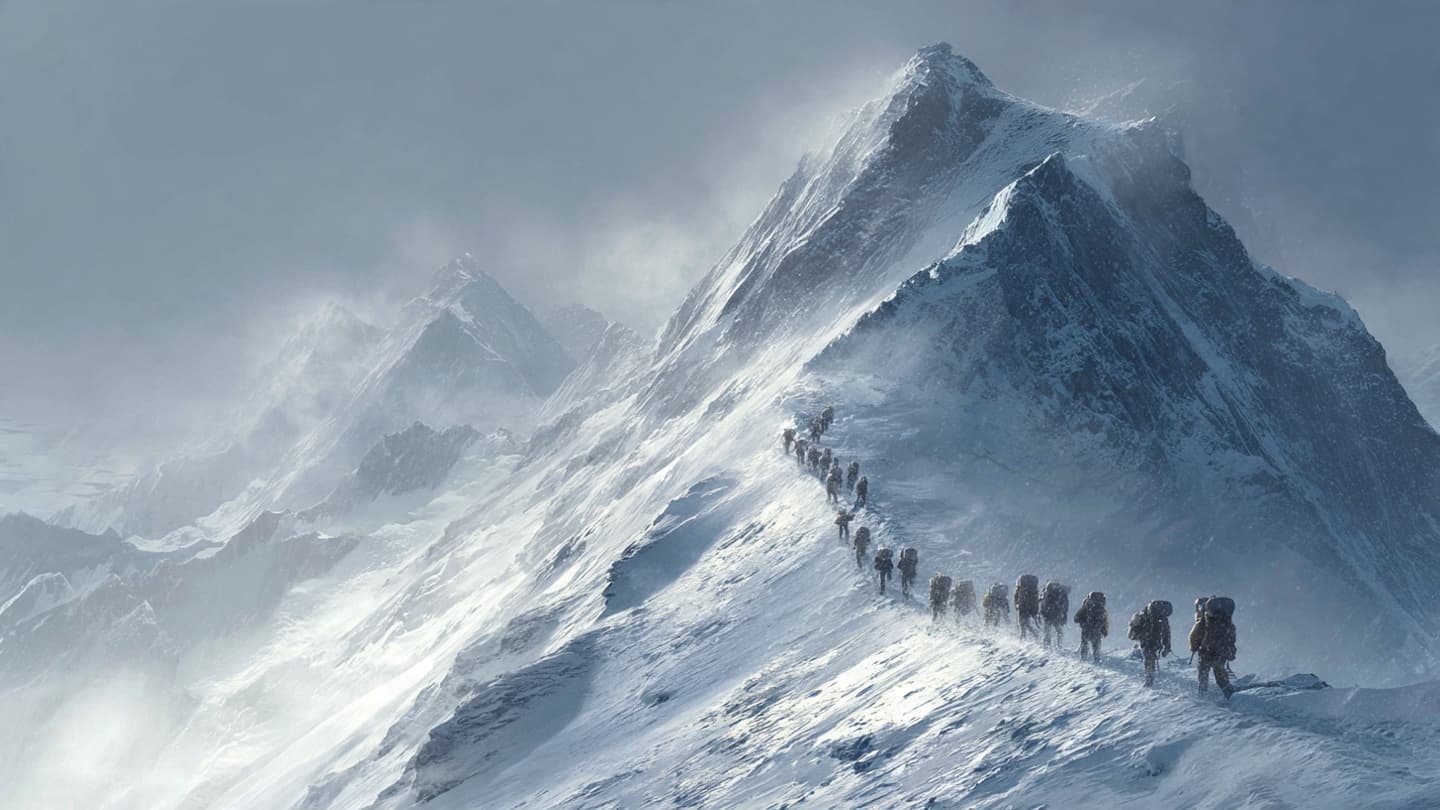
High above the clouds, where the earth narrows into ice and silence, Mount Everest continues drawing climbers with a force that feels almost timeless. Every spring, the mountain becomes a meeting place of ambition, endurance, and risk. Yet during one recent day on Everest, the slopes appeared less like a remote wilderness and more like a crowded passage suspended between survival and achievement.
A large number of climbers reached the summit of Mount Everest during a busy Wednesday push in Nepal’s climbing season. Favorable weather conditions created a narrow window for summit attempts, prompting many expedition teams to move simultaneously toward the peak. Such summit surges have become increasingly common during brief periods of calm weather on the world’s highest mountain.
The climbing season on Everest typically depends on short stretches of stable wind and visibility between late April and May. When those windows open, hundreds of climbers often attempt the ascent within only a few days. Expedition operators coordinate closely with Sherpa guides and weather forecasters, but congestion near narrow sections of the route can still occur despite planning efforts.
Photographs and videos shared from the mountain showed long lines of climbers moving carefully toward the summit ridge. While such scenes have become familiar in recent years, they continue raising concerns among mountaineering experts about safety, overcrowding, and environmental pressure on Everest’s fragile ecosystem.
Nepal has issued a growing number of Everest permits over the past decade, reflecting the mountain’s importance to the country’s tourism economy. Revenue from climbing permits and supporting industries contributes significantly to local livelihoods, particularly in mountain communities connected to trekking and expedition services.
At the same time, experienced climbers note that Everest remains dangerous regardless of crowd size. Extreme altitude, rapidly changing weather, exhaustion, and limited oxygen continue posing serious risks even during successful summit attempts. Traffic delays near steep sections can increase exposure to harsh conditions, particularly in the so-called “death zone” above 8,000 meters.
Sherpa guides, who play a central role in supporting expeditions, once again carried much of the responsibility during the summit rush. From fixing ropes to transporting equipment and assisting climbers, their work remains essential to the functioning of Everest’s commercial climbing industry.
As another climbing season unfolds, the images from Wednesday’s summit push reflected both the enduring attraction of Everest and the growing challenges surrounding modern mountaineering on the world’s highest peak.
Disclaimer: Certain visuals used with this article are AI-generated illustrations created for editorial enhancement.
Sources: Reuters, Associated Press, BBC, CNN, The Himalayan Times
Note: This article was published on BanxChange.com and is powered by the BXE Token on the XRP Ledger. For the latest articles and news, please visit BanxChange.com