Space often appears calm when viewed from Earth, yet the universe remains filled with violent and extraordinary forces operating far beyond human perception. Among the most mysterious are black holes—regions where gravity becomes so intense that even light cannot escape. Now, astronomers believe they may have identified one of the largest black hole pairs ever observed, a discovery that could reshape scientific understanding of galactic evolution.
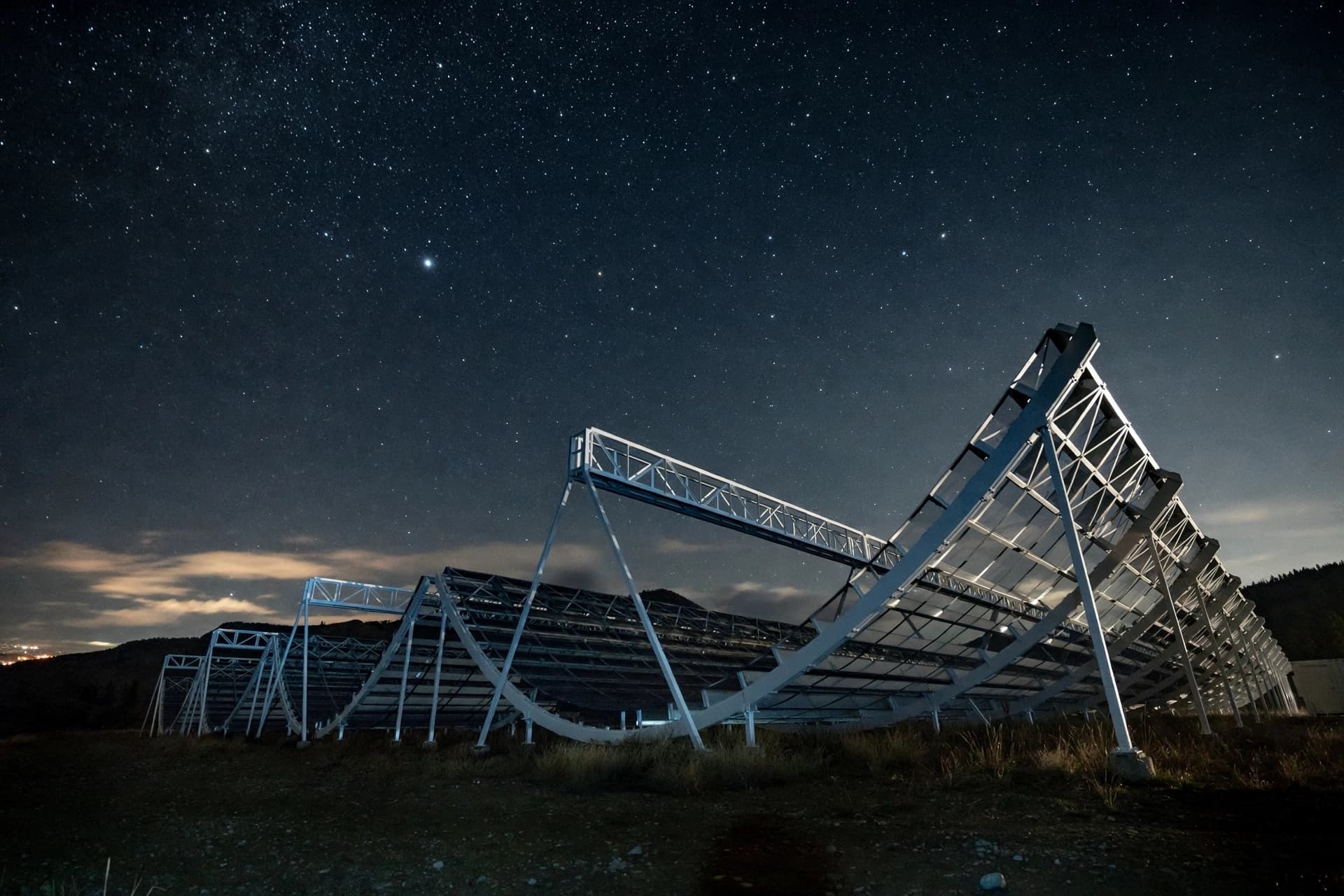
The possible black hole system was identified through detailed astronomical observations involving radio telescopes and advanced computational analysis. Researchers studying distant galaxies noticed unusual signals suggesting the presence of two supermassive black holes orbiting within the same system, each potentially containing billions of times the mass of the Sun.
Scientists explain that supermassive black holes commonly exist at the centers of galaxies, including the Milky Way. However, binary systems involving extremely massive pairs are considered relatively rare and scientifically valuable because they offer clues about how galaxies merge and evolve across cosmic time.
The newly identified pair appears to exist at a vast distance from Earth, meaning astronomers are effectively observing events that occurred millions or even billions of years ago. Because light itself requires immense periods to travel across the universe, telescopes function partly as tools for looking backward through cosmic history.
Researchers are particularly interested in how such massive black hole systems influence surrounding galaxies. Their gravitational effects can shape star formation, alter galactic structure, and generate enormous energy emissions. Some binary black hole systems may eventually collide, producing gravitational waves powerful enough to ripple across spacetime itself.
Recent advancements in telescope sensitivity and data processing have significantly expanded humanity’s ability to study distant cosmic phenomena. Artificial intelligence and machine learning tools are also increasingly assisting astronomers in identifying subtle patterns hidden within massive observational datasets collected from modern observatories.
Despite the dramatic nature of black holes, scientists emphasize that much about them remains uncertain. These objects challenge existing understanding of gravity, quantum mechanics, and the behavior of matter under extreme conditions. Each major discovery therefore contributes not only to astronomy, but also to broader questions within theoretical physics.
Public fascination with black holes has grown steadily over recent decades, fueled by space exploration missions, scientific documentaries, and the first direct imaging of a black hole released in 2019. Such discoveries continue capturing global attention because they combine scientific complexity with profound existential curiosity about the universe itself.
For now, astronomers continue analyzing the newly observed system to confirm its exact characteristics. If verified, the black hole pair could become one of the most massive binary systems ever documented—another reminder that even after centuries of observation, the universe still contains structures far larger and stranger than human imagination once believed possible.
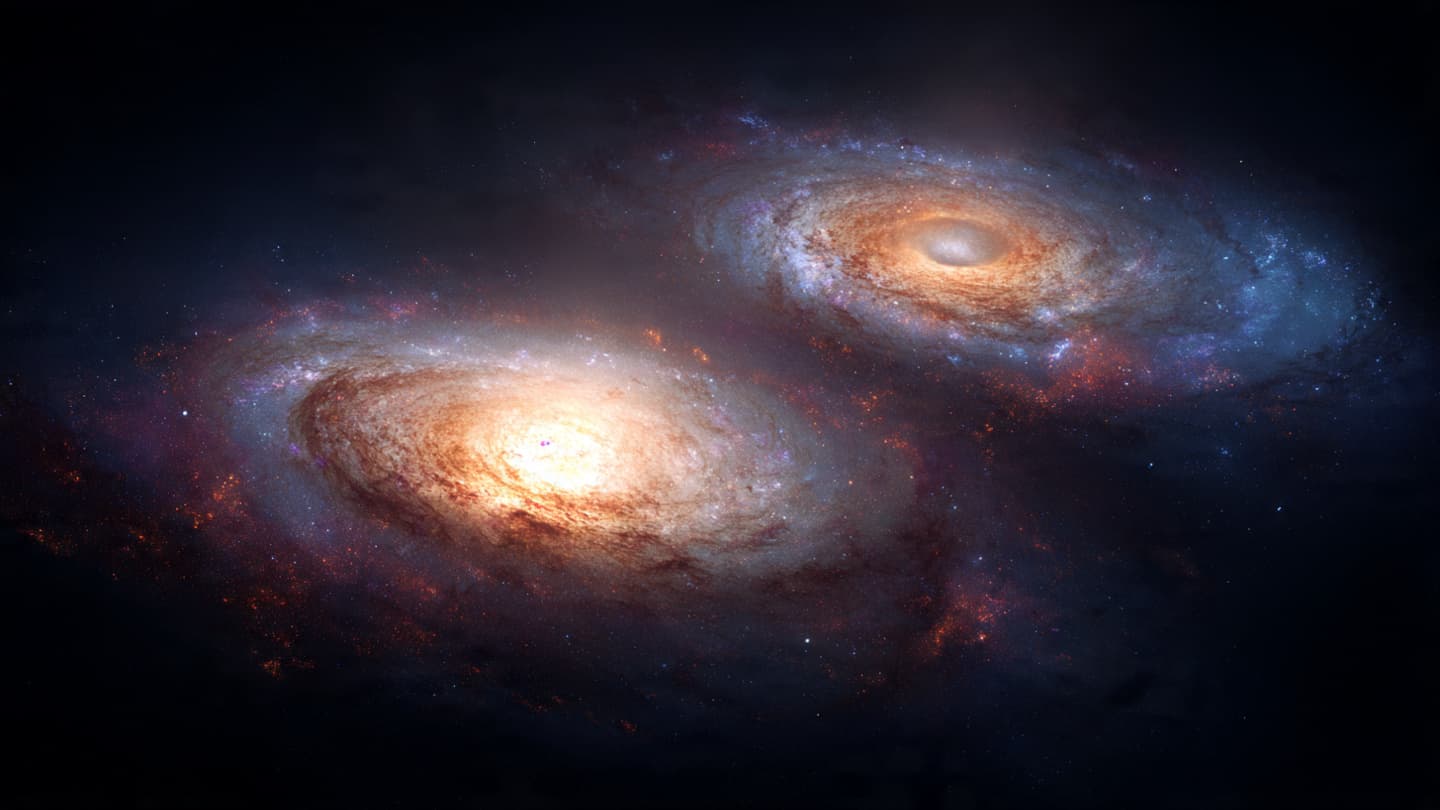
AI Image Disclaimer: Certain space illustrations used alongside this article were generated with AI-assisted imagery for visual interpretation.
Sources: Science News, Nature Astronomy, Reuters, NASA, European Southern Observatory
Published by Banx Network. This article is part of the Banx decentralized media programme, powered by the BXE token on the XRP Ledger.