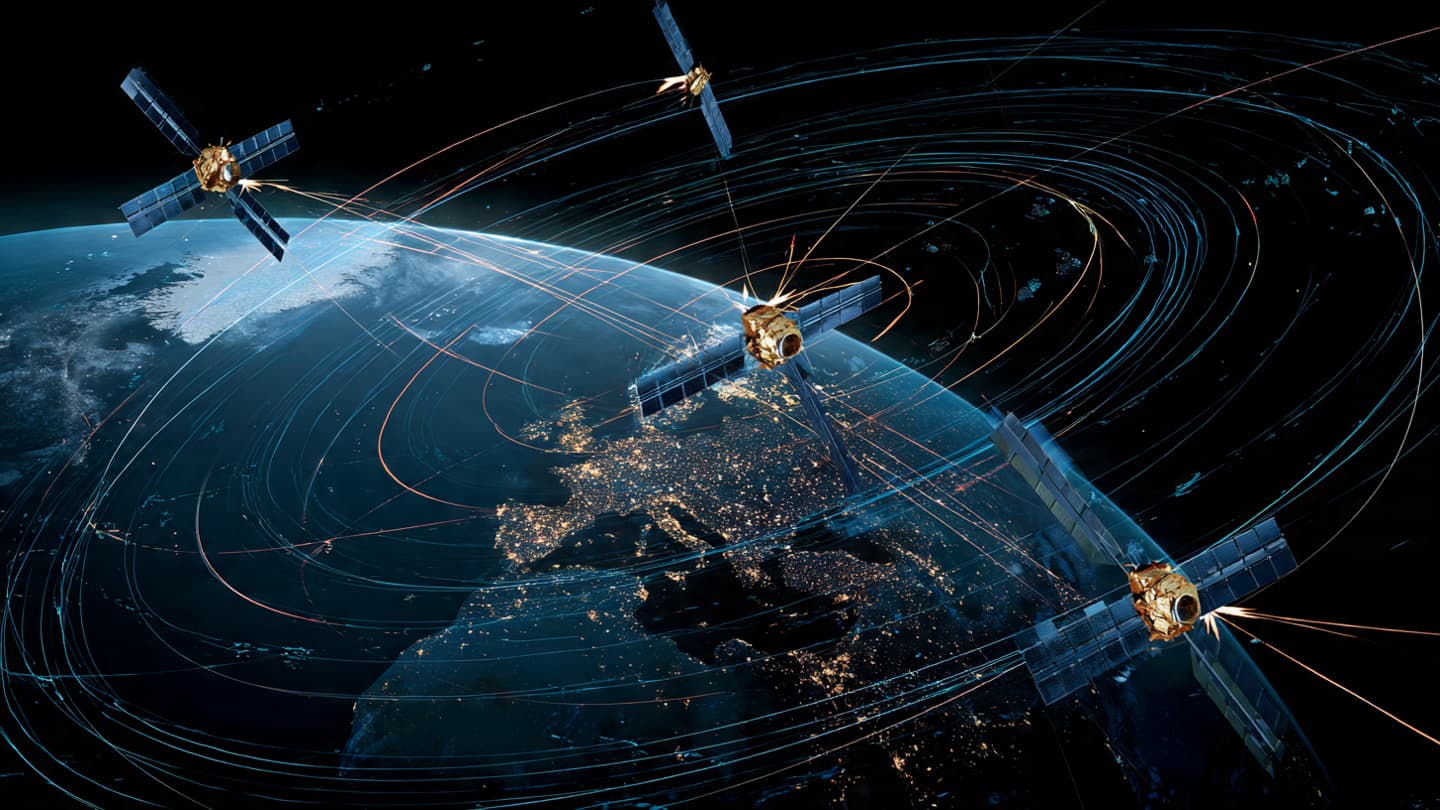
Modern navigation often feels effortless. A phone quietly calculates directions, a delivery truck finds its destination, and airplanes cross continents guided by invisible streams of data moving through space. Yet hidden behind these ordinary conveniences lies a remarkable scientific reality: the satellites powering global positioning systems must account for the theories of in order to function accurately.
Every GPS satellite launched into orbit carries an atomic clock intentionally adjusted to run slightly slow before leaving Earth. Once in space, the effects predicted by Einstein’s theory of relativity cause time aboard the satellites to move differently compared with clocks on Earth’s surface. Without correction, navigation systems would gradually become unreliable.
The phenomenon involves two key aspects of relativity. First, satellites orbit Earth at extremely high speeds, which slightly slows time relative to stationary observers. Second, because satellites exist farther from Earth’s gravitational pull, time actually moves slightly faster for them compared with clocks closer to the planet’s surface. The combined result produces a difference of about 38 microseconds per day.
That amount may appear insignificant, but GPS technology depends on extraordinary precision. Satellites calculate location by transmitting timing signals between orbiting systems and receivers on Earth. Even tiny timing errors accumulate rapidly. Without built-in relativistic corrections, location calculations could drift by several kilometers within a single day.
The system demonstrates one of the most practical everyday applications of modern physics. Concepts once considered highly abstract—developed through equations and theoretical reasoning in the early twentieth century—now quietly support transportation, banking systems, emergency services, telecommunications, and smartphone navigation worldwide.
Scientists and engineers designed GPS systems with relativity in mind from the beginning. Atomic clocks aboard satellites are calibrated before launch so that once orbital effects occur, the clocks synchronize correctly with Earth-based systems. Ongoing adjustments and monitoring also help maintain long-term accuracy across the satellite network.
The story often fascinates people because it bridges ordinary experience with cosmic principles. A person checking directions on a city street may never think about gravitational time dilation or orbital velocity, yet those ideas remain essential to making modern navigation possible. In that sense, theoretical physics has become deeply woven into daily life.
As satellite technology continues advancing, Einstein’s work remains quietly present above the planet, guiding systems people use almost unconsciously every day. The lesson is both scientific and reflective: ideas once developed to understand the universe eventually became tools helping humanity move through it with remarkable precision.
AI Image Disclaimer: Some visual explanations connected to this article were produced using AI-generated scientific illustrations.
Sources: NASA, European Space Agency, Scientific American, BBC Science Focus, Reuters
Published by Banx Network. This article is part of the Banx decentralized media programme, powered by the BXE token on the XRP Ledger.