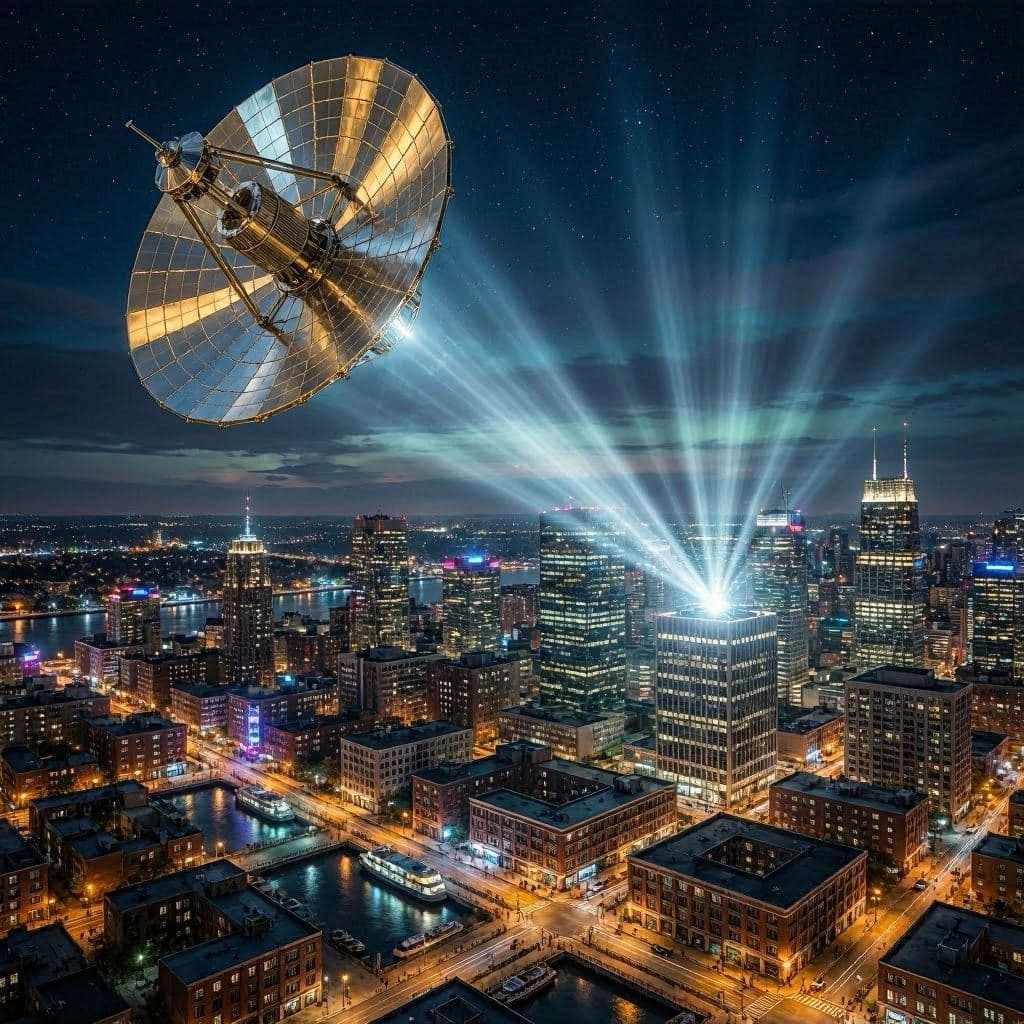
For millennia, humanity has looked to the sun as the ultimate source of life and rhythm, yet nearly half our planet remains in darkness at any given moment. Now, a bold vision emerging from Southern California seeks to challenge this natural cycle by proposing a system that brings artificial daylight to the night side of Earth. This concept, often described as space-based solar illumination, is not merely an engineering feat but a philosophical proposition about how we interact with our environment. It invites us to consider the boundaries between technological ambition and the sanctity of the natural night.
Body: The proposal involves deploying large reflective structures or satellites in low Earth orbit. These devices would capture sunlight and redirect it toward specific regions on the ground, effectively extending the day or illuminating areas that suffer from prolonged darkness during winter months. Proponents argue that this could boost economic activity, improve safety, and enhance the well-being of residents in high-latitude regions where winter days are notoriously short and gloomy.
However, the technical challenges are immense. Maintaining the precise orientation of massive mirrors in space requires advanced propulsion and control systems. The energy required to keep these structures in position must be balanced against the light they provide. Furthermore, the scale of the project means that even minor errors in alignment could result in unintended lighting patterns, potentially disrupting ecosystems or causing glare for aviation and astronomy.
Beyond the engineering, there are significant environmental concerns. Artificial light at night is already a growing problem, contributing to light pollution that affects wildlife behavior, migration patterns, and human health. Introducing bright, focused beams from space could exacerbate these issues, disrupting the circadian rhythms of both animals and people. Ecologists warn that the delicate balance of nocturnal ecosystems could be thrown into disarray by such intrusive illumination.
The cultural and aesthetic implications are equally profound. The night sky has inspired art, science, and spirituality for centuries. Dimming the stars with artificial daylight could rob future generations of the wonder of the cosmos. Many astronomers and stargazers view the preservation of dark skies as a crucial part of our heritage, arguing that some things should remain untouched by human intervention.
Regulatory frameworks for such activities are currently non-existent. Who owns the right to illuminate a patch of Earth? How do nations negotiate the use of orbital space for lighting rather than communication or observation? International cooperation would be essential to establish guidelines that protect both local interests and global commons. Without clear rules, the project could lead to diplomatic tensions and legal disputes.
Despite the hurdles, the idea reflects a persistent human desire to conquer nature’s limitations. It speaks to our capacity for innovation and our willingness to reimagine the world around us. Whether this specific project comes to fruition or not, it sparks a necessary conversation about the role of technology in shaping our daily experience of time and light.
Closing: In the end, the proposal to bring daylight to dark parts of Earth is a testament to human ingenuity, but it also serves as a cautionary tale. It reminds us that every technological solution carries unintended consequences. As we stand on the brink of such capabilities, we must weigh the benefits of extended light against the value of natural darkness, ensuring that our progress does not come at the cost of our connection to the natural world.
AI Image Disclaimer: Please note that any accompanying visuals for this narrative are artificially generated interpretations meant to evoke the spirit of the story, not documentary evidence.
Sources: IEEE Spectrum New Scientist Space.com
Published by Banx Network. This article is part of the Banx decentralized media programme, powered by the BXE token on the XRP Ledger.