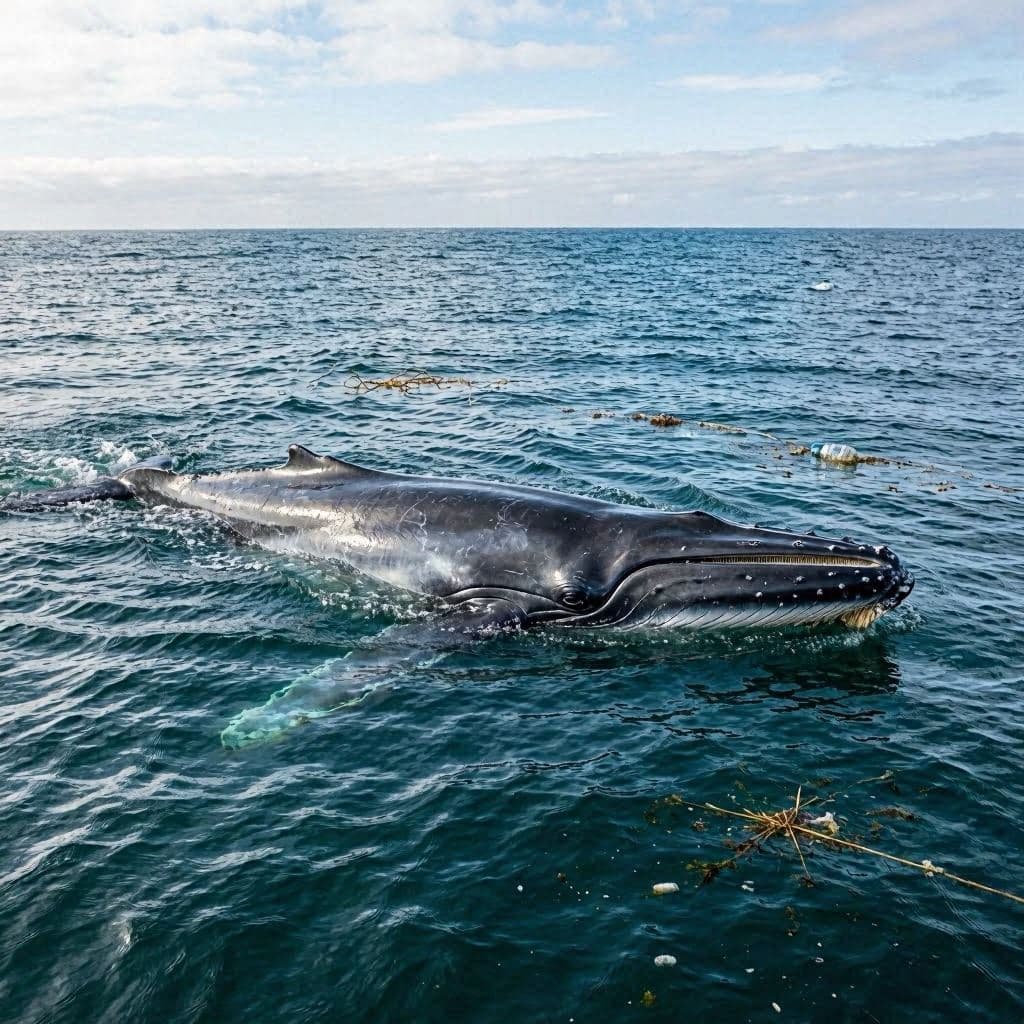
In the vast, blue expanse of the ocean, the fin whale moves with a grace that belies its immense size. As the second-largest animal on Earth, it is a symbol of marine majesty, filtering tons of water through its baleen plates to capture krill and small fish. Yet, beneath the surface of this natural rhythm lies a modern paradox. Every time these giants open their mouths to feed, they are not just consuming prey; they are inadvertently ingesting millions of tiny fragments of plastic. This silent accumulation highlights a troubling intersection between ancient biological instincts and contemporary human waste, inviting us to reflect on the unseen costs of our convenience.
Body: Recent studies have revealed the staggering scale of this issue. Researchers estimate that fin whales can ingest up to six million microplastic particles per day. These microscopic pieces, often no larger than a grain of sand, are ubiquitous in the ocean, having broken down from larger debris over time. For a filter feeder, distinguishing between nutrient-rich krill and synthetic pollutants is impossible. The whale’s feeding mechanism, evolved over millennia for efficiency, now acts as a net for humanity’s discarded materials.
The source of this plastic is primarily the prey itself. Krill and small fish accumulate microplastics from the water column, effectively concentrating the pollution before it reaches the whale. This process, known as bioaccumulation, means that the top predators of the food chain bear the brunt of the contamination. It is a sobering reminder that pollution does not disappear; it merely transforms and travels, eventually finding its way into the bodies of the largest creatures on the planet.
The health implications for these whales are still being studied, but the potential risks are significant. Microplastics can cause physical blockages, reduce stomach capacity, and leach toxic chemicals into the animal’s system. Over time, this burden may affect their energy levels, reproductive success, and overall resilience. For a species already recovering from the impacts of historical whaling, this new stressor adds another layer of vulnerability to their survival.
Beyond the individual animal, the presence of microplastics in whales serves as a barometer for ocean health. These animals are integrators of their environment, reflecting the condition of the ecosystems they inhabit. When we find plastic in their tissues, it is a clear signal that the ocean itself is saturated with waste. It challenges the notion that the sea is too vast to be affected by human activity, proving instead that no part of it is untouched.
Addressing this problem requires a shift in how we manage plastic production and disposal. While cleaning up existing debris is important, preventing new plastic from entering the waterways is crucial. This involves improving waste management infrastructure, reducing single-use plastics, and innovating biodegradable alternatives. It is a collective responsibility that extends from policymakers to individual consumers, requiring sustained effort and global cooperation.
For those who witness these magnificent creatures in the wild, the knowledge of their plight adds a layer of poignancy to the experience. The sight of a whale breaching or diving becomes a reminder of the fragility of nature in the Anthropocene. It encourages a deeper connection to the marine world and a commitment to protecting it, not just for the whales, but for the health of the planet as a whole.
Closing: In the end, the fin whale’s feeding problem is a mirror held up to society. It shows us the consequences of our material choices and the interconnectedness of all life. By addressing the root causes of plastic pollution, we can help ensure that these gentle giants continue to thrive in oceans that are clean, vibrant, and free from the shadows of our waste.
AI Image Disclaimer: Please note that any accompanying visuals for this narrative are artificially generated interpretations meant to evoke the spirit of the story, not documentary evidence.
Sources: Stanford University Science Advances National Geographic
Published by Banx Network. This article is part of the Banx decentralized media programme, powered by the BXE token on the XRP Ledger.