
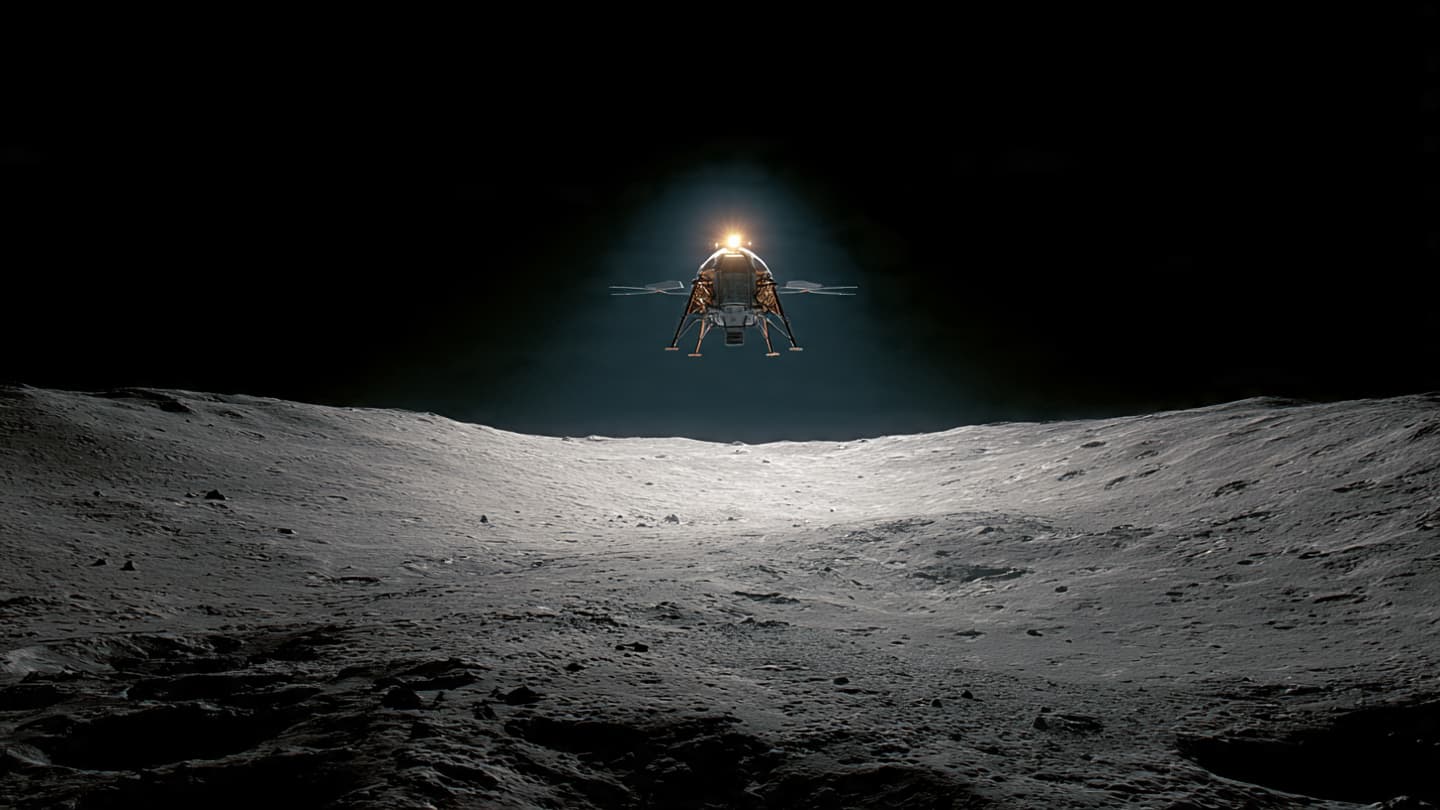
The Moon has always occupied a curious place in human imagination — close enough to watch each night, yet distant enough to remain largely untouched. Decades after the Apollo era first carried humans across the void, space agencies are again turning their attention toward the lunar surface, this time with ambitions extending beyond brief visits. NASA’s announcement of three uncrewed lunar missions this year reflects a broader effort to prepare for sustained activity and, eventually, a permanent base on the Moon.
The planned missions are intended to test technologies, gather environmental data, and evaluate systems necessary for future long-term operations. NASA officials say robotic missions remain essential before astronauts can safely establish extended human presence on the lunar surface.
Building a lunar base presents challenges far beyond simply landing spacecraft. Engineers must address radiation exposure, extreme temperature swings, communication systems, energy generation, dust management, and life-support infrastructure capable of operating reliably in harsh conditions.
The missions are expected to support NASA’s Artemis program, which aims to return astronauts to the Moon while developing technologies for eventual deep-space exploration, including potential missions to Mars. Scientists view the Moon as both a scientific destination and a testing ground for future interplanetary operations.
Uncrewed missions allow researchers to study landing zones, resource availability, and terrain stability without risking human lives. Particular interest has focused on regions near the lunar south pole, where permanently shadowed craters may contain frozen water deposits useful for future exploration efforts.
Water ice on the Moon could potentially support drinking supplies, oxygen production, and even rocket fuel generation if extraction technologies become practical. This possibility has transformed the Moon from a symbolic destination into a potentially strategic resource environment for long-duration missions.
International interest in lunar exploration has expanded rapidly in recent years. Alongside NASA, countries including China, India, and Japan, as well as private aerospace companies, are developing technologies connected to lunar transportation and infrastructure.
Scientists also emphasize the Moon’s research value. Lunar geology preserves ancient records from the early Solar System, offering insights into planetary formation and cosmic history that are difficult to study on Earth because of erosion and tectonic activity.
NASA says the upcoming missions will help refine technologies and operational planning as preparations continue for future crewed lunar expeditions and potential base construction efforts later in the decade.
AI Image Disclaimer: Some lunar exploration visuals connected to this article were created using AI-generated imagery.
Sources: NASA Reuters Space.com The Planetary Society European Space Agency
Published by Banx Network. This article is part of the Banx decentralized media programme, powered by the BXE token on the XRP Ledger.



